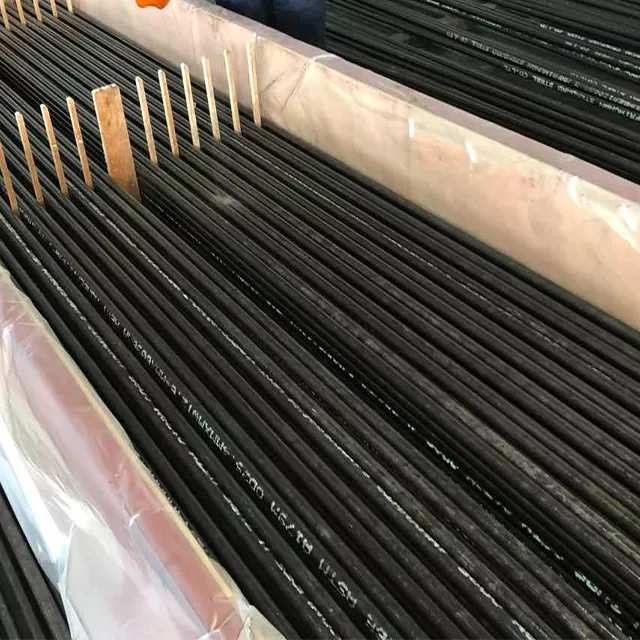
Thermal expansion acts as a relentless force in industrial heat transfer systems. Left unmanaged, it serves as a primary driver of mechanical failure. It forces unexpected downtime and inflates maintenance budgets. Extreme temperature differentials demand robust structural solutions to keep operations safe. The Heatexchangers U Bending Tube design stands as the industry-standard structural answer for these harsh environments.
We move beyond basic definitions in this guide. You need to understand exactly how these systems function under pressure. We evaluate structural realities and compare critical architectural trade-offs. You will also find strict procurement criteria designed specifically for engineering and purchasing decision-makers. By the end, you will know exactly how to specify components to ensure maximum reliability and prevent catastrophic mechanical failures.
Key Takeaways
U-tube bundles naturally absorb thermal stress, eliminating the need for vulnerable and costly shell-side expansion joints.
Myth vs. Reality: While highly resistant to thermal stress, differential temperature between inlet/outlet legs still requires precise bend radius calculations ($R \ge 1.5D$) to prevent localized fatigue.
Compared to straight-tube designs, U-tube configurations reduce physical footprint by 40–60% but restrict applications to clean, non-fouling fluids due to mechanical cleaning limitations.
Procurement safety relies on verifying post-bend heat treatment (annealing) to prevent Stress Corrosion Cracking (SCC).
The Business Cost of Unmanaged Thermal Stress
Extreme temperature variances create severe operational hazards. Hot fluids and cold fluids interact continuously across thin metal boundaries. Equipment shells expand at one specific rate. Internal tubes expand at a completely different rate. Tube sheets face massive, uneven thermal loads. This creates volatile differential thermal expansion across the entire unit.
Traditional straight-tube systems struggle immensely in these environments. Fixed-tubesheet designs require complex mechanical workarounds to survive. Engineers often install large expansion joints directly on the shell side. Alternatively, they deploy intricate floating head mechanisms. These additions introduce significant operational liabilities. They act as vulnerable, failure-prone points within the system architecture.
Unmanaged cyclical thermal stress destroys industrial equipment. It induces rapid, unseen material fatigue deep within the alloy. You will eventually experience sudden tube ruptures. Hazardous chemical leaks pose severe safety and environmental risks. Ultimately, ignoring these structural realities degrades the total system lifespan. Operations face massive financial penalties from unplanned shutdowns and emergency repair deployments.
How Hairpin Architectures Neutralize Thermal Strain
Engineers require a reliable mechanical solution for extreme thermal variance. The floating, hairpin-style design offers an elegant, proven answer. The entire tube bundle expands freely inside the pressure vessel. It contracts naturally as internal temperatures fluctuate. It never pushes against a secondary fixed tube sheet. This intelligent architecture eliminates massive structural strain natively.
Myth-Busting: The Reality of Differential Leg Expansion
Industry professionals often repeat a dangerous engineering myth. They claim a U Bending Tube eliminates absolutely all thermal stress. We must look closely at the evidence-based reality. Advanced engineering studies reveal a much more complex truth.
The inlet leg and the outlet leg handle drastically different fluid temperatures. This persistent temperature variance creates micro-differential expansion between the two straight sections. The localized stress concentrates heavily at the apex of the bend. Left unchecked, this dynamic strain causes premature metal fatigue.
We can fix this inherent issue through precise engineering. You must apply strict Finite Element Analysis (FEA) during the design phase. Proper baffle spacing remains equally critical to unit survival. These specific steps prevent destructive fretting wear against internal support plates. They also alter natural vibration frequencies to keep the bundle operating within safe ranges.
Decision-Stage Comparison: U-Tube vs. Straight-Tube Configurations
You must base equipment decisions on specific operational use cases. No single architecture fits every industrial application perfectly. We frame this choice objectively to help you evaluate trade-offs. The following evaluation matrix compares fundamental design characteristics directly.
Evaluation Matrix
Review the comparison chart below. It highlights the primary operational differences between hairpin bundles and traditional straight configurations.
Evaluation Criteria | U-Tube Configuration | Straight-Tube Configuration |
Thermal Stress Handling | Excellent. Provides native expansion. No joints needed. | Poor to Moderate. Requires expansion joints or floating heads. |
Fouling & Cleaning Suitability | Ideal for clean, high-pressure fluids. Hard to clean bends. | Ideal for highly viscous, fouling fluids. Easily mechanically cleaned. |
Space / Physical Footprint | Highly compact. Reduces physical footprint by up to 40–60%. | Requires a large footprint. Needs tube pull-out space on both ends. |
Cost to Implement | Lower initial cost. Features simpler overall manufacturing. | Higher initial cost. Carries higher long-term maintenance overhead. |
U-Tube bundles dominate applications requiring high-pressure integrity. They excel where thermal cycling destroys standard equipment. Straight tubes remain necessary for heavy fouling environments. Food processing and crude refining often require straight tubes for daily mechanical rodding.
Mitigating Failure Modes and Implementation Risks
We build trust through transparent, objective engineering assessment. You must clearly understand the operational limitations of hairpin bundles. We outline the most common degradation risks below. We also provide the exact mitigations required to prevent them.
Stress Corrosion Cracking (SCC) & Cold-Drawing Risks
Manufacturing hairpin bends requires immense physical force. This cold-bending process severely alters the internal grain structure. It stretches the outer radius and compresses the inner radius. This leaves volatile residual stresses locked inside the apex.
These stressed zones invite aggressive Stress Corrosion Cracking (SCC). You must mandate a strict post-bend solution annealing process. Manufacturers typically heat stainless grades to 1040–1100°C. This targeted heat treatment relieves dangerous residual stresses. The metal grain structure normalizes safely before final installation.
Erosion and Flow-Induced Vibration
Hairpin bundles present a unique geometric challenge internally. They feature sparse tube arrangements directly at the bundle center. Fluid naturally seeks the path of least resistance. It can short-circuit through this open space rapidly.
This bypass creates uneven heat transfer and localized erosion. You must control internal fluid dynamics strictly. Maintain tube-side flow velocities precisely between 1 to 10 ft/s (0.3 to 3 m/s). This specific velocity range balances heat transfer rates perfectly. It also prevents destructive baffle-fretting fatigue across the bundle.
Maintenance Limitations
You must acknowledge specific maintenance restrictions before purchasing. Inner-bundle tube replacement is virtually impossible in the field. You cannot simply extract a damaged central tube easily. The outer layers block all physical access points.
Routine maintenance strategies must adapt to this reality. You cannot rely on physical mechanical rodding to clear blockages. Your maintenance teams must rely entirely on specialized chemical flushing. High-pressure hydro-jetting serves as the only alternative for severe scaling.
Procurement Checklist: Specifying a U Bending Tube For Heatexchangers
Specifying a U Bending Tube For Heatexchangers requires extreme engineering precision. Purchasing managers and senior engineers need a reliable shortlisting logic. You must ensure strict compliance with ASME and TEMA industry standards. Use this vendor-agnostic specification checklist to secure reliable equipment.
Verify Material Grades: Match the exact alloy to your specific operating environment. Specify SA-213 TP304 for standard industrial use. Demand TP316L for high-chloride or corrosive environments. Require Inconel 625 for extreme high-pressure and high-temperature applications.
Enforce Bend Radius Tolerances: Strict geometry prevents catastrophic mechanical failures. Verify vendors adhere strictly to the minimum bend radius standard. The radius must measure at least 1.5 times the outer diameter ($R \ge 1.5D$). This prevents unacceptable wall thinning. It also stops dangerous ovality at the apex.
Mandate Quality Control & Testing: Never accept unverified component shipments. Require highly specific Material Test Certificates (MTCs) from the fabricator. Demand Hydrostatic Testing documentation. Mandate Eddy Current Testing to detect invisible micro-cracks. Review all Dimensional Inspection reports thoroughly prior to shipping approval.
Confirm Post-Bend Heat Treatment: Check the fabrication timeline carefully. Ensure the vendor includes proper solution annealing after the cold-drawing phase. Request temperature logs to verify the treatment reached the required threshold.
Applying this checklist standardizes your procurement process. It protects your facility from substandard manufacturing practices. It also extends the functional life of your thermal infrastructure.
Conclusion
Thermal expansion remains a constant threat to industrial infrastructure. The hairpin tube configuration stands as the ultimate architectural safeguard. It absorbs volatile thermal shifts naturally and efficiently. However, this elegant design requires strict manufacturing oversight to succeed. You must enforce minimum bend radius tolerances. You must also verify post-weld heat treatments rigorously.
Decision-makers should take immediate action. Audit your fluid fouling profiles before finalizing any new specification. Clean fluids match perfectly with hairpin architectures. Viscous fluids require completely different approaches. We advise consulting directly with specialized thermal engineers. They can perform accurate FEA modeling. They will also guide custom material selection to match your exact operational needs.
FAQ
Q: What is the expected lifespan of a well-maintained U-tube heat exchanger?
A: A properly maintained unit typically lasts 15 to 30 years. This lifespan depends heavily on strict water chemistry control. It also requires strict adherence to recommended flow velocity limits. Routine chemical flushing prevents premature degradation and extends operational viability significantly.
Q: Why is a minimum bend radius required for a U Bending Tube?
A: A minimum bend radius prevents severe structural weakening during fabrication. Tight bends cause dangerous outer wall thinning. They also create excessive ovality at the apex. These structural deformities trigger premature material fatigue and rupture when exposed to high operational pressures.
Q: Can U-tubes be mechanically cleaned?
A: You can clean the straight legs mechanically. However, the tight U-bends block traditional physical tools. These critical apex sections typically require high-pressure hydro-jetting. Operators also use specialized chemical flushing. This limitation makes them far less suitable for heavy-fouling or highly viscous fluid applications.


