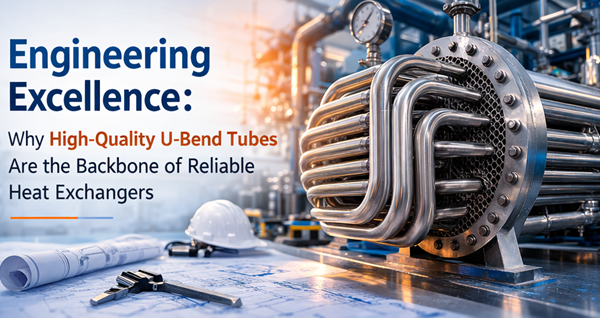
Why do high-pressure systems fail even with advanced equipment? In many cases, the problem starts with the Boiler Tube. Heat exchangers rely on durable tube designs to transfer heat safely and efficiently. In this article, you will learn how U Bending Tube technology improves performance, reliability, and manufacturing quality in modern thermal systems.
Understanding the U Bending Tube and Its Role in Heat Exchanger Design
What Is a U Bending Tube?
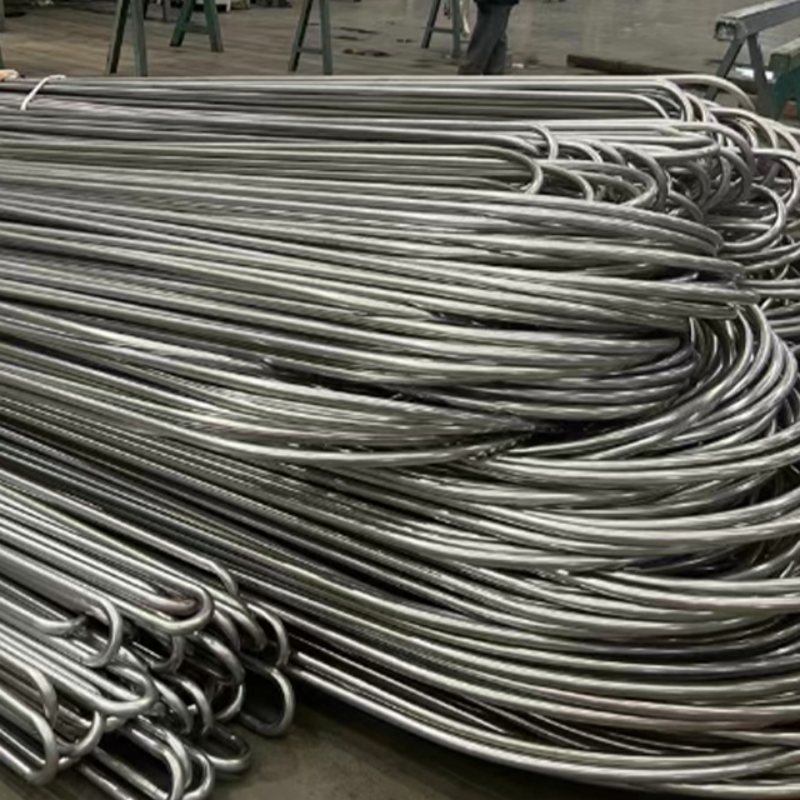
In shell-and-tube heat exchangers, the U bending tube is a widely used tube configuration known for its simple structure and strong adaptability. It is created by bending a straight heat exchanger tube into a 180-degree “U” shape, allowing the fluid to enter and exit from the same side while still traveling through a long heat-transfer path. The bending process must be carefully controlled to maintain wall thickness and internal smoothness. Excessive deformation could reduce heat transfer efficiency or weaken the tube under pressure. Precision bending equipment ensures the tube keeps its mechanical strength and consistent curvature. Compared with straight-tube designs, U bending tubes connect both ends to a single tube sheet rather than two separate sheets. This reduces sealing points and simplifies the overall exchanger structure. The curved section also allows the tube to absorb thermal expansion more easily, making the design suitable for systems exposed to frequent temperature changes.
Basic Construction of a U-Tube Heat Exchanger
A typical U-tube heat exchanger consists of several coordinated components that enable efficient heat transfer between two fluids:
● Shell – the outer vessel that holds the shell-side fluid
● U-shaped tube bundle – the main heat transfer surface formed by multiple U bending tubes
● Single tube sheet – a thick plate that secures both ends of each tube
● Baffles – plates that guide shell-side fluid across the tubes to improve heat transfer
● Channel head – the inlet and outlet section for tube-side fluid
Among these parts, the tube sheet and U-tube bundle form the core mechanical structure. The tube sheet keeps the tubes aligned and prevents the shell-side and tube-side fluids from mixing. Because the design uses only one tube sheet, fabrication becomes simpler and the number of welded joints decreases. This helps reduce potential leakage points and supports reliable long-term operation.
How U Bending Tubes Enable Efficient Heat Transfer
U bending tubes help heat exchangers transfer energy efficiently by supporting an effective flow arrangement. One fluid moves through the tubes, while another fluid flows around the tubes inside the shell.
Heat transfer occurs through two main processes:
1. Conduction through the metal tube wall
2. Convection as fluids carry heat to and from the tube surfaces
Many U-tube exchangers use a counterflow arrangement, where the two fluids move in opposite directions. This keeps the temperature difference high along the tube length, improving heat transfer efficiency. Internal baffles also enhance performance by forcing the shell-side fluid to cross the tube bundle. This increases turbulence and promotes better heat exchange. The curved portion of the U bending tube can also create slight internal mixing, helping maintain efficient heat transfer across the entire tube.
Why High-Quality U Bending Tubes Are Critical to Heat Exchanger Reliability
Managing Thermal Expansion in High-Temperature Systems
Industrial heat exchangers often operate under conditions where temperatures change dramatically during start-up, shutdown, or process fluctuations. Metals naturally expand when heated and contract when cooled. If this movement is restricted, mechanical stress builds up in the structure. In conventional straight-tube exchangers with fixed tube sheets at both ends, this thermal expansion can place considerable stress on the tubes and tube sheets. Over time, the accumulated stress may lead to deformation, fatigue cracks, or even leakage at tube-to-sheet joints. The geometry of a U bending tube provides a practical engineering solution. Because the tube curves back toward the tube sheet, one end of the tube can shift slightly along the bend as temperatures change. This flexibility allows the tube bundle to absorb thermal expansion without transferring large forces to the surrounding structure. For equipment exposed to temperature differences of hundreds of degrees, this feature significantly improves reliability. The U-shape effectively acts as a natural expansion loop, reducing the risk of structural damage and extending the service life of the exchanger.
Improving Operational Safety and Leak Prevention
Leak prevention is a major concern in heat exchanger design, particularly when the two fluids involved are chemically reactive, toxic, or under high pressure. Any mixing between shell-side and tube-side fluids could cause operational hazards or product contamination. The use of U bending tubes contributes to safety by simplifying the exchanger’s sealing structure. Since both ends of the tubes connect to a single tube sheet, the number of sealing surfaces and gasketed joints is reduced compared with some alternative designs. Fewer joints generally mean fewer potential leakage paths. This is particularly valuable in applications such as petrochemical processing, power generation, and chemical manufacturing, where heat exchangers operate continuously for long periods. In addition, the single tube sheet arrangement allows engineers to concentrate inspection and maintenance on one primary interface rather than two separate tube sheets. This simplifies pressure testing and helps detect potential problems earlier in the equipment’s life cycle.
Enhancing Heat Transfer Performance
Beyond mechanical reliability, the shape of U bending tubes also supports efficient thermal performance. The tube bundle provides a large surface area for heat exchange, which is essential for transferring energy between fluids effectively. When fluids move through the curved sections of the tubes, slight changes in flow direction can generate additional internal mixing. This mixing disrupts the thin thermal boundary layer that forms along the tube wall, allowing heat to transfer more quickly between the fluid and the metal surface.
Combined with shell-side turbulence created by baffles, the exchanger maintains strong convective heat transfer on both sides of the tube wall. As a result, U-tube heat exchangers are capable of handling demanding thermal duties in industries where precise temperature control is required.
Examples include:
● Preheating feedwater in power generation systems
● Cooling process fluids in petrochemical plants
● Condensing refrigerants in large HVAC installations
In each case, maintaining efficient heat transfer helps reduce energy consumption and improves overall system productivity.
Supporting Compact and Cost-Efficient System Design
Space constraints are common in industrial facilities, offshore platforms, and marine environments. Engineers often need equipment that can deliver high heat-transfer capacity without occupying excessive space. The layout of U bending tubes makes it possible to pack a large number of tubes into a relatively compact shell. Because the tubes curve back toward the tube sheet rather than extending across the full length of the exchanger, designers can arrange them in dense bundle patterns that maximize heat transfer surface area.
This compact arrangement offers two major benefits:
Design Advantage | Practical Impact |
Higher surface area density | Greater heat transfer capacity in smaller equipment |
Single tube sheet structure | Lower fabrication cost and reduced material usage |
From a manufacturing perspective, the simplified structure can also reduce production complexity. With fewer major structural components than some other shell-and-tube configurations, U-tube exchangers often require less welding and fewer heavy forged parts. For many industrial operators, this combination of compact size, lower initial cost, and reliable thermal performance makes heat exchangers built with high-quality U bending tubes an attractive long-term investment.
Manufacturing Excellence Behind High-Quality U Bending Tubes
Precision Tube Bending Technology
Producing a reliable U bending tube starts with precise bending technology. Heat exchanger tubes are first manufactured as straight seamless tubes and then bent into a 180° U-shape using controlled cold bending methods. Since these tubes operate under pressure and temperature fluctuations, maintaining accurate geometry during bending is essential. Modern manufacturers often use mandrel-controlled bending machines. The mandrel supports the inner wall of the tube during bending, preventing collapse, wrinkling, or excessive deformation. This helps maintain smooth internal surfaces and stable fluid flow.
Key parameters monitored during the process include:
● Bend radius relative to tube diameter
● Tube ovality after bending
● Wall thickness reduction in the bend area
● Alignment of the two straight legs
Proper control of these factors ensures the finished U bending tube maintains structural strength and consistent flow performance in heat exchanger systems.
Heat Treatment and Stress Relief
The bending process introduces internal stress into the metal. If not treated, these stresses can lead to fatigue, cracking, or corrosion under thermal cycling. To prevent this, post-bend heat treatment is applied. Controlled heating allows the metal structure to relax and redistribute residual stress. Common annealing methods include:
● Solution annealing for stainless steel and alloy tubes
● Stress-relief annealing to stabilize the bend area
● Stabilized annealing for high-temperature applications
Heat treatment is usually performed in controlled furnaces where temperature and atmosphere are monitored carefully. Protective gases such as argon may be used to avoid oxidation. This process restores ductility and ensures the tube can withstand repeated temperature changes in demanding industrial environments.
Quality Control and Testing Procedures
Because heat exchangers often operate under high pressure, each U bending tube must undergo strict inspection before installation. A common verification method is hydrostatic testing, where water pressure is applied inside the tube to ensure it can withstand operational pressure without leakage. Manufacturers also perform dimensional checks to confirm compliance with engineering requirements.
Typical inspection items include:
● Bend radius accuracy
● Distance between tube legs
● Wall thickness at the curved section
● Overall tube length and straightness
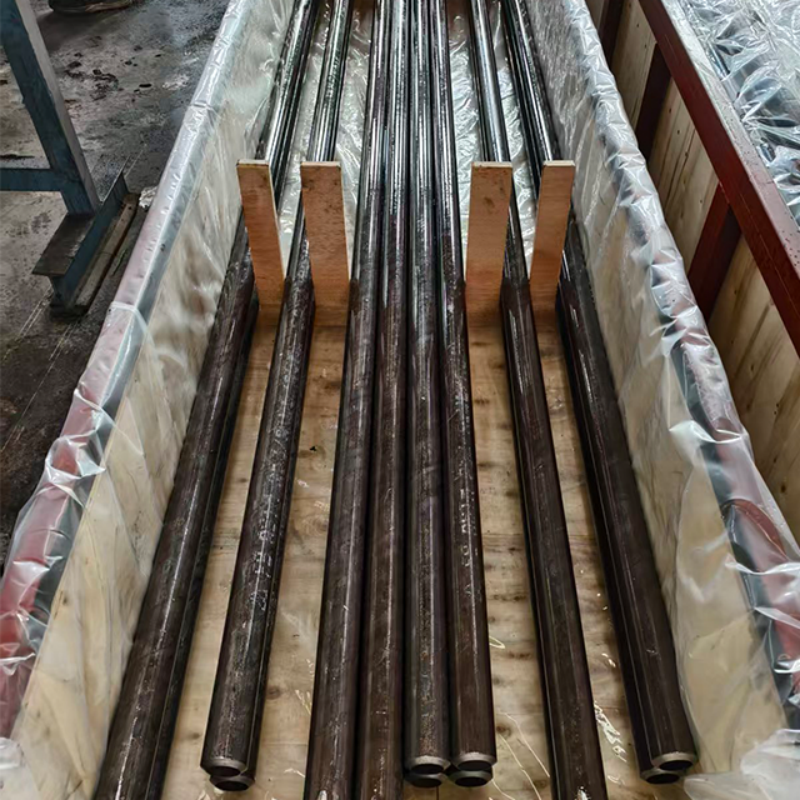
After testing, tubes are cleaned, deburred, and dried to remove contaminants. Protective caps are placed on tube ends, and the tubes are packaged carefully to prevent damage during transport.
Compliance with International Engineering Standards
High-quality U bending tubes are manufactured according to recognized international standards to ensure safety, compatibility, and long-term reliability.
Standard | Purpose |
ASTM | Defines material specifications for heat exchanger tubes |
TEMA | Provides guidelines for shell-and-tube exchanger design |
ASME | Establishes safety rules for pressure vessels |
ASTM standards regulate material composition and mechanical properties. TEMA guidelines ensure proper exchanger design and interchangeability of components. ASME codes focus on structural integrity and pressure safety. Following these standards ensures that U bending tubes meet strict engineering requirements and can operate reliably in high-pressure and high-temperature heat exchanger systems.
Materials and Industrial Applications of U Bending Tube Systems
Common Materials Used for U Bending Tubes
Material selection plays a decisive role in the long-term performance of a U bending tube. Since heat exchangers operate in diverse environments—ranging from corrosive chemical plants to seawater cooling systems—the tube material must be chosen according to the operating conditions. Different materials offer specific advantages in terms of corrosion resistance, thermal conductivity, and mechanical strength.
Material | Key Advantage | Typical Use |
Stainless Steel | Strong corrosion resistance and durability | Chemical processing and food industries |
Titanium | Exceptional resistance to seawater corrosion | Marine cooling and desalination |
Copper Alloys | Very high thermal conductivity | HVAC and refrigeration equipment |
Nickel-Based Alloys | Excellent strength at high temperatures | Power generation and aerospace |
Stainless steel grades such as 304 or 316 are commonly used when chemical resistance and moderate temperatures are required. Titanium becomes the preferred choice in environments involving seawater or highly aggressive fluids. Copper alloys, on the other hand, are valued for their superior heat transfer properties, making them ideal for cooling systems. For extremely high-temperature or high-pressure applications, nickel-based alloys like Inconel provide the strength and thermal stability needed to maintain structural integrity.
Major Industrial Applications
Because of their structural flexibility and efficient heat transfer characteristics, U bending tube systems are used across many industrial sectors. Each industry takes advantage of the design’s ability to handle temperature variations while maintaining compact equipment layouts. In power generation plants, U-tube heat exchangers are widely used in feedwater heaters and steam condensers. These systems recover thermal energy from steam cycles and improve overall plant efficiency. In the oil and gas industry, refineries rely on U-tube exchangers for heating crude oil, cooling refined products, and managing temperature in various process streams. The design performs well under high pressure and temperature conditions typical of hydrocarbon processing. Chemical manufacturing facilities also depend heavily on heat exchangers equipped with U bending tubes. These systems regulate the temperature of reactions, condensations, and separations where precise thermal control is essential. Marine engineering presents another demanding application. Ships and offshore installations frequently use U-tube exchangers for engine cooling, lubrication oil cooling, and seawater heat transfer. In desalination plants, the same technology helps convert seawater into fresh water while resisting corrosion.
Key Engineering Factors When Selecting U Bending Tubes
Choosing the right U bending tube configuration requires careful engineering evaluation. The performance of the entire heat exchanger can depend on how well the tube specifications match the operating environment.
Several technical factors are typically considered during the selection process:
● Operating temperature and pressure determine the required material strength and tube wall thickness.
● Fluid characteristics, including corrosion potential or fouling tendency, influence material choice.
● Tube diameter and bending radius affect heat transfer surface area and fluid flow behavior.
● Maintenance accessibility plays a role in industries where periodic cleaning or inspection is necessary.
Engineers must also balance performance with long-term service requirements. In high-temperature systems, for example, the tube material must resist creep and fatigue over many operating cycles. In corrosive environments, selecting a material with strong chemical resistance can significantly extend equipment lifespan. Design optimization therefore involves both thermal calculations and mechanical considerations. By carefully selecting tube materials, dimensions, and bending geometry, engineers ensure that U bending tube heat exchangers deliver reliable heat transfer performance while maintaining structural integrity under demanding industrial conditions.
Conclusion
High-performance U Bending Tube technology supports safe and efficient heat exchanger operation in demanding systems. Precision manufacturing, reliable materials, and strict standards ensure long service life and stable performance. Suzhou Baoxin Precision Mechanical Co.,Ltd. provides advanced stainless steel boiler tubes engineered for durability, efficiency, and dependable industrial heat transfer solutions.
FAQ
Q: What is a U Bending Tube in a heat exchanger?
A: A U Bending Tube is a heat exchanger tube bent into a 180° shape, allowing both ends to connect to one tube sheet while accommodating thermal expansion.
Q: Why is a U Bending Tube preferred in high-temperature heat exchangers?
A: A U Bending Tube flexes during temperature changes, reducing thermal stress and preventing tube sheet damage in high-temperature systems.
Q: How does U Bending Tube design affect heat transfer efficiency?
A: The U Bending Tube layout supports counterflow operation and turbulence, improving heat transfer performance in shell-and-tube heat exchangers.
Q: What materials are commonly used for U Bending Tube manufacturing?
A: A U Bending Tube is often produced from stainless steel, titanium, or copper alloys, selected based on corrosion resistance and operating temperature.


