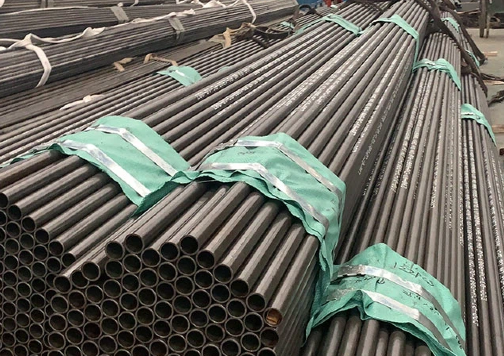
When it comes to industrial applications, the selection of materials plays a crucial role in the success of a project. One material that has consistently proven itself as reliable and versatile across a range of industries is carbon steel tubing. Among the various sizes and specifications of carbon steel tubing, the 14-inch carbon steel tubing stands out due to its unique balance of strength, durability, and versatility. Whether it's used in construction, manufacturing, automotive, or pipeline applications, 14" carbon steel tubing offers numerous benefits that make it an ideal choice for demanding environments.
This article will explore the strength and durability of 14" carbon steel tubing, why it is favored in many industries, and how it performs in various applications. We'll also look at the key factors that influence its durability, how it's manufactured, and why it’s considered a cost-effective solution for large-scale projects.
1. What is 14" Carbon Steel Tubing?
At its core, carbon steel tubing is made from an alloy of iron and carbon, with varying amounts of other elements such as manganese, silicon, and copper, depending on the grade. Carbon steel can be categorized based on its carbon content into low, medium, and high-carbon steels, with each category offering different properties such as hardness, ductility, and strength.
14" carbon steel tubing specifically refers to tubing that is 14 inches in diameter, typically used in large-scale applications where strength, durability, and the ability to withstand heavy loads are crucial. This tubing is made using high-quality carbon steel, which is formed into tubes of varying thicknesses to suit specific applications.
This size of tubing is often used in industries that require heavy-duty pipelines, structural supports, and other components that can endure significant mechanical stress and extreme environments.
2. The Strength of 14" Carbon Steel Tubing
a. High Tensile Strength
One of the most important characteristics of carbon steel is its tensile strength—the ability of a material to resist breaking or stretching under tension. Carbon steel tubing, including the 14" size, has excellent tensile strength, making it capable of handling significant pressure and stress without failing. This is particularly beneficial in industrial applications where the tubing is exposed to high-pressure systems, such as pipelines or hydraulic lines.
The tensile strength of carbon steel tubing is directly influenced by the carbon content. In medium-carbon steel (often used for 14" tubing), the carbon content typically ranges from 0.3% to 0.6%, providing a good balance of strength and toughness. This allows 14" carbon steel tubing to withstand heavy mechanical loads and resist deformation under pressure.
b. High Yield Strength
Yield strength is another critical property for 14" carbon steel tubing. It refers to the amount of stress a material can withstand before it begins to deform permanently. A high yield strength means that the material will not bend or warp easily under load, ensuring that the tubing maintains its shape and structural integrity over time.
Carbon steel, due to its composition and manufacturing process, has a relatively high yield strength, which makes it an excellent material for high-stress applications like construction, oil and gas pipelines, and machinery supports. The yield strength ensures that the 14" tubing can handle the stresses encountered in these industries, from heavy loads to environmental factors like temperature fluctuations.
c. Toughness and Impact Resistance
Another important property of 14" carbon steel tubing is its toughness, which is the ability to absorb energy and resist fractures or cracks under sudden impact or stress. This is particularly important in applications where the tubing might experience impacts or shocks, such as in the construction of machinery or structural components that are subject to vibrations or heavy loads.
Carbon steel's toughness is enhanced by its ductility, which allows it to deform without breaking. This is why 14" carbon steel tubing is often chosen for structural applications in construction or infrastructure projects. The material can endure both tensile and compressive forces, making it ideal for supporting weight in large constructions like bridges, support beams, and load-bearing frames.
3. Durability of 14" Carbon Steel Tubing
a. Corrosion Resistance
While carbon steel is known for its strength, one of the challenges is its susceptibility to corrosion when exposed to moisture, oxygen, or certain chemicals. However, 14" carbon steel tubing can still perform well in corrosive environments, depending on the grade of steel and the protective coatings applied.
To enhance its corrosion resistance, carbon steel tubing is often coated with protective materials like galvanization (zinc coating), powder coating, or other types of corrosion-resistant coatings. These coatings form a protective barrier between the steel and the external elements, preventing rust and corrosion from compromising the structural integrity of the tubing.
For applications in environments where corrosion is a significant concern—such as marine, chemical, or subterranean environments—carbon steel tubing can be treated with special coatings to extend its lifespan and durability.
b. Resistance to Fatigue
Fatigue resistance refers to the ability of a material to withstand repeated loading and unloading without failing. Carbon steel, especially medium-carbon varieties used for 14" tubing, offers excellent resistance to fatigue, which is crucial for components that are subject to cyclic stresses, such as piping systems and structural frames.
In industries like oil and gas, where equipment is constantly exposed to vibrations, fluctuating pressures, and thermal cycling, 14" carbon steel tubing performs well over time, resisting cracks and deformations caused by repeated stress. The high yield strength and toughness of carbon steel allow it to handle fatigue without compromising the structural integrity of the tubing.
c. Temperature Resistance
Temperature resistance is a key factor in the durability of 14" carbon steel tubing. Carbon steel has good thermal conductivity, meaning it can withstand both high and low temperatures without becoming brittle or weak. This makes it suitable for applications in environments with extreme temperature fluctuations, such as in power plants, chemical processing facilities, and automotive systems.
While 14" carbon steel tubing is suitable for a range of temperatures, it is important to note that extreme temperature exposure over time can affect its performance. As with corrosion, protective coatings or specific alloying processes can be used to enhance temperature resistance for more demanding environments.
4. Applications of 14" Carbon Steel Tubing
a. Oil and Gas Industry
One of the primary uses of 14" carbon steel tubing is in the oil and gas industry, where it is used for drilling, piping systems, and transporting fluids under high pressure. The tubing is capable of withstanding the harsh conditions of the subsurface environment and extreme pressures, making it an ideal choice for pipeline construction.
Additionally, its strength and resistance to mechanical stress and fatigue make 14" carbon steel tubing ideal for use in drilling rigs and other heavy-duty equipment that requires robust support and stability.
b. Construction and Structural Supports
Another major application of 14" carbon steel tubing is in construction and structural supports. The tubing is used for load-bearing frames, columns, beams, and bridges due to its high strength and durability. Its ability to withstand large amounts of weight and pressure ensures the safety and longevity of buildings and infrastructure.
c. Automotive Industry
In the automotive industry, 14" carbon steel tubing is commonly used for exhaust systems, chassis, and suspension components. Its combination of toughness, impact resistance, and fatigue resistance makes it ideal for parts that are subjected to constant stress, vibration, and temperature changes.
d. Machinery and Manufacturing
The manufacturing industry also makes extensive use of 14" carbon steel tubing. It is used in machinery frames, hydraulic lines, and pneumatic systems. The tubing’s high yield strength and impact resistance make it ideal for parts of machines that require both support and flexibility, such as mechanical arms, frames, and structural elements that are exposed to heavy loads.
5. Conclusion
14" carbon steel tubing is a versatile and durable material that offers numerous benefits for industrial and construction applications. Its high tensile strength, resistance to fatigue, and excellent durability make it a reliable choice for demanding environments. Whether it is used in oil and gas pipelines, construction projects, automotive systems, or machinery, 14" carbon steel tubing performs reliably under pressure, temperature fluctuations, and exposure to harsh conditions.
By selecting the appropriate carbon steel grade and applying the right protective coatings, businesses can maximize the longevity and performance of their carbon steel tubing, ensuring that it remains an essential component in a wide range of industrial processes and infrastructure projects.


