Introduction
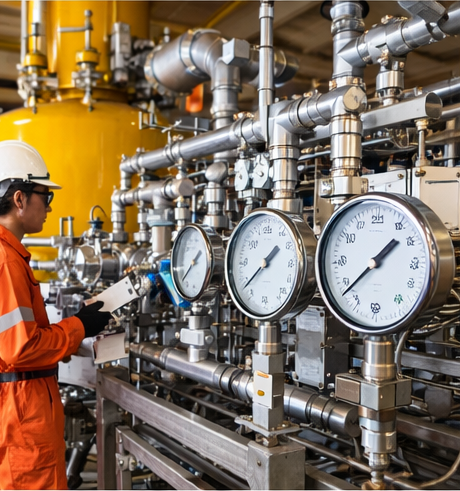
Seamless steel tubes are crucial for transporting oil, gas, and chemicals. But why are they the preferred choice over welded tubes?
In this article, we will explore the key advantages of seamless steel tubes, including their strength, durability, and resistance to extreme conditions. You'll learn why these tubes are essential for critical industries and how they outperform welded alternatives.
What are Seamless Steel Tubes?
The Manufacturing Process of Seamless Steel Tubes
Seamless steel tubes are produced through a precise manufacturing process that starts with a solid steel billet. The process begins by heating the billet until it reaches the right temperature for further processing. Once heated, the billet is pierced to form a hollow tube using a method called rotary piercing. After the tube is pierced, it is elongated and reduced in size through a process known as elongation, which is often performed using a rotary stretch or extrusion. This process further refines the tube's dimensions.
Once the desired length and diameter are achieved, the tube undergoes a series of steps including drawing and cooling. During the drawing process, the tube is pulled through a die to reduce its thickness and refine its outer diameter. The final product is a seamless tube with uniform wall thickness and precise dimensions, ideal for various industrial applications, especially those that require high strength and resistance to pressure and temperature changes.
Differences Between Seamless and Welded Steel Tubes
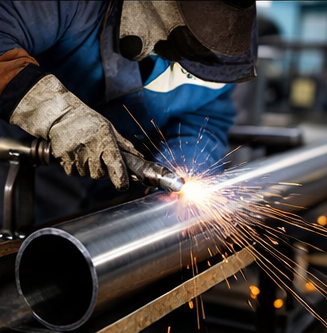
The key difference between seamless and welded steel tubes lies in their manufacturing methods. Seamless steel tubes, as the name suggests, are produced without any welding seams. This results in a homogeneous structure that is free from weak points, making the tube stronger and more reliable under high stress. In contrast, welded steel tubes are formed by welding the edges of a steel strip together, creating a seam along the length of the tube.
While welded tubes can be more cost-effective, the welded seam can often be a point of weakness, especially in applications that involve high pressure, corrosive environments, or extreme temperatures. The welding process introduces potential for defects such as cracks, stress corrosion, and fatigue, which can compromise the tube's integrity. Seamless tubes, by eliminating this potential weak point, offer superior performance in demanding applications, such as oil and gas pipelines, high-pressure steam systems, and chemical transport.
Benefits of Seamless Tubes
● Higher Strength: The absence of a weld seam means seamless tubes have a more consistent material structure, making them stronger and better equipped to handle stress and pressure.
● Better Durability: Seamless tubes tend to last longer, especially in harsh environments where welded tubes may degrade due to the vulnerability of their seams.
● Enhanced Safety: In applications where safety is critical, such as chemical and oil transportation, seamless tubes provide a higher level of reliability by reducing the risk of failure caused by seam weaknesses.
Applications of Seamless Steel Tubes
Seamless steel tubes are widely used in industries that require high-performance materials capable of withstanding extreme conditions. Their applications include:
● Oil and Gas Industry: Used in pipelines for oil and natural gas transportation, where high pressure and corrosive conditions are common.
● Chemical Processing: Essential in systems transporting aggressive chemicals, where corrosion resistance is critical.
● Power Generation: Employed in power plants for heat exchangers and boilers that operate under extreme temperatures and pressures.
The manufacturing process and the inherent benefits of seamless steel tubes make them the preferred choice for these industries, ensuring that they maintain their structural integrity and safety under the most demanding conditions.
Key Benefits of Seamless Steel Tubes for Oil, Gas, and Chemical Transportation
Pressure Tolerance
Seamless steel tubes are engineered to endure extreme internal and external pressures, making them ideal for high-stress environments such as deep-sea drilling and high-pressure pipelines.
The absence of weld seams in seamless tubes ensures a uniform structure, which helps distribute pressure evenly along the tube, significantly reducing the risk of failures. This advantage is particularly important in applications like offshore oil extraction, where pressures can exceed 15,000 psi. Seamless tubes maintain their structural integrity in such environments, ensuring pipeline safety.
Key Points:
● No weak points: The lack of weld seams makes seamless tubes stronger than welded alternatives, which are more prone to stress-related cracks at the seams.
● High pressure endurance: Seamless tubes are designed to handle the high pressures encountered in critical applications, ensuring safety and reliability in oil and gas pipelines.
Temperature Resilience
Seamless steel tubes perform exceptionally well in both cryogenic and high-temperature environments, which is essential in industries like LNG (liquefied natural gas) transportation and refinery systems.
These tubes are resistant to extreme temperature fluctuations. For example, seamless tubes can withstand cryogenic conditions as low as -196°C during LNG transportation and high temperatures found in refinery operations, where temperatures can exceed 50°C (120°F). The consistent material structure, free from the weak spots found in welded tubes, helps maintain performance under these harsh conditions.
Condition | Seamless Steel Tubes | Welded Steel Tubes |
Cryogenic Temperatures | Resistant to -196°C and below | May become brittle and fail under low temperatures. |
High-Temperature Conditions | Performs well in temperatures above 50°C | May degrade faster at high temperatures due to seam weaknesses. |
Seamless steel tubes' ability to resist thermal fatigue gives them an advantage in systems where temperature extremes are frequent, making them highly durable in critical applications.
Corrosion Resistance
In the oil, gas, and chemical industries, corrosion resistance is critical. Seamless steel tubes are made from corrosion-resistant materials like stainless steel, ensuring a long service life even in harsh, chemically aggressive environments.
Since seamless tubes are free from weld seams, they offer uniform resistance to corrosion across the entire surface, unlike welded tubes that may be more vulnerable to corrosion at the weld joint. This is particularly crucial in environments like oil and gas pipelines, where exposure to corrosive substances such as H2S (hydrogen sulfide) is common.
Key benefits of seamless steel tubes in corrosion resistance:
● Consistent protection: Seamless tubes provide continuous protection against chemical degradation.
● Extended lifespan: Their resistance to corrosion reduces maintenance needs and the risk of failures, leading to a longer operational lifespan.
Superior Flow Characteristics
The smooth internal surface of seamless steel tubes is another key benefit, especially in fluid and gas transportation systems. The lack of weld seams ensures that the inner surface is smooth and uniform, which reduces friction and turbulence during fluid transport.
● Improved hydraulic efficiency: The smooth surface of seamless tubes allows for better flow dynamics, leading to reduced energy consumption and improved overall system efficiency.
● Reduced risk of blockages: With no seams to cause irregularities, seamless tubes have a lower risk of scaling and blockages, ensuring consistent flow.
This enhanced flow characteristic is particularly beneficial in industries like power generation and chemical processing, where uninterrupted and efficient fluid transportation is critical.
Applications of Seamless Steel Tubes in Critical Industries
Oil and Gas Industry
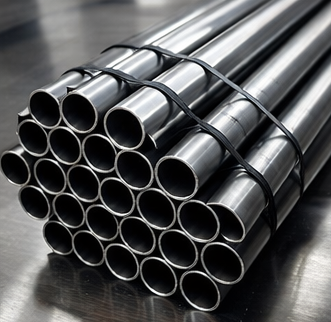
Seamless steel tubes are a critical component in the oil and gas industry, where they are used in pipelines, offshore oil extraction, and downhole operations. These applications require materials that can withstand extreme pressure, temperature fluctuations, and corrosive environments.
Key Applications:
● Pipelines: Seamless tubes are commonly used in oil and gas pipelines due to their ability to handle high internal pressures. They provide uniform strength throughout the tube, making them less susceptible to failure compared to welded tubes, which are weaker at the seam.
● Offshore Oil Extraction: For offshore drilling, seamless steel tubes are used in risers and casing pipes, essential for the safe transportation of oil from the seabed to the surface. The high-pressure tolerance and corrosion resistance of these tubes make them ideal for deep-sea operations, where they must endure harsh environmental conditions.
● Downhole Operations: In drilling operations, seamless tubes are used for tools and equipment that are exposed to extreme pressure and aggressive chemicals. Their robust performance minimizes the risk of failure and ensures the safety and efficiency of the operation.
The combination of pressure resistance, corrosion resistance, and structural integrity makes seamless steel tubes the preferred material in the oil and gas industry, particularly in offshore and high-pressure applications.
Chemical Processing and Petrochemical Industry
Seamless steel tubes are widely used in the chemical processing and petrochemical industries, where they are employed to transport hazardous chemicals and to form critical components like reactors, condensers, and distillation units. Their corrosion resistance and strength are vital in these environments.
Why Seamless Tubes are Essential:
● Chemical Resistance: Made from corrosion-resistant materials like stainless steel, seamless tubes are ideal for transporting aggressive chemicals, such as sulfur compounds and acids, which could degrade welded tubes. Their uniform structure ensures consistent protection against chemical corrosion.
● Reactors and Condensers: Seamless tubes are crucial in reactors and condensers, where they are exposed to both high temperatures and aggressive chemicals. The lack of seams reduces the risk of failure, ensuring long-term reliability in systems that operate under continuous stress.
● Distillation Units: In petrochemical plants, seamless tubes are used in distillation units, which require materials that can handle high temperatures, pressures, and corrosive substances. Seamless tubes’ smooth internal surface improves flow efficiency, reducing the likelihood of blockages or scaling in the system.
Seamless steel tubes’ combination of high strength, chemical resistance, and durability makes them a vital choice for industries that rely on the safe and efficient transport of chemicals.
Power Generation
In power generation systems, seamless steel tubes are integral to maintaining efficiency and safety in environments with high pressure and temperature. These tubes are used in steam generators, heat exchangers, and super-critical boilers, all of which require materials that can withstand extreme conditions.
Applications in Power Generation:
1. Steam Generators: Seamless tubes are used extensively in steam generators, where they are exposed to extremely high pressures and temperatures. The tubes must resist creep (deformation under high temperature) and thermal fatigue, ensuring reliable operation in power plants.
2. Heat Exchangers: These tubes are essential in heat exchangers, where their smooth inner surface and ability to handle high temperatures help optimize heat transfer, reducing energy consumption and improving system performance.
3. Super-Critical Boilers: In super-critical boilers, which operate at temperatures and pressures above the critical point of water, seamless steel tubes are used for their ability to resist thermal expansion and corrosion. These tubes are crucial for maintaining system integrity and preventing failure.
Seamless steel tubes offer high pressure and temperature tolerance, making them indispensable in power generation systems where performance and safety are critical.
Decision Factors for Choosing Seamless Steel Tubes
Decision Factor | Impact | Benefit |
Material Composition | Stainless steel or alloyed materials | Ensures strength, corrosion resistance, and durability under specific conditions. |
Application Requirements | Custom specifications (diameter, thickness) | Improves efficiency, safety, and longevity in demanding environments. |
Lifecycle Cost vs. Initial Investment | Higher initial cost offset by reduced maintenance and extended service life | Long-term cost savings, fewer repairs, and improved operational efficiency. |
When selecting seamless steel tubes, it is crucial to consider the material composition, application-specific requirements, and the long-term cost benefits. These factors ensure that the tubes not only meet the immediate needs of the system but also provide reliable performance and cost savings over time.
Industry Trends and Future of Seamless Steel Tubes
Technological Advancements in Manufacturing
Recent advancements in manufacturing technologies are significantly enhancing the production of seamless steel tubes, ensuring higher quality and efficiency. One key trend is the rise of intelligent and automated manufacturing processes. These technologies are revolutionizing how seamless tubes are produced by integrating artificial intelligence, machine learning, and automated systems to optimize production cycles.
● Precision Control: Automated systems now allow for finer control over the tube production process, ensuring consistent wall thickness, diameter, and structural integrity throughout the production run. This precision reduces variability and minimizes defects, leading to higher-quality products.
● Faster Production: Automation speeds up the manufacturing process, increasing throughput and reducing lead times. This is particularly beneficial in industries like oil and gas, where demand for high-quality seamless tubes is constant and urgent.
● Reduced Waste: Intelligent manufacturing processes help minimize material waste by optimizing the use of raw materials. This not only lowers production costs but also supports more sustainable manufacturing practices.
These technological advancements are driving the seamless steel tube industry toward more efficient, cost-effective, and environmentally friendly production methods.
Standardization and Regulatory Changes
The seamless steel tube industry is also experiencing significant changes in standardization and regulatory frameworks, which are influencing the selection and application of these tubes in critical infrastructure.
● Evolving Standards: Industry standards such as GB/T 14976-2025 are being updated to address the increasing demands of industries like oil and gas, chemical processing, and power generation. These evolving standards focus on enhancing the durability, performance, and safety of seamless steel tubes in high-pressure and high-temperature environments.
● Impact on Tube Selection: With these new standards, the material grades, manufacturing processes, and testing protocols for seamless steel tubes are becoming more stringent. Manufacturers and engineers must ensure that the tubes meet these updated specifications to guarantee safety, reliability, and regulatory compliance.
● Global Compliance: As seamless steel tubes are used in various international markets, regulatory changes are also aligning with global standards. Companies that manufacture and export these tubes must stay up-to-date with regional and international requirements, ensuring that their products meet the highest safety and quality benchmarks.
Adhering to these evolving standards will be crucial for ensuring that seamless steel tubes can continue to meet the performance and safety requirements of modern infrastructure projects. This also reflects the increasing importance of quality assurance in global supply chains.
Conclusion
Seamless steel tubes offer unmatched strength, pressure tolerance, and corrosion resistance, making them essential for the oil, gas, and chemical industries. These tubes outperform welded alternatives, providing durability and safety in harsh environments. Suzhou Baoxin Precision Mechanical Co., Ltd. manufactures high-quality seamless steel tubes that meet stringent industry standards, ensuring long-term reliability and efficiency in critical transportation systems.
FAQ
Q: What is a Seamless Steel Tube and why is it preferred in industrial applications?
A: A seamless steel tube is a tube manufactured without welds or seams, offering superior strength and resistance to pressure, temperature, and corrosion. It's preferred in industrial applications where reliability and durability are critical.
Q: How do Seamless Steel Tubes perform under extreme pressure conditions?
A: Seamless steel tubes are designed to withstand high internal and external pressures, making them ideal for applications like oil and gas pipelines, where pressure resistance is crucial for safe and efficient operations.
Q: What are the cost considerations for using Seamless Steel Tubes in industrial systems?
A: While seamless steel tubes may have a higher initial cost, their long-term durability, reduced maintenance, and extended lifespan make them more cost-effective in the long run compared to welded alternatives.


