Introduction
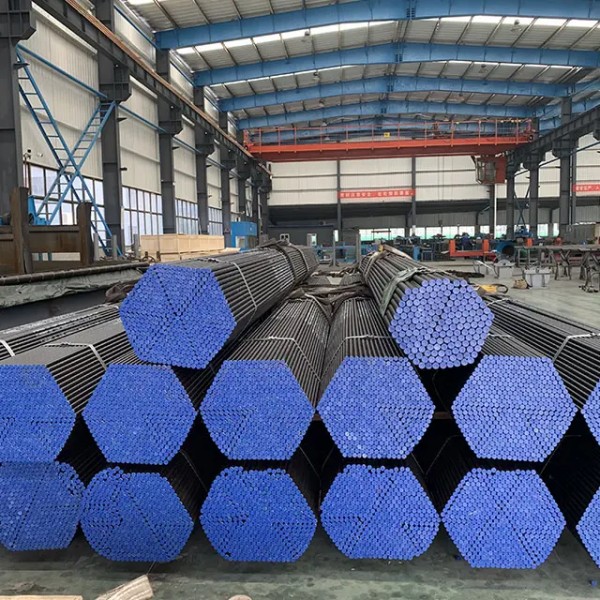
Why do strong plants fail? Often, small tube errors. A Heat Exchanger Tube must meet strict specs. Petrochemical and boiler systems face heat and corrosion. Standards like ASTM A/SA179 guide tube selection. In this article, you will learn key specs.
Service Conditions and Their Impact on Heat Exchanger Tube Specifications
Industrial heat transfer systems do not operate under uniform conditions. The required specification of a Heat Exchanger Tube is largely determined by the working medium, operating pressure, temperature profile, and maintenance strategy. In petrochemical plants, boilers, and condenser systems, these variables directly affect corrosion resistance, mechanical strength, dimensional stability, and inspection standards. A technically sound specification begins with understanding the service environment rather than selecting a material grade in isolation.
Petrochemical Systems: Corrosion, Sour Service, and Chemical Compatibility
Petrochemical facilities expose seamless steel heat exchanger tubes to complex chemical environments including chlorides, hydrocarbons, acidic compounds, and hydrogen sulfide (H₂S). These media accelerate localized corrosion mechanisms such as pitting, sulfide stress cracking (SSC), and hydrogen-induced cracking (HIC). In refining and chemical processing systems, even small variations in sulfur content or chloride concentration can significantly shorten service life if material compatibility is not properly evaluated.
Corrosion allowance must be defined during the design stage. In seamless steel tube applications for oil refining equipment, engineers typically account for material loss over time by increasing wall thickness or selecting upgraded alloy grades. Without proper allowance, gradual wall thinning can compromise pressure containment and lead to premature maintenance shutdowns.
In environments classified as sour service, enhanced alloy grades or coated seamless heat exchanger tubes may become necessary. Surface treatments such as epoxy coatings or stainless cladding can provide additional chemical barriers, while duplex or high-alloy materials offer improved resistance to chloride-induced corrosion. The decision is usually based on a balance between expected corrosion rate, inspection intervals, and lifecycle cost.
Typical Petrochemical Exposure and Material Response
Service Condition | Main Risk Mechanism | Specification Focus |
High chloride content | Pitting corrosion | Stainless or duplex alloy selection |
H₂S presence | SSC / HIC | Compliance with sour service standards |
Acidic media (low pH) | General corrosion | Corrosion allowance or coated tube |
Hydrocarbon processing | Elevated temperature oxidation | Alloy steel with improved stability |
Boiler Systems: High Temperature and Pressure Ratings
Boiler systems impose demanding thermal and mechanical stresses on heat exchanger tubes. High-pressure steam generation requires materials capable of maintaining structural integrity under continuous exposure to elevated temperatures. Long-term creep resistance becomes a critical property, particularly in superheater and reheater sections of thermoelectric installations.
At high temperatures, microstructural stability plays a central role in performance. Chromium–molybdenum alloy steels are often selected because their composition enhances resistance to creep deformation and oxidation scaling. Without adequate oxidation stability, surface degradation can reduce effective wall thickness and alter heat transfer efficiency.
Alignment with allowable stress values under ASME-based design rules is mandatory in boiler applications. Tube wall thickness must satisfy calculated pressure containment requirements while maintaining dimensional compatibility with headers and tube sheets. Designers must consider not only maximum operating pressure but also transient thermal stresses during startup and shutdown cycles.
Key boiler design considerations include:
● Continuous operation at elevated temperatures requiring creep-resistant alloy grades
● Internal pressure determined by steam generation capacity and safety margins
● Compliance with pressure equipment standards governing seamless heat exchanger tubes
Condenser Systems: Thermal Conductivity and Thin-Wall Considerations
Condenser systems prioritize heat transfer efficiency, often operating at comparatively lower pressures than boilers but under continuous fluid flow conditions. The trade-off between heat transfer performance and structural strength is particularly evident in thin-wall condenser tubes. Reducing wall thickness improves thermal responsiveness but must not compromise mechanical durability.
Tube metallurgy directly influences thermal conductivity. Copper-based alloys provide high conductivity but may require additional corrosion protection in aggressive water conditions. Stainless and titanium grades, while lower in conductivity than copper alloys, offer superior resistance to corrosion in marine or chemically treated cooling water environments. Therefore, metallurgy selection must balance conductivity, corrosion resistance, and lifecycle stability.

Mechanical cleaning requirements also affect specification decisions. Smooth inner surfaces reduce fouling accumulation and maintain consistent heat exchange efficiency over time. In seamless condenser tubes, surface roughness control is essential to minimize scaling and reduce hydraulic resistance. Proper specification ensures that cleaning operations—whether mechanical or chemical—do not damage the tube structure.
Heat Exchanger Tube Material Selection for Industrial Applications
Material selection for a Heat Exchanger Tube integrates service temperature, pressure, corrosion exposure, and required mechanical properties. In industrial practice, seamless steel tubes are chosen not only for their strength but also for dimensional accuracy and long-term stability. The following material categories illustrate how application conditions guide specification decisions.
Carbon Steel Grades for Moderate Conditions
Seamless carbon steel heat exchanger tubes compliant with ASTM/ASME A/SA179 are commonly used in moderate-pressure, non-aggressive service environments. These tubes provide reliable mechanical performance while maintaining cost efficiency for large-scale industrial installations.
Typical dimensional parameters for standardized supply include outer diameters from 5MM to 114.3MM and wall thicknesses ranging from 0.5MM to 20MM. This range accommodates most petrochemical and boiler heat exchange configurations where extreme corrosion resistance is not required. Mechanical property benchmarks—such as minimum tensile and yield strength—ensure adequate pressure containment for conventional operations.
In general petrochemical and boiler service where media are controlled and corrosion rates remain predictable, carbon steel offers a practical balance between structural reliability and economic feasibility. However, its use depends on accurate evaluation of corrosion allowance and inspection intervals.
Alloy Steels for Elevated Temperature Service
Chromium–molybdenum alloy steels are frequently selected for high-temperature boiler applications due to their improved creep strength and oxidation resistance. The addition of alloying elements enhances microstructural stability under prolonged exposure to elevated thermal loads.
Selection criteria typically include:
● Maximum continuous operating temperature
● Required design pressure
● Allowable stress values at temperature
● Compatibility with pressure equipment standards
Alloy steels are commonly applied in thermoelectric systems and pressure equipment where structural integrity must be maintained over long service cycles. Compared to carbon steel, these materials provide superior performance under thermal stress but require precise fabrication and inspection controls.
Stainless and Duplex Alloys for Corrosive Environments
In chemically aggressive or marine-related condenser systems, stainless and duplex alloys provide enhanced resistance to pitting and stress corrosion cracking. Austenitic stainless steels such as 304L and 316L offer reliable corrosion resistance in moderate chloride environments, while duplex structures combine improved mechanical strength with higher resistance to localized corrosion.
For more demanding conditions, alternative materials such as copper-nickel alloys or titanium seamless heat exchanger tubes may be considered. Copper-nickel alloys demonstrate favorable performance in seawater cooling systems, whereas titanium offers exceptional resistance to a broad pH range and strong chemical media.
Comparison of Alloy Categories for Corrosive Service
Material Category | Corrosion Resistance | Mechanical Strength | Typical Application Context |
Austenitic Stainless | Good in moderate chloride environments | Moderate | Chemical processing, condenser units |
Duplex Stainless | Excellent pitting resistance | High | High-chloride petrochemical service |
Copper-Nickel | Strong marine resistance | Moderate | Seawater condenser systems |
Titanium | Exceptional chemical stability | High | Highly corrosive industrial media |
Material selection ultimately requires a holistic evaluation of service conditions, inspection strategy, and long-term maintenance planning. By aligning metallurgical characteristics with operating demands, engineers can define a Heat Exchanger Tube specification that ensures durability, thermal efficiency, and compliance across petrochemical, boiler, and condenser systems.
Heat Exchanger Tube Dimensional and Mechanical Specifications
Dimensional precision and mechanical integrity are fundamental to the safe operation of any Heat Exchanger Tube used in petrochemical, boiler, or condenser systems. While material grade determines corrosion and temperature resistance, geometry and strength parameters directly control pressure containment, installation compatibility, and long-term structural reliability. A technically sound specification therefore integrates outside diameter (OD), wall thickness (WT), allowable stress limits, and manufacturing tolerances into a coherent design framework rather than treating them as isolated parameters.
Outside Diameter and Wall Thickness Ranges
In industrial practice, common OD standards in petrochemical and boiler systems typically fall within the 5MM–114.3MM range for seamless carbon steel heat exchanger tubes. Smaller diameters are often selected for compact heat transfer bundles, while larger diameters are used in high-capacity process units where flow volume and mechanical stability must be optimized simultaneously. Selecting the correct OD is not only a matter of flow rate but also of tube sheet compatibility and equipment configuration.
Wall thickness selection depends primarily on design pressure and equipment classification. In condenser systems operating at relatively moderate pressures, thinner walls may be sufficient provided that corrosion allowance is properly calculated. Conversely, high-pressure boiler applications require increased thickness to maintain structural safety margins. The following table summarizes general dimensional considerations:
Parameter | Typical Industrial Range | Engineering Purpose |
Outside Diameter (OD) | 5MM–114.3MM | Compatibility with tube sheet and flow capacity |
Wall Thickness (WT) | 0.5MM–20MM | Pressure containment and corrosion allowance |
Length | Standardized for installation efficiency | Minimizes welding and alignment error |
Compatibility with pressure equipment and industrial machinery installations is equally important. Seamless heat exchanger tubes must align with header design, expansion methods, and welding procedures. Incorrect dimensional selection can lead to improper tube sheet fit, uneven stress distribution, or leakage under operational load. Therefore, dimensional specification must be coordinated with the entire equipment design rather than selected independently.
Pressure Containment and Wall Thickness Calculations
Pressure containment design for a heat exchanger tube is governed by the relationship between internal pressure, allowable material stress, and minimum required wall thickness. In simplified terms, the required thickness increases proportionally with operating pressure and inversely with allowable stress at operating temperature. However, practical design includes additional safety factors and allowances for corrosion over the intended service life.
Key factors influencing thickness calculation include:
● Design pressure (maximum allowable operating pressure)
● Operating temperature and corresponding allowable stress
● Corrosion allowance based on anticipated material loss
● Regulatory safety margins defined by applicable standards
Balancing mechanical durability with thermal efficiency presents a recurring engineering trade-off. Thicker walls improve structural reliability but reduce heat transfer efficiency due to increased thermal resistance. In industrial heat exchange systems, this balance must be carefully evaluated to ensure both safety and performance targets are achieved without excessive material usage.
For boiler and petrochemical applications, thickness calculations must consider long-term creep deformation under elevated temperature. In contrast, condenser systems prioritize maintaining adequate strength while minimizing thermal resistance. Therefore, the optimal wall thickness varies significantly across service environments even within the same OD category.
Manufacturing Tolerances and Surface Quality
Dimensional accuracy is critical for seamless forming processes. Tight tolerances ensure that each heat exchanger tube fits precisely into the tube sheet, enabling effective expansion or welding without overstressing the material. Excessive deviation in OD or wall thickness can compromise joint integrity and lead to localized stress concentrations.
Manufacturing tolerances directly influence:
● Tube sheet hole alignment and expansion quality
● Welding penetration consistency
● Uniform load distribution across the bundle
Surface quality also plays a crucial role in long-term reliability. A smoother inner surface reduces scaling and fouling in condenser and boiler service, improving heat transfer stability and minimizing pressure drop. Similarly, controlled external surface finish enhances corrosion resistance and reduces the likelihood of localized oxidation.
In practical operation, surface roughness affects not only thermal efficiency but also maintenance frequency. Seamless heat exchanger tubes with optimized surface quality are less prone to deposit accumulation, thereby extending cleaning intervals and supporting more stable system performance over time.
Heat Exchanger Tube Inspection and Testing Standards
Inspection and testing procedures provide the final verification that dimensional and mechanical specifications have been properly achieved. For seamless heat exchanger tubes used in petrochemical, boiler, and condenser systems, quality control extends beyond simple dimensional checks to include non-destructive examination, pressure testing, and material verification. These processes ensure that tubes can withstand operational stress without premature failure.
Non-Destructive Examination (NDT) Requirements
Non-destructive examination methods such as eddy current testing (ECT) and ultrasonic testing (UT) are widely applied to detect surface and subsurface defects. These methods are capable of identifying longitudinal discontinuities, micro-cracks, inclusions, or wall thinning that may not be visible during visual inspection.
Eddy current testing is particularly effective for detecting small surface defects in conductive materials, while ultrasonic testing provides deeper penetration for internal flaw detection. Batch-level inspection procedures help maintain consistency across production lots, ensuring that each seamless heat exchanger tube meets specified structural requirements.
In high-pressure or corrosive service applications, NDT is essential for preventing in-service failure. By identifying defects before delivery, manufacturers and engineers reduce the risk of unexpected leakage or rupture during operation.
Hydrostatic and Mechanical Performance Testing
Hydrostatic testing verifies the pressure containment capability of each tube by subjecting it to a controlled internal pressure above its intended operating level. This test confirms structural integrity and ensures that no leakage occurs under simulated service conditions.
Mechanical performance tests further evaluate material ductility and strength. Flattening and flaring tests assess the tube’s ability to withstand expansion during installation, while tensile testing confirms compliance with ASTM/ASME mechanical property requirements. Together, these evaluations ensure that seamless carbon steel heat exchanger tubes meet both dimensional and structural expectations.
The integration of hydrostatic and mechanical testing provides a comprehensive validation framework. Pressure integrity, ductility, and tensile strength are confirmed prior to installation, reducing operational uncertainty.
Additional Testing for Sour or Critical Service
In petrochemical environments involving hydrogen sulfide or other aggressive chemicals, additional testing is often required. Hydrogen-induced cracking (HIC) and sulfide stress cracking (SSC) assessments evaluate material susceptibility to environmentally assisted cracking mechanisms.
Chemical composition analysis is also conducted to confirm compliance with specified grade requirements. Spectrometric analysis ensures that carbon, manganese, sulfur, and other elements remain within controlled limits, thereby preserving mechanical performance and corrosion resistance characteristics.
Documentation and traceability play a central role in critical service applications. Certificates of Compliance, test reports, and inspection records provide verification that each heat exchanger tube conforms to applicable standards and project specifications. Proper documentation supports long-term operational reliability and regulatory compliance in petrochemical, boiler, and condenser systems.
By combining dimensional accuracy, mechanical validation, and rigorous inspection procedures, industrial operators can ensure that each Heat Exchanger Tube meets the demanding requirements of high-pressure, high-temperature, and corrosive service environments.
Conclusion
Heat Exchanger Tube specs must match real use. Service demands guide material and size choice. Strength and testing ensure safe operation. Clear specifications support long service life.
Suzhou Baoxin Precision Mechanical Co.,Ltd. provides seamless tubes with strict quality control and reliable technical support.
FAQ
Q: How do I select the right Heat Exchanger Tube material?
A: Select a Heat Exchanger Tube based on operating temperature, pressure, and corrosion exposure. Match material grade to service conditions and applicable standards.
Q: What standards apply to Heat Exchanger Tube specifications?
A: A Heat Exchanger Tube typically follows ASTM or ASME standards, which define mechanical properties, dimensions, and testing requirements.
Q: How is wall thickness determined for a Heat Exchanger Tube?
A: Wall thickness for a Heat Exchanger Tube is calculated from design pressure, allowable stress, and corrosion allowance under code rules.
Q: What inspections are required before delivery?
A: A Heat Exchanger Tube should undergo NDT, hydrostatic testing, and material verification to ensure compliance and pressure integrity.


