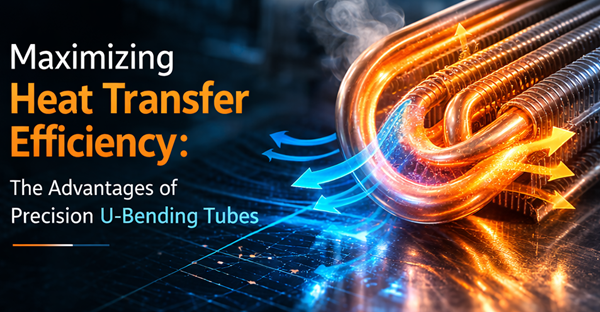
Modern industries rely on efficient heat transfer to control energy use and operating costs. Even small design improvements can greatly improve system performance. One critical component is the Boiler Tube, which must handle high temperatures and pressure. In this article, you will learn how precision tube design improves heat transfer, durability, and overall efficiency in demanding industrial systems.
What Is a U Bending Tube and Why It Matters in Heat Transfer Systems
Definition and Basic Structure of a U Bending Tube
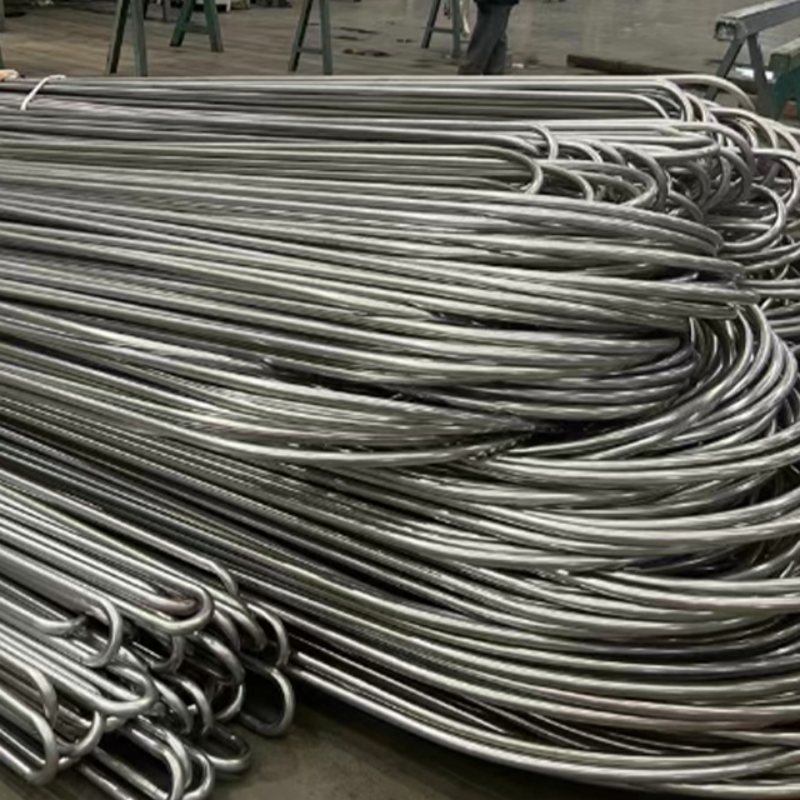
A U bending tube is a straight tube bent into a smooth U-shape while keeping its structural strength. The tube remains continuous, which improves reliability and fluid flow. Both ends connect to the same tube sheet in a heat exchanger. Fluid flows through the tube, turns at the bend, and exits through the other side while another fluid flows outside the tube. Heat transfers through the tube wall without mixing the fluids. This design reduces leak risks and allows the tube to handle thermal expansion, making it suitable for high-pressure and high-temperature systems.
Role of U Bending Tubes in Shell and Tube Heat Exchangers
In shell-and-tube heat exchangers, U bending tubes form the internal tube bundle carrying one fluid while another flows around them. Because the tube bends back toward the inlet side, engineers can place longer tube lengths inside a compact shell. This increases heat transfer surface area and improves efficiency. U-tube exchangers are widely used in power plants, petrochemical processing, HVAC systems, boilers, and condensers where reliable heat transfer is required.
How the U-Shape Improves Thermal System Design
The U-shaped design improves thermal performance in several ways. It allows longer tubes in smaller equipment, increasing heat transfer area. Curved tubes also create turbulence that enhances heat exchange. In addition, the bend naturally absorbs thermal expansion caused by temperature changes. These features make U bending tubes efficient and durable for many industrial heat exchanger applications.
Key Performance Advantages of Precision U Bending Tubes
Improved Fluid Dynamics and Heat Transfer Efficiency
Precision bending does more than shape the tube—it directly influences how fluids behave during heat exchange. Inside a curved tube, fluid motion becomes more complex compared to flow through a straight pipe. As the fluid passes through the bend, centrifugal forces create small rotational currents that move fluid from the center of the tube toward the walls and back again. These internal circulations disturb the thermal boundary layer, a thin region near the tube wall where heat transfer normally slows down. When this layer is disrupted, heat energy moves more rapidly between the fluid and the metal surface. The result is improved thermal efficiency without requiring additional equipment or energy input.
In practical applications, this means heat exchangers equipped with precision U bending tubes can achieve higher heat transfer coefficients compared with systems that rely solely on straight tubes. For industries where energy efficiency and temperature control are critical, even small improvements in heat transfer performance can translate into meaningful reductions in operating costs.
Compact Design with Higher Heat Transfer Surface
One of the most practical benefits of a U bending tube configuration is its ability to maximize heat transfer area within limited equipment space. Heat exchangers often face physical constraints such as installation space, weight limits, or integration within existing industrial systems. Because the tube doubles back on itself, engineers can place a longer tube length inside the same shell volume. More tube length means more surface area available for thermal exchange between the two fluids.
This design approach offers several advantages:
● Greater heat transfer capacity without increasing equipment size
● Reduced installation space, particularly valuable in industrial plants where space is limited
● Improved energy efficiency, since larger surface areas enhance heat exchange effectiveness
Compact heat exchanger designs are especially important in sectors such as power plants and petrochemical facilities, where equipment density and efficiency strongly influence overall plant performance.
Thermal Expansion Compensation and Structural Stability
Industrial heat exchangers frequently operate under fluctuating temperature conditions. When tubes experience repeated heating and cooling cycles, they naturally expand and contract. If the tube system is too rigid, these movements can introduce mechanical stress that damages the tube sheet or surrounding components. The curved geometry of a U bending tube helps mitigate this problem. Instead of forcing the tube to remain perfectly straight, the bend acts as a flexible section that can absorb dimensional changes. As the metal expands, the curved portion can slightly adjust its shape, relieving stress from the fixed tube sheet. This built-in flexibility provides an important engineering advantage. Systems using U-tube bundles typically require fewer expansion joints or additional mechanical compensators, simplifying the overall equipment design and improving reliability over long operating cycles.
Reduced Leakage Risk with Continuous Tube Design
Leak prevention is a major concern in heat exchanger systems, particularly when handling high-pressure fluids or hazardous chemicals. Traditional pipe assemblies sometimes rely on welded joints or connectors to create the required tube layout. Each joint introduces a potential point of failure. Precision U bending tubes reduce this risk by forming the required geometry from a single continuous tube. Without intermediate welds, the number of possible leakage points is significantly reduced. The smooth internal surface also allows fluid to move without interruption, which supports stable flow conditions. This design characteristic improves both operational safety and maintenance efficiency. Fewer joints mean fewer locations that require inspection or repair, and the overall system becomes more resistant to long-term fatigue or corrosion-related failures.
Manufacturing Process and Quality Control of Precision U Bending Tubes
The performance of a U bending tube in a heat exchanger depends not only on its design but also on the precision of its manufacturing process. Even small geometric deviations can affect fluid flow, structural reliability, and heat transfer efficiency. For this reason, modern tube production combines advanced bending technology with strict quality control procedures to ensure each tube meets demanding industrial standards.
CNC Tube Bending Technology
In contemporary manufacturing facilities, Computer Numerical Control (CNC) bending machines are widely used to produce precision U bending tubes. These machines operate with programmed parameters that control bending angle, radius, and tube positioning with a high degree of accuracy. Using CNC technology allows manufacturers to produce tubes with consistent geometry across large production batches. The system precisely calculates the bending radius and applies controlled force during the bending process. This reduces dimensional variation and ensures that each tube fits accurately within the heat exchanger bundle. Precise bending also contributes directly to thermal performance. When the bend radius and tube alignment are accurate, fluid flows smoothly through the tube path without unnecessary resistance. Avoiding deformation during bending helps maintain internal surface integrity, which supports stable flow conditions and efficient heat transfer.
Mandrel Bending for Dimensional Accuracy
During tube bending, maintaining the original round shape of the tube is essential. Without proper support, the bending process can cause deformation such as flattening, wrinkling, or uneven wall thickness. To prevent these issues, manufacturers often use mandrel bending technology. A mandrel—essentially a supporting tool inserted inside the tube—reinforces the tube wall while the bending force is applied. This internal support helps the tube retain its circular cross-section throughout the bend.
Mandrel-assisted bending provides several technical benefits:
● Preserves internal diameter for consistent fluid flow
● Prevents wall thinning at the outer bend radius
● Avoids internal wrinkles that could trap contaminants
Maintaining uniform wall thickness is particularly important in high-pressure heat exchanger systems. Even minor structural irregularities could compromise long-term durability or reduce resistance to internal pressure.
Heat Treatment and Stress Relief
The bending process introduces mechanical stress into the tube material. If these stresses remain within the metal structure, they can lead to distortion, fatigue, or corrosion over time—especially in high-temperature environments. To stabilize the material, post-bending heat treatment is commonly applied. Depending on the tube material and application requirements, manufacturers may use processes such as solution annealing or stress-relief annealing. These treatments allow the metal’s microstructure to return to a more stable state. As a result, the tube gains improved resistance to stress corrosion cracking and enhanced mechanical stability. Heat treatment is particularly important for stainless steel and high-alloy tubes that operate in aggressive industrial environments.
Inspection and Hydrostatic Testing
Before U bending tubes are delivered for industrial installation, they undergo a series of inspection procedures designed to verify structural integrity and dimensional accuracy.
Quality control typically includes:
● Dimensional measurement to confirm bending radius and tube length
● Visual inspection of the bend area to detect surface defects
● Cleaning and internal air blowing to remove debris
One of the most critical tests is hydrostatic pressure testing. During this procedure, the tube is filled with water and subjected to a controlled pressure level. This test ensures the tube can withstand operating pressures without leakage or structural failure. Additional steps such as end protection, internal cleaning, and packaging preparation are often performed before shipment to maintain product quality during transportation and storage.
Materials and Industrial Applications of U Bending Tubes
Selecting the appropriate material for a U bending tube is essential for ensuring reliable heat transfer performance. Different industrial environments expose heat exchanger tubes to varying combinations of temperature, pressure, corrosion, and mechanical stress. As a result, material choice must align with both thermal performance requirements and long-term durability.
Common Materials Used in U Bending Tubes
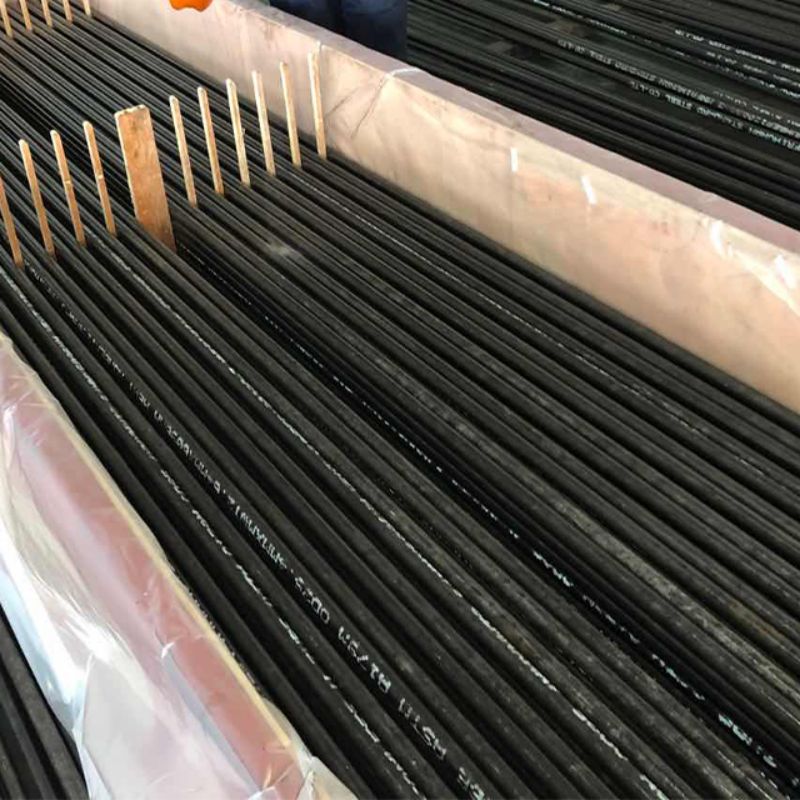
A variety of metals and alloys are used to manufacture U bending tubes, each offering specific advantages depending on the application environment.
Material | Key Properties | Typical Uses |
Copper | Excellent thermal conductivity and high ductility | HVAC systems, refrigeration equipment |
Stainless Steel (304/316) | Strong corrosion resistance and good high-temperature strength | Chemical processing, food manufacturing |
Titanium | Exceptional resistance to seawater and chloride corrosion | Marine heat exchangers, desalination plants |
Nickel Alloys | High oxidation resistance and stability at extreme temperatures | Petrochemical and high-temperature reactors |
Copper tubes are often preferred where thermal conductivity is the primary concern, while stainless steel and nickel alloys provide superior durability in chemically aggressive environments. Titanium is particularly valuable in marine systems where saltwater corrosion would rapidly degrade conventional materials.
Major Industrial Applications
Because of their structural flexibility and heat transfer efficiency, U bending tubes are used in many large-scale thermal systems. These tubes play a key role in equipment designed to heat, cool, or recover energy from process fluids.
Some of the most common application areas include:
● Power generation systems, where U-tube heat exchangers are used in condensers and feedwater heaters
● Oil and gas refining facilities, which require durable heat exchangers for temperature control during chemical processing
● HVAC and refrigeration systems, where efficient heat transfer supports cooling and climate control operations
● Food and pharmaceutical manufacturing, where sanitary heat exchangers help maintain precise temperature conditions during processing
In these environments, reliability and efficiency are critical, making precision U bending tubes an essential component of the equipment.
Design Factors When Selecting a U Bending Tube
Choosing the correct U bending tube involves evaluating several engineering parameters. Each factor affects how the tube will perform within the heat exchanger.
Key considerations typically include:
● Tube diameter and wall thickness, which influence pressure tolerance and heat transfer capacity
● Bending radius and straight leg length, ensuring compatibility with the exchanger design
● Operating temperature and pressure, which determine material strength requirements
● Fluid characteristics, including corrosiveness and fouling tendencies
Careful evaluation of these parameters allows engineers to select tube configurations that balance efficiency, durability, and operational safety within the heat exchanger system.
Conclusion
Precision Boiler Tube solutions improve heat transfer efficiency and support safe operation in high-pressure systems. Advanced manufacturing methods ensure durability, stable fluid flow, and resistance to thermal stress. Suzhou Baoxin Precision Mechanical Co.,Ltd. provides high-performance stainless steel boiler tubes designed for reliability, energy efficiency, and long service life in demanding industrial environments.
FAQ
Q: What is a U Bending Tube used for in heat exchangers?
A: A U Bending Tube allows fluid to reverse direction in shell-and-tube heat exchangers, increasing heat transfer area while reducing space requirements.
Q: How does a U Bending Tube improve heat transfer efficiency?
A: The curved geometry of a U Bending Tube promotes turbulence and secondary flow, which improves thermal exchange between fluids.
Q: Why is precision important when manufacturing a U Bending Tube?
A: Precision ensures a U Bending Tube maintains uniform diameter and wall thickness, preventing flow restriction and structural weakness.
Q: What materials are commonly used for U Bending Tube applications?
A: A U Bending Tube is often made from stainless steel, copper, titanium, or nickel alloys depending on temperature, corrosion, and pressure requirements.


