Automotive manufacturing faces a critical turning point today. Stricter global emission standards are transforming vehicle design fundamentally. Simultaneously, extended vehicle warranty demands push engineers to re-evaluate structural materials. Standard carbon steel options frequently fail under modern high-thermal cycling. Aggressive road-salt environments accelerate this degradation rapidly. Such failures lead directly to premature warranty claims. They also cause costly compliance violations for major automotive brands. Proper material selection becomes paramount.
Fortunately, specifying a Durable Stainless Automotive Tube mitigates these risks effectively. Proper implementation requires procurement and engineering teams to align perfectly. They must understand exact grade capabilities and dimensional tolerances. You will learn how to match specific alloys to environmental stressors. We will also explore crucial performance metrics and practical fabrication constraints. This comprehensive approach ensures long-term vehicle reliability and robust system performance.
Key Takeaways
- Material selection must balance high-temperature oxidation resistance with cold-formability capabilities, specifically when deciding between austenitic (300 series) and ferritic (400 series) grades.
- Supplier evaluation should hinge on strict adherence to automotive quality management standards (IATF 16949) and verifiable non-destructive testing (NDT) capabilities.
The Engineering Case for Upgrading to Stainless Tubing
Original Equipment Manufacturers (OEMs) face intense pressure today. They must reduce overall vehicle weight. They cannot compromise passenger safety or system longevity in the process. Traditional materials often fall short under these dual demands. Exhaust systems, fuel lines, and structural components serve as critical failure points. These areas experience extreme thermal and corrosive stress daily. Upgrading to high-grade alloys resolves these vulnerabilities effectively.
Higher combustion temperatures drive the need for better materials. Modern engines must meet stringent emissions compliance regulations. These regulations require hotter exhaust gases to burn off particulate matter. Elevated temperatures accelerate the degradation of inferior metals rapidly. Aluminized steel often scales and cracks under these harsh conditions. Engineers must utilize robust materials to prevent catastrophic manifold or tailpipe failures.
The automotive industry shift toward Electric Vehicles (EVs) introduces new challenges. Internal Combustion Engine (ICE) exhausts are no longer the sole focus. Battery Thermal Management Systems (BTMS) demand precise fluid routing. High-pressure hydrogen lines in fuel cell vehicles require absolute zero-leakage performance. These advanced propulsion systems operate under intense internal pressures. They demand highly durable tubing to maintain system integrity over a decade of use.
We can categorize the engineering drivers into three distinct areas:
- Weight Reduction Goals: Achieving lighter chassis designs using high-yield-strength alloys.
- Thermal Management: Handling rapid temperature fluctuations in modern combustion and battery systems.
- Environmental Durability: Resisting chemical attacks from road de-icing salts and automotive fluids.
Evaluating Material Grades: Matching Alloy to Application
Selecting the correct alloy prevents costly over-engineering. It also stops premature part failure. Engineers generally choose between two primary families of stainless steel. Ferritic and austenitic grades dominate the automotive landscape. Each family offers distinct metallurgical advantages.
Ferritic Grades (e.g., 409, 439)
Ferritic stainless steels contain high chromium levels but lack nickel. This chemical composition makes them magnetic and highly resistant to thermal fatigue. Grade 409 serves as the industry standard for exhaust applications. Grade 439 offers slightly better high-temperature oxidation resistance.
- Best for: Exhaust manifolds, catalytic converter shells, and tailpipes.
- Why: These alloys offer a strong balance. They combine thermal fatigue resistance and high cost-effectiveness. Ferritic grades also exhibit a lower thermal expansion coefficient compared to austenitic alternatives. They expand and contract less during intense heat cycles.
Austenitic Grades (e.g., 304, 316L)
Austenitic stainless steels incorporate significant amounts of nickel. This addition alters their crystalline structure. It makes them highly formable and exceptionally corrosion-resistant. Grade 304 handles general exposure well. Grade 316L contains molybdenum for extreme environments.
- Best for: Fuel rails, EGR cooler tubes, structural chassis components, and harsh-environment exposure.
- Why: Austenitic alloys provide superior pitting resistance. Grade 316L specifically fights off road de-icing salts and harsh chemicals. These grades also offer higher formability. You can use them for complex bending and severe forming operations.
Decision Framework
Do not over-specify materials. You must match the alloy strictly to the application requirements. Austenitic grades offer superior corrosion resistance universally. However, they carry higher raw material costs. They also increase tooling wear during fabrication due to rapid work hardening. Ferritic grades excel in dry, high-heat zones. Austenitic grades rule in wet, chemically aggressive environments.
Material Grade Comparison Chart | Feature | Ferritic (400 Series) | Austenitic (300 Series) |
| Thermal Expansion | Low | High |
| Corrosion Resistance | Moderate (Oxidation focused) | High (Pitting focused) |
| Formability | Moderate | Excellent |
| Magnetic Properties | Magnetic | Non-Magnetic |
| Common Automotive Use | Exhaust Systems | Fuel Lines, EGR Coolers |
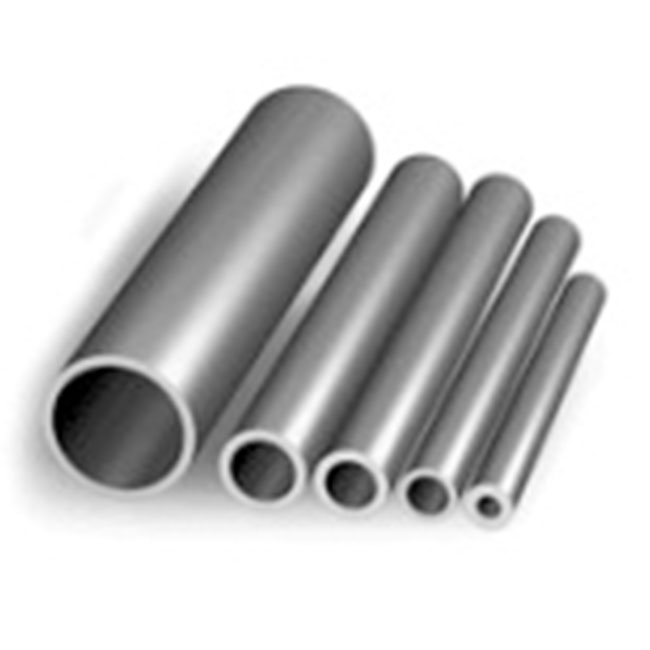
Core Performance Metrics: Specifications that Drive Outcomes
Specifying a Durable Stainless Automotive Tube requires strict attention to metrics. Vague requirements lead to assembly line failures. Engineers must define precise numerical parameters. These specifications directly dictate how the tubing behaves in the real world.
Dimensional Accuracy & Tolerances
Precision is non-negotiable in modern manufacturing. Outside Diameter (OD) and Wall Thickness (WT) tolerances dictate automated assembly success. Robotic welding cells require perfectly round tubes. Any deviation in ovality causes poor weld penetration. Inconsistent wall thickness leads to burn-through during TIG welding. Tight dimensional control directly impacts assembly line efficiency. It reduces scrap rates significantly.
Corrosion Resistance Benchmarks
You cannot guess a material's environmental durability. Engineers evaluate the Pitting Resistance Equivalent Number (PREN). This mathematical formula uses chromium, molybdenum, and nitrogen levels to predict pitting resistance. A higher PREN indicates better survival in coastal regions. It ensures the metal withstands heavy road-salt exposure during winter months. Dry climates allow for lower PREN specifications safely.
Mechanical Properties
Vehicles endure constant dynamic road vibrations. Tubing must absorb this kinetic energy without failing. We assess Yield Strength and Tensile Strength limits rigorously. Yield strength tells us when the metal will permanently bend. Tensile strength indicates when it will tear apart. High mechanical properties ensure the tube withstands continuous stress. This prevents catastrophic metal fatigue over a ten-year vehicle lifespan.
Implementation Realities and Fabrication Risks
Even the finest metal can fail during the manufacturing process. Tube bending, hydroforming, and welding introduce severe mechanical stress. Fabrication teams must understand the metallurgical behavior of their chosen alloys. Proper tooling and techniques prevent costly scrap.
Work Hardening Challenges
Metals change their physical properties when deformed. Austenitic stainless tubes harden rapidly during cold working processes. CNC rotary draw bending stretches the outer edge of the tube. We call this outer edge the extrados. Rapid work hardening causes the extrados to crack under tension. The inner radius can wrinkle simultaneously. This reality requires specialized tooling. Fabricators must utilize precision mandrel materials. They also need specific high-pressure lubricants to reduce friction during bending.
Welding and Joining
Joining tubes introduces intense, localized heat. This heat causes a phenomenon known as sensitization. Carbon molecules migrate to the grain boundaries during welding. They combine with chromium to form carbides. This depletes the surrounding area of protective chromium. It leads directly to intergranular corrosion. Engineers mitigate this risk actively. They specify low-carbon grades like 316L. They also utilize precise orbital TIG welding techniques to minimize the heat-affected zone.
Weight vs. Strength Trade-offs
Lightweighting remains a universal automotive goal. Stainless steel is inherently denser than aluminum. However, its mechanical properties offer a distinct advantage. The high yield strength of stainless steel allows engineers to utilize thinner wall thicknesses. You can reduce the material mass significantly. This strategy successfully offsets the initial weight penalty. Furthermore, thinner stainless walls easily maintain high burst-pressure ratings. They outperform thicker aluminum counterparts in high-pressure fluid routing applications.
Fabrication Risk Mitigation Chart | Fabrication Process | Primary Risk | Engineering Solution |
| CNC Tube Bending | Extrados Cracking / Wrinkling | Use bronze mandrels and synthetic lubricants. |
| Orbital Welding | Sensitization (Carbide Precipitation) | Specify Low-Carbon (L-grade) alloys. |
| Hydroforming | Uneven Wall Thinning | Optimize initial WT tolerances strictly. |
Shortlisting Logic: Criteria for Automotive Tube Suppliers
Sourcing raw materials carries immense liability. A single bad batch of tubing can trigger a massive vehicle recall. Procurement teams must scrutinize prospective mills thoroughly. Supplier evaluation goes far beyond simple unit pricing. It demands rigorous quality assurance verification.
Compliance & Certification
Automotive supply chains operate on strict quality standards. Mandatory adherence to IATF 16949 is the absolute baseline. This standard ensures the supplier utilizes a robust quality management system. Furthermore, the material itself must meet international norms. Suppliers must guarantee compliance with ASTM A269/A213 or DIN EN 10312. These certifications prove the metal meets expected metallurgical baselines.
Traceability
Defects occasionally slip through the tightest controls. When a failure occurs, isolation is critical. Suppliers must provide full heat lot traceability. This tracking must follow the metal from the raw billet stage down to the finished tube. Complete traceability allows OEMs to isolate potential manufacturing defects quickly. It contains the fallout to a specific batch of vehicles. This capability prevents widespread panic and limits brand damage.
In-House Testing Capabilities
Trust requires verification. You should demand verifiable non-destructive testing (NDT) data. Require suppliers to provide proof of 100% Eddy Current Testing (ECT) before shipment. ECT detects hidden longitudinal cracks in the weld seam. Hydrostatic testing guarantees the tube will not leak under intense fluid pressure. Dimensional laser profiling ensures absolute OD and ovality perfection. Only partner with mills possessing these robust in-house testing capabilities.
Conclusion
Transitioning to higher-grade materials is no longer optional. It represents a necessary adaptation to modern automotive reliability standards. Vehicle lifespans are increasing. Emission regulations are tightening globally. Using a Durable Stainless Automotive Tube protects vital systems from premature failure.
Ultimate success relies on precise engineering alignment. You must map the exact environmental and thermal stressors to the appropriate alloy grade. Ferritic metals handle the heat. Austenitic metals handle the chemicals. You must also partner with a manufacturer capable of holding tight metallurgical constraints. Dimensional tolerances dictate your assembly line efficiency.
Next Step: Action is required to leverage these materials successfully. Engineers should initiate a design-for-manufacturability (DFM) review immediately. Engage with prospective tube mills directly. Test specific material formability limits against your exact part geometries to guarantee production readiness.
FAQ
Q: Is stainless steel always better than aluminized steel for exhaust systems?
A: Aluminized steel is cost-effective for dry, moderate-temperature applications. However, for modern vehicles with extended warranties and higher exhaust temperatures, 409 or 439 stainless steel is required. It prevents premature structural failure and heavy scaling over the vehicle's lifespan.
Q: What is the difference between 304 and 316L in automotive applications?
A: Both are highly durable, but 316L contains molybdenum. This addition significantly boosts its resistance to chloride-induced pitting from road salts. 316L is typically reserved for critical fluid lines or extreme environments. Grade 304 handles general high-corrosion applications effectively.
Q: How does the wall thickness of a durable stainless automotive tube affect bending?
A: Thinner walls reduce overall vehicle weight drastically. However, they increase the risk of wrinkling during tight-radius bends. Precision mandrels and specialized wiper dies are absolutely required to maintain tube ovality and structural integrity during fabrication.


