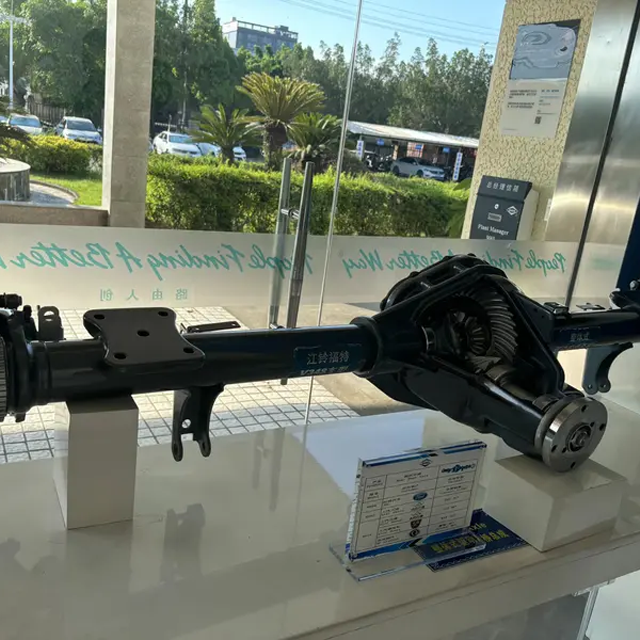
Rear-end collisions present critical stakes for modern vehicle safety. Automotive structural engineers must protect the sensitive fuel system constantly. They must prevent irreversible chassis deformation during severe impacts. They also need to mitigate dangerous occupant whiplash effectively. Standard metal stamping or unreinforced beams often fail to meet these demanding modern requirements. They struggle to satisfy aggressive lightweighting goals without compromising essential energy absorption thresholds.
Integrating a precisely engineered Reinforced Auto Rear Beam Tube bridges this critical engineering gap. It perfectly balances vehicle weight reduction targets with stringent global crash compliance mandates. You need robust tubular components to ensure complete unibody integrity. This detailed guide will evaluate the structural mechanics behind these advanced impact beams. We will explore complex material evaluation criteria deeply. We will also outline the strict supplier vetting requirements needed for sourcing high-performance reinforced rear beam components.
Key Takeaways
Structural Role: Reinforced beam tubes localize deformation, protecting critical structural nodes and fuel lines from catastrophic kinetic energy transfer.
Compliance Baseline: Quality components are essential for passing stringent rear-impact regulations, including FMVSS 301 (Fuel System Integrity).
Evaluation Criteria: Selecting the right tube requires balancing yield strength, energy absorption rates, and mounting point compatibility.
Sourcing Risk: Implementation success depends on a manufacturer’s advanced tube engineering capabilities, including precise heat treatment and FEA (Finite Element Analysis) validation.
The Engineering Challenge: Mitigating Rear-End Collision Damage
Kinetic energy creates massive destructive potential during high-speed rear impacts. Modern passenger vehicles travel at higher average speeds today. They also carry significantly heavier battery payloads. This combination exponentially increases total collision energy. Vehicles must absorb this violent energy before it reaches the unibody structure. If raw crash energy penetrates the passenger cabin, occupant injury risk surges. When a trailing vehicle strikes, the impact generates a sudden, violent shockwave. A poorly designed bumper system fails almost instantly. It allows this dangerous kinetic energy to bypass exterior crumple zones completely.
The physical consequences of component failure are exceptionally severe. Sub-par rear beams lead to cascading structural failures. The physical damage spreads rapidly across the entire vehicle platform. You risk irreversible structural frame and chassis deformation. The rear vehicle subframe takes the brunt of the unabsorbed force. Suspension geometry suffers severe and permanent misalignment. This drastic misalignment compromises vehicle drivability completely. We see massive chassis disruption when impact forces penetrate the main longitudinal rails. Structural integrity vanishes once the primary chassis load paths buckle.
Regulatory pressures heavily influence modern vehicle structural design. Automakers face evolving global safety standards constantly. Safety authorities mandate stricter crash survivability targets every single year. For instance, FMVSS 301 mandates extremely strict fuel system protection. Vehicles must survive specific rear-impact testing speeds without any fuel leakage. Passing these dynamic sled tests requires predictable kinetic energy dissipation. This strict compliance requirement makes robust rear architecture an absolute necessity. You simply cannot achieve modern safety compliance using outdated metal stamping methods.
Core Mechanics: How a Reinforced Auto Rear Beam Tube Absorbs Impact
Automotive safety structures rely heavily on engineered controlled deformation. They must manage violent crash energy effectively and predictably. A highly engineered Reinforced Auto Rear Beam Tube acts as a primary, heavy-duty crush zone. Engineers design these tubular steel or aluminum structures to yield predictably under extreme stress. They turn raw kinetic energy into localized, controlled material deformation. The metal bends and folds in a highly calculated manner. This specific process prevents sudden, violent force transfer directly into the passenger cabin.
Cross-sectional engineering plays a vital role in this yielding process. Specific geometric tube profiles deliver superior bending stiffness. Traditional open-profile stamped beams twist and buckle prematurely. They lose their structural shape under high-speed impact loads. In contrast, closed continuous tubes perform significantly better. They utilize variable wall thickness and internal geometric ribbing structures. These internal features maximize structural resistance against multi-directional bending moments. They keep the safety beam intact longer during the initial heavy strike.
Proper load path distribution determines overall passenger crash survivability. The rear beam interacts seamlessly with adjacent deformable crash boxes. It also connects directly to the longitudinal vehicle chassis rails. We can map the entire energy dissipation process through several distinct physical stages:
The initial impact force strikes the reinforced tube surface directly.
Localized surface yielding begins instantly upon metal contact.
The internal tube geometry resists immediate catastrophic buckling.
The tube distributes the concentrated impact force outward horizontally.
Kinetic energy transfers into the adjoining modular crash boxes.
These specific boxes trigger a progressive, accordion-like crushing action.
Residual forces spread evenly across the vehicle's entire longitudinal architecture.
This highly engineered load path protects vital automotive components efficiently. It keeps the volatile fuel tank completely isolated from the violent crash pulse. It also shields rear-mounted battery architectures from direct kinetic intrusion.
Material Selection and Tube Engineering Standards
Material selection dictates the ultimate safety threshold of your vehicle's rear architecture. You must perfectly balance material strength, component weight, and large-scale manufacturability. Automotive structural engineers typically choose between high-strength steel grades and advanced aluminum alloys. Each material category offers distinct physical advantages and unique engineering challenges.
High-strength steel remains a highly cost-effective and structurally reliable option. It provides exceptional peak load capacity for heavy vehicle platforms. Heavy-duty trucks and large passenger SUVs rely heavily on this raw strength. However, traditional steel alloys add significant unsprung weight to the chassis. Advanced aluminum alloys offer incredible specific energy absorption metrics instead. They provide massive structural lightweighting benefits for modern electric vehicles. EV manufacturers desperately need these weight savings to extend their battery range. Yet, aluminum requires complex extrusion methods. It also demands specialized metal joining techniques to prevent brittle structural fractures.
Performance Comparison: High-Strength Steel vs. Advanced Aluminum Alloys
Material Characteristic
High-Strength Steel
Advanced Aluminum Alloys
Peak Load Capacity
Exceptional for heavy platforms
Moderate to High
Lightweighting Benefit
Minimal to Low
Excellent for EVs
Specific Energy Absorption
Standard baseline efficiency
Highly efficient per kilogram
Manufacturing Complexity
Standard welding and stamping
Complex custom extrusion required
Joining Requirements
Traditional industrial spot welding
Adhesives or specialized mechanical rivets
Advanced forming processes elevate base metal material properties significantly. Manufacturing techniques like hydroforming reshape the metal entirely from the inside out. They use highly pressurized fluid to expand tubes tightly into complex dies. Specialized heat treatments modify the internal metallurgical grain structure safely. Cold drawing processes refine the exterior dimensional accuracy of the tube. These combined manufacturing methods dramatically increase both ultimate tensile strength and dynamic yield strength.
Defect tolerance serves as another absolutely critical engineering standard. Impact beams experience immense internal stress during high-speed vehicle collisions. Even microscopic internal fractures cause catastrophic component failure instantly. We emphasize the critical importance of utilizing seamless metal tubing. High-frequency welded (HFW) tubes also provide excellent structural reliability. High-quality HFW processes ensure the longitudinal weld seam matches the parent material strength perfectly. This deliberate engineering prevents the tube from splitting open along the weld upon sudden impact.
Validating Performance: FEA Modeling and Physical Crash Testing
Digital structural validation must always precede expensive physical prototyping phases. Procurement teams should require rigorous Finite Element Analysis (FEA) data from all component suppliers. FEA software simulates exactly how a component reacts to various high-speed crash scenarios. It reveals hidden stress concentrations extremely early in the component design phase. It also highlights potential material failure points before any metal gets cut. Relying purely on physical prototypes wastes valuable engineering time. It inflates product development budgets unnecessarily.
You must carefully evaluate specific energy absorption metrics within supplier data packages. Do not simply look at generic material tensile strength ratings. Analyze the absolute peak force limits the structural tube can endure safely. It must resist catastrophic bending under maximum impact load. Review the total kinetic energy absorbed during the entire dynamic crush event. Examine the maximum allowable intrusion distance dictated by the rear beam geometry. These precise numerical metrics determine regulatory compliance. They confirm if the part protects the fuel system adequately.
Standardized testing protocols separate elite manufacturers from average tier-two suppliers. A reputable component manufacturer aligns their internal testing completely. They match rigid OEM physical sled testing requirements perfectly. They conduct dynamic physical sled testing constantly to gather real-world data. This physically replicates real-world, high-speed vehicle crash pulses accurately. They also integrate their proprietary 3D tube models into full-vehicle crash simulation software. This comprehensive digital and physical validation approach ensures total success. The final produced part meets critical safety benchmarks seamlessly every time.
Implementation Risks: Vetting Your Reinforced Auto Rear Beam Tube Supplier
Sourcing a high-performance crash component carries significant structural implementation risks. You must evaluate potential supply partners thoroughly. Assess their manufacturing experience and automated quality control infrastructure critically. Do not underestimate the inherent complexity of large-scale automotive production.
Assembly and vehicle integration challenges frequently derail OEM production timelines. Welding reinforced metal tubes to dissimilar chassis metals requires highly specialized techniques. Joining lightweight aluminum tubes to a traditional steel vehicle platform poses distinct difficulties. It demands advanced structural adhesives or complex mechanical fasteners. Galvanic corrosion between dissimilar metals degrades structural joints over time. Your chosen component supplier must demonstrate deep metallurgical expertise here. They must excel in managing these complex, multi-material integration scenarios reliably.
Manufacturing scalability and strict dimensional tolerances pose another major risk. Batch-to-batch variance in metal tube wall thickness degrades overall performance. Inconsistent metal tempering ruins crash predictability entirely. Automated quality control represents an absolute non-negotiable supplier capability. You need totally consistent parts for every single vehicle rolling off the line.
When vetting potential supply partners, evaluate these strict operational metrics closely:
Inline Ultrasonic Testing: This automated process ensures absolutely zero hidden structural defects. It scans the entire tube wall and weld seam continuously during production.
Automated Dimensional Scanning: Advanced laser systems verify every single production batch. They ensure tubes meet strict geometric and curvature tolerances perfectly.
Comprehensive Material Traceability: Advanced tracking software monitors exact raw alloy compositions. It logs exact heat treatment cycles for every single physical component.
Tolerance Stack-Up Analysis: The supplier must clearly prove their component integrates perfectly. It must fit within the broader rear vehicle assembly framework without binding.
Tooling budgets and manufacturing lead times also impact vehicle project feasibility directly. Custom geometric tube shapes require dedicated hardened steel dies. They often need highly specialized extrusion mandrels. You must evaluate a partner's capacity to customize tube profiles efficiently. They should achieve this customization without charging exorbitant upfront tooling costs. A seasoned automotive tier-1 supplier utilizes intelligent modular tooling strategies. This smart approach accelerates early prototyping significantly. It actively prevents delayed mass production schedules.
Conclusion
A reliable Reinforced Auto Rear Beam Tube functions as far more than a simple metal commodity. It acts as a highly engineered, truly safety-critical automotive component. It dictates the structural survivability of severe rear-end passenger impacts.
Corporate buyers must prioritize dedicated manufacturers that offer completely transparent FEA validation data. You should demand proven material science expertise from your engineering partners. Your internal decision matrix must weigh strict dimensional tolerances heavily against basic unit costs. Compromising on raw material integrity jeopardizes entire vehicle platforms immediately.
Take proactive steps to secure your automotive supply chain today. Automotive engineers and tier-1 procurement teams should request a comprehensive technical consultation with prospective manufacturers. Review their detailed material data sheets to verify physical yield strengths. Submit your vehicle CAD files for an immediate structural manufacturability assessment. Securing the right manufacturing partner guarantees both global compliance and structural excellence.
FAQ
Q: How does a reinforced auto rear beam tube affect overall vehicle weight?
A: Reinforcement adds localized structural mass to the rear chassis. However, advanced tube geometries offset this addition beautifully. Techniques like variable wall thickness put material strictly where maximum stress concentrates. This highly optimized structural approach often results in a net weight saving compared to traditional multi-piece stamped steel assemblies.
Q: What data should I request to verify FMVSS 301 compliance potential?
A: You must require highly detailed validation documents from your component supplier. Advise requesting component-level dynamic physical crush test data. Ask for comprehensive FEA energy dissipation models mapping the entire impact pulse. Finally, demand certified material yield strength documents to ensure the metal strongly prevents fuel system intrusion.
Q: Can reinforced tubes be customized for EV battery protection?
A: Yes, they are incredibly customizable. Rear beam designs can adapt specific material crush zones to limit structural intrusion tightly. Engineers tailor the tube cross-section to stop impact energy well before it reaches sensitive electrical areas. This specifically protects rear-mounted battery modules in modern electric vehicles from dangerous puncture or thermal runaway.