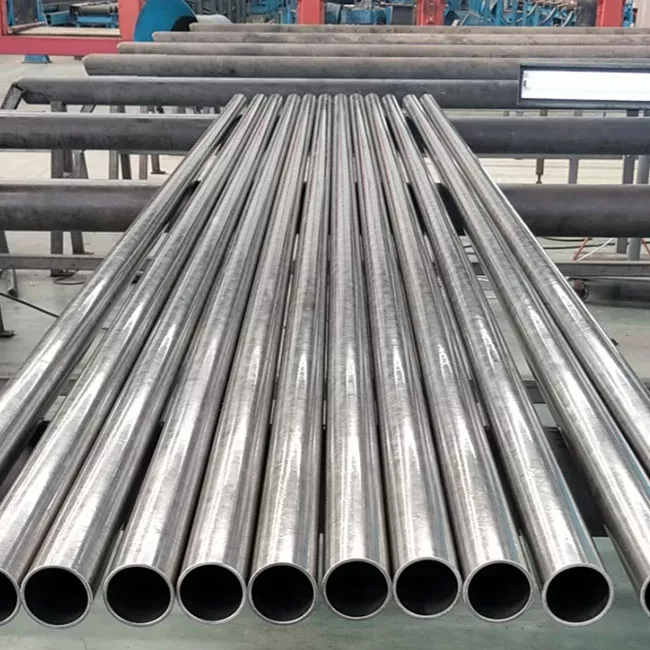
In the relentless pursuit of automotive excellence, where safety, efficiency, and longevity are paramount, the components that operate beneath the hood are more critical than ever. Among these unsung heroes, Stainless Automotive Tube stands out as a fundamental element, serving as the unseen backbone of vehicle fluid dynamics. This specialized tubing is far more than just a conduit; it is an engineered solution providing the structural integrity necessary to manage high-pressure, high-temperature, and corrosive environments inherent in both traditional and next-generation vehicle architectures.
Modern vehicles—whether powered by sophisticated combustion engines, advanced hybrid systems, or cutting-edge electric powertrains—place unprecedented demands on material science. Components must not only withstand the immediate rigors of daily driving but must also guarantee operational reliability over a lifespan often exceeding a decade. For critical applications such as braking systems, fuel delivery lines, oil circulation, and exhaust systems, the failure of a single tube can lead to catastrophic consequences. This reality solidifies high-quality, durable stainless steel as the non-negotiable choice for manufacturers prioritizing performance, safety, and sustainable operation.
The Unseen Backbone: Precision Engineering for Automotive Fluid Dynamics
The operational efficiency of any vehicle hinges on the reliable transfer of fluids and gases under varying conditions. The shift toward smaller, turbocharged engines and higher-pressure fuel injection systems has dramatically intensified the mechanical and thermal stress placed upon internal components. Traditional materials often succumb to fatigue, corrosion, or thermal degradation, leading to leaks, performance dips, and costly maintenance.
Stainless Automotive Tube overcomes these challenges through its inherent material superiority and precision fabrication. Unlike carbon steel or lower-grade alloys, stainless steel’s composition—particularly its chromium content—forms a passive, self-repairing oxide layer that acts as an impenetrable shield against environmental attack. This characteristic is vital for applications exposed to road salt, chemical de-icers, engine bay heat cycles, and corrosive exhaust gases.
The demand for enhanced performance has concurrently driven a need for extremely precise tubing tolerances. Fuel lines, for instance, must maintain absolute consistency in inner diameter and wall thickness to ensure accurate fuel metering and optimal engine combustion. Similarly, hydraulic systems, including anti-lock braking and stability control components, rely on flawless, pressure-rated tubing to ensure instantaneous and consistent response. The engineering standard today is not merely "leak-proof" but "failure-proof" under extreme dynamic loads, a requirement only met by expertly cold-drawn, seamless stainless steel tubing.
Longevity and Durability: Meeting the Automotive Lifecycle Imperative
For fleet operators and OEMs, the total cost of ownership (TCO) is a crucial metric, heavily influenced by component lifespan and maintenance frequency. When a vehicle’s expected lifecycle extends beyond 150,000 miles, every component must be specified to last the duration. Stainless steel delivers this longevity, offering a compelling return on investment by significantly reducing warranty claims and unexpected service requirements associated with material failure.
The superior strength-to-weight ratio of high-grade stainless steel also allows for tubing with optimized wall thicknesses, contributing to overall vehicle mass reduction without compromising safety. This is a critical factor in the drive toward higher fuel economy and increased battery range in modern vehicles.
Engineered Resilience in Critical Applications
Corrosion-Resistant Brake Lines: Brake lines are perhaps the most safety-critical application. Exposed to moisture, dirt, and chemicals, conventional materials are susceptible to premature rust and subsequent failure. Stainless steel offers virtually maintenance-free operation for the lifetime of the vehicle, providing peace of mind to both the manufacturer and the end-user.
High-Pressure Fuel Injection: Modern GDI (Gasoline Direct Injection) and common rail diesel systems operate at extremely high pressures (up to 30,000 PSI). The tubing used must resist pressure-induced cracking and material creep. High-performance stainless steel tubing with tight dimensional control is the only viable option to manage these high-energy demands safely.
Exhaust and Emission Systems: High-temperature stainless alloys are essential for catalytic converter components and exhaust manifolds, where temperatures can exceed 1000°C. These systems must also resist the acidic condensate produced during engine warm-up, ensuring the long-term integrity required to meet increasingly strict global emission standards.
Stainless Steel in Next-Generation Vehicle Systems (EVs and Hybrids)
The electrification of the automotive industry does not diminish the need for robust fluid transfer solutions; it merely shifts the application focus, making the choice of material even more critical. Electric vehicles (EVs) rely heavily on advanced thermal management systems to ensure the safety and optimal performance of their high-capacity battery packs.
Battery cooling loops require highly reliable, non-reactive, and lightweight tubing to circulate coolant efficiently across the battery cells. Leakage in these systems can lead to catastrophic thermal events or long-term battery degradation. Custom stainless steel tube fabrication is perfectly suited for this demanding role, providing:
Chemical Inertness: Stainless steel does not react with various coolants, preventing contamination and preserving the cooling system’s integrity.
Structural Rigidity: It provides necessary mechanical protection for the cooling lines as they are routed through the vehicle chassis, protecting against vibration and road debris.
Weld Integrity: High-quality welding processes ensure that complex cooling circuits can be assembled reliably and permanently, minimizing the risk of failure in the tightly packed battery enclosures.
Furthermore, as the industry explores hydrogen fuel cell vehicles (FCEVs), the need for ultra-high-pressure, zero-permeability tubing becomes mandatory. Stainless steel, especially high-nickel austenitic grades, is the material of choice for safe and efficient hydrogen storage and delivery lines, underscoring its relevance across the entire spectrum of future mobility.
Precision Manufacturing and Quality Assurance: The Difference Maker
While the selection of the correct stainless steel grade (e.g., 304, 316, or specialized high-heat alloys) is foundational, the performance of the final component is ultimately determined by the precision of its fabrication. Manufacturing excellence is what transforms raw material into automotive fluid transfer solutions that meet OEM specifications.
The Hallmark of Quality Fabrication
Seamless vs. Welded: For the highest pressure and integrity demands, seamless stainless steel tubing offers superior circumferential strength and uniformity, eliminating the potential weak point inherent in a welded seam.
Precision Bending and Forming: Modern vehicle platforms require extremely complex tubing geometries. Advanced cold-forming and CNC bending techniques are essential to produce parts with precise radii and minimal wall thinning, ensuring perfect fit and hydraulic performance without compromising the material’s structural integrity.
Cleanliness Standards: Automotive tubing must be delivered internally clean, especially for fuel and hydraulic systems, to prevent particulate contamination from entering sensitive valves and injectors. State-of-the-art cleaning and passivation processes are non-negotiable steps in quality assurance.
The complexity of modern vehicle systems necessitates a manufacturing partner capable of delivering not just a product, but a reliable engineering solution. Our dedication to strict dimensional tolerances, advanced metallurgical testing, and customized production runs ensures that every tube segment contributes flawlessly to the vehicle’s intended performance envelope.
Partnering for Automotive Excellence
The demands of the modern automotive industry require materials and manufacturing partners that can deliver absolute reliability and forward-thinking solutions. Choosing high-specification Stainless Automotive Tube is a direct investment in vehicle safety, long-term operational efficiency, and minimized environmental impact. Our focus is solely on providing the highest quality, custom-engineered stainless steel tubing solutions that integrate seamlessly into your most critical applications, thereby accelerating your product development and securing your competitive advantage.
Contact us today to discuss your specific high-performance tubing requirements, including custom alloys, dimensional specifications, and specialized fabrication needs. Let our expertise in precision stainless steel be the foundation for your next generation of vehicle performance.


