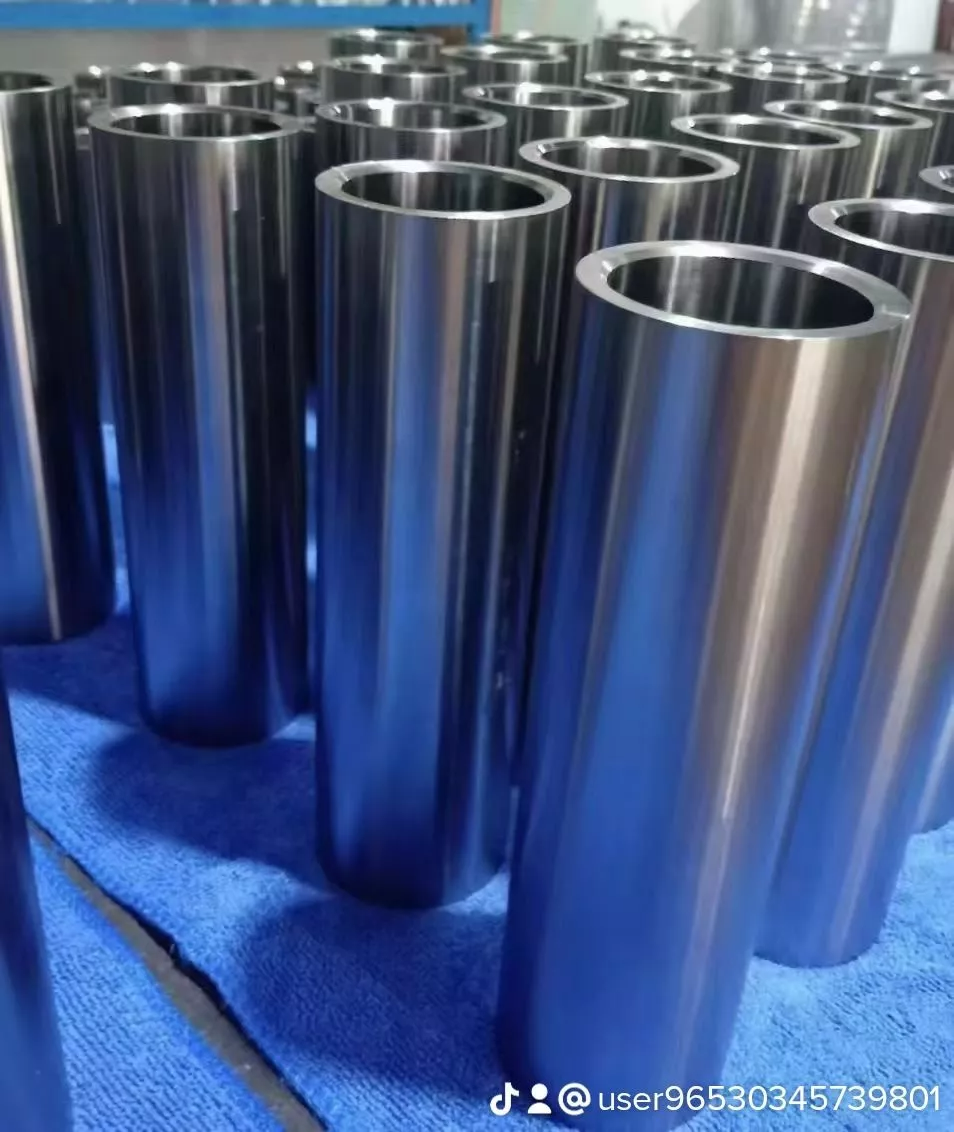
Modern automotive chassis engineering demands a strict balance. Designers must meet stringent crash-safety regulations, optimize vehicle dynamic performance, and hit aggressive lightweighting targets. These targets are especially critical for modern electric vehicle (EV) platforms. Traditional heavy solid or stamped assemblies often struggle to meet these conflicting demands. Consequently, high-strength hollow-form tubing in the ante (front) fender and subframe areas has emerged as a highly effective structural solution. It replaces older, bulkier materials without sacrificing passenger safety.
This article provides engineers and procurement specialists a clear breakdown of the operational and commercial benefits of specifying these high-strength components. You will discover actionable evaluation criteria for material selection. We will also explore how upgrading structural elements ensures your next vehicle platform achieves both safety and production efficiency.
Key Takeaways
High-strength car ante fender tubes drastically improve torsional rigidity without adding unsprung mass.
Tubular hollow forms optimize energy dissipation during front-quarter impacts, aiding in crash standard compliance.
Specifying industry-standard materials, such as the ASTM A519 Car Ante Fender Tube, ensures predictable weldability and dimensional consistency.
Steel tubing offers a superior cost-to-performance ratio for mass-produced platforms compared to titanium or carbon-fiber alternatives.
Sourcing decisions must prioritize supplier metallurgical certifications and strict dimensional tolerance capabilities.
Benefit 1: Enhancing Torsional Rigidity in the Front Subframe
The Engineering Reality
The front fender and shock tower areas handle severe cornering loads. When a vehicle enters a sharp turn, lateral forces transfer directly into the chassis. Flex in this critical zone severely degrades steering response. Drivers experience this as vague handling or unpredictable feedback. To maintain precise suspension geometry, the underlying structure must resist twisting forces entirely.
The Structural Advantage
Hollow circular or profiled tubes provide a significantly higher polar moment of inertia compared to open C-channels or stamped sheet metal of the exact same weight. This mathematical advantage means the material distributes further from the central axis. Using a Car Ante Fender Tube maximizes stiffness while minimizing mass. Open channels simply cannot resist torsion as effectively because they lack a continuous outer boundary.
The Performance Outcome
Upgrading to high-strength tubing minimizes chassis flex under dynamic loads. This upgrade translates directly to predictable handling and stable suspension geometry. A rigid front end allows the shock absorbers and springs to do their job without chassis distortion interfering. Engineers can then tune the suspension much more precisely.
Best Practices and Common Mistakes
Gains in rigidity depend heavily on the quality of node joints and assembly welding techniques.
Best Practice: Use finite element analysis (FEA) to optimize joint angles before finalizing the tube profile.
Common Mistake: Relying on high-strength tubes but using weak gussets. The joint will fail long before the tube reaches its yield point.
Benefit 2: Optimizing Crashworthiness and Energy Mitigation
The Safety Compliance Lens
Ante fender structures serve as critical paths for distributing frontal and offset-impact forces away from the passenger cell. Modern safety standards, like the IIHS small overlap front test, punish vehicles lacking robust front-quarter structures. The chassis must absorb massive amounts of kinetic energy in milliseconds.
Yield and Deformation Mechanics
High-strength tubes undergo controlled plastic deformation perfectly. Engineers can tune wall thickness and select specific material grading to dictate exactly how the tube crushes. A hollow tube collapses in a predictable accordion-like pattern. This folding action absorbs kinetic energy far more efficiently than a solid bar, which often bends and transfers raw shock directly into the cabin.
Real-World Application
In modern EV architectures, effective energy mitigation prevents catastrophic intrusion into the firewall or battery compartments. Battery cells react violently to physical puncture. Utilizing tubular structures in the front fender area creates a dedicated crumple zone. It safely bleeds off crash energy before it ever reaches volatile electrical components.
Benefit 3: Achieving Aggressive Lightweighting Targets
The Mass Penalty Problem
Traditional heavy-gauge stamped assemblies add unnecessary weight. This extra mass penalizes internal combustion engine fuel efficiency. For electric vehicles, it directly limits battery range. Heavy front ends also create an unbalanced vehicle, leading to understeer and faster tire wear.
Hollow Form Efficiency
Thin-wall, high-tensile tubing removes "dead material" located at the neutral axis. Bending stress reaches its maximum at the outer surface of a material and drops to zero at the center. Solid bars carry useless weight in their center. Hollow tubes put the strength exactly where you need it.
Outcome Metrics
Adopting high-strength tubes allows design teams to shave critical kilograms off the front end. This process delivers several measurable benefits:
Improved Weight Distribution: Shifting mass away from the nose helps achieve an ideal 50/50 front-to-rear balance.
Enhanced Acceleration: Less mass requires less energy to move, improving off-the-line performance.
Extended EV Range: Every kilogram saved translates to incremental gains in battery efficiency and overall travel distance.
Benefit 4: Ensuring Manufacturing Consistency and Weldability
The Role of Standardization
Utilizing an ASTM A519 Car Ante Fender Tube guarantees known mechanical properties. This standard covers seamless carbon and alloy steel mechanical tubing. It provides engineers a reliable baseline for yield strength, tensile strength, and carbon content. Predictable materials remove guesswork from the manufacturing floor.
Seamless vs. Welded Variants
Seamless variants offer uniform radial strength. They eliminate the failure risks associated with seam-weld defects during secondary bending or hydroforming processes. Seam-welded tubes sometimes split under extreme forming pressures. Seamless tubes expand and bend uniformly.
Feature | Seamless Tubing (ASTM A519) | Welded Tubing (ERW) |
Radial Strength | Highly uniform across all axes. | Varies slightly at the weld seam. |
Hydroforming | Excellent. Expands evenly without tearing. | Risk of splitting if weld quality is poor. |
Wall Tolerance | Slightly wider tolerance range. | Highly precise wall thickness. |
Crash Yield | Predictable crush zones. | May buckle unevenly along the seam. |
Assembly Line Reality
Predictable metallurgy ensures automated robotic welding cells maintain high throughput. Consistent carbon content means minimal rework or burn-through rates. When automated welders encounter varying material densities, spatter and weak joints occur. Standardized tubing keeps production moving flawlessly.
Benefit 5: Scaling the Cost-to-Performance Ratio
The Commercial Assessment
Exotic materials like titanium, aluminum extrusions, and carbon fiber offer higher ultimate strength-to-weight ratios. However, their material and processing costs strictly prohibit use in high-volume production. Carbon fiber requires slow curing times. Titanium demands specialized welding environments. Neither suits mass-market assembly lines.
The Steel Advantage
Advanced high-strength steel (AHSS) tubing hits the "sweet spot" for mid-tier to premium consumer vehicles. It delivers approximately 80% of the structural performance of exotic alloys at a fraction of the cost. Steel remains abundant, highly recyclable, and familiar to existing manufacturing infrastructure.
Lifecycle Cost and Repairability
High-strength steel provides easier repairability post-collision compared to composite structures. Carbon fiber splinters and shatters during an impact, requiring complete subframe replacement. Steel tubes bend. Shops can cut, sleeve, and re-weld steel structures safely. This ease of repair lowers insurance classification groups for the end consumer, making the vehicle more attractive in the marketplace.
Specifying and Sourcing: A Decision-Stage Framework
Selecting the right supplier ensures your design performs properly in the real world. Procurement specialists must evaluate vendors rigorously to avoid line-down situations or catastrophic structural failures.
Evaluation Criteria
Use this framework when assessing tube mills and suppliers:
Material Test Reports (MTRs): Mandate full traceability. You need certified data detailing chemical composition and mechanical properties like tensile strength, yield strength, and elongation limits.
Dimensional Tolerances: Assess the supplier's capability to maintain strict outside diameter (OD), inside diameter (ID), and wall thickness consistency. Poor tolerances cause severe assembly line bottlenecking when tubes fail to fit into welding jigs.
Secondary Processing Capabilities: Evaluate whether the supplier provides pre-bent, laser-cut, or hydroformed tubes. Outsourcing these steps reduces your internal manufacturing burden and shortens the supply chain.
Risk Mitigation
Always avoid commodity-grade tubes with undocumented origins. Unverified materials often contain impurities causing brittle welds. Specify exact ASTM, DIN, or JIS standards on your purchase orders. This prevents structural failures in edge-case load scenarios and protects your brand reputation.
Conclusion
High-strength car ante fender tubes serve as far more than structural filler. They act as engineered solutions resolving the intense tension between vehicle weight, safety compliance, and manufacturing scalability. By adopting hollow-form designs, automakers can protect EV battery payloads and improve dynamic handling.
Chassis engineering teams should take the following actionable next steps:
Audit your current bill of materials (BOM) to identify heavy stamped assemblies ripe for replacement.
Compare the torsional data and mass of your existing stamped parts against tubular alternatives.
Initiate material sampling programs with certified tube mills to test weldability on your current automated lines.
Review crash simulation data using seamless tubing profiles to verify energy mitigation improvements.
FAQ
Q: What is the difference between seamless and welded tubing for fender structures?
A: Seamless tubing is extruded without a seam, offering uniform structural integrity under multi-axial loads. It undergoes predictable crash deformation without the risk of seam splitting. Welded tubing is rolled and welded, which can introduce a weak point at the seam if not manufactured perfectly, potentially compromising energy absorption during impacts.
Q: Why specify ASTM A519 for chassis tubing?
A: ASTM A519 outlines standardized mechanical properties, tight tolerances, and predictable carbon and alloy compositions. Specifying this standard ensures the tubing meets the rigorous yield and tensile requirements necessary for automotive mechanical applications, guaranteeing consistent welding and bending behavior on the assembly line.
Q: Can high-strength steel tubing compete with aluminum in EV platforms?
A: Yes. While aluminum is lighter by volume, high-strength steel offers a superior volume-to-strength ratio. In space-constrained EV platforms, modern thin-wall high-strength steel tubing often matches aluminum’s weight targets while providing better intrusion resistance for battery compartments at a significantly lower manufacturing cost.


