High-pressure systems demand reliable heat transfer and strong materials. But what keeps these systems safe under extreme heat and pressure? The answer often lies in the Boiler Tube design and material choice. In this article, you will learn how stainless steel boiler tubes improve safety, efficiency, and durability in modern industrial heat exchangers.
Understanding the Role of Boiler Tubes in Industrial Heat Exchangers
What Is a Boiler Tube and How It Works
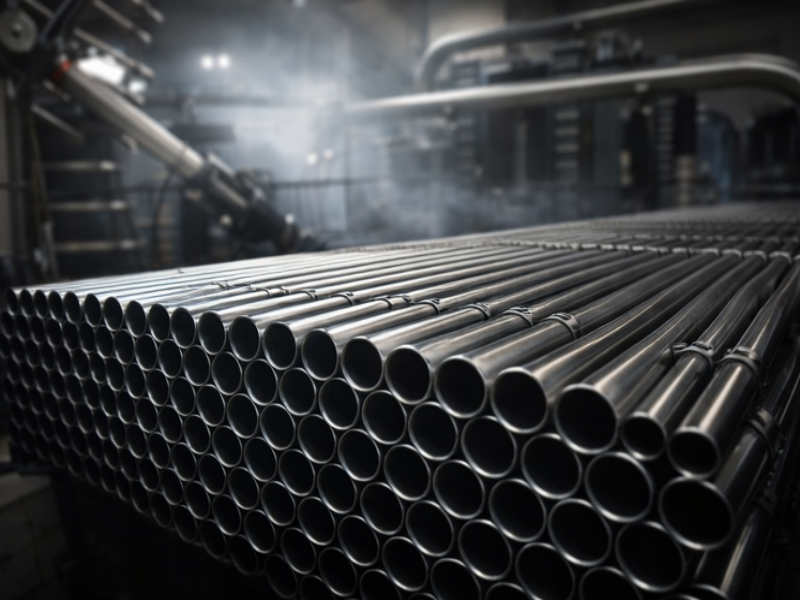
In industrial heat transfer equipment, the boiler tube serves as the core pathway through which thermal energy moves from one medium to another. These tubes are widely used in boilers and shell-and-tube heat exchangers, where two fluids exchange heat while remaining physically separated. Typically, one fluid flows through the inside of the tube (tube side), while another circulates around the outside within the shell (shell side). The tube wall acts as the conductive barrier that enables heat transfer.
This design is particularly effective because it allows large volumes of heat to move efficiently while preventing contamination between process streams. For example, in a refinery heat exchanger, hot process fluids may flow through the tubes while cooling water circulates around them, absorbing heat without mixing with the process chemicals.
Boiler tubes are manufactured in different diameters, lengths, and materials to match the specific demands of the application. Their thin walls promote effective heat conduction, while their structural strength allows them to withstand high pressures and temperature fluctuations commonly found in industrial systems.
Another important characteristic of boiler tubes is their adaptability. They can be arranged in bundles inside heat exchangers to create large heat transfer surfaces within a relatively compact structure. This flexibility is one of the reasons shell-and-tube exchangers remain one of the most widely used thermal management solutions in industries such as power generation, petrochemical processing, and manufacturing.
Why Boiler Tubes Are Critical for Heat Transfer Efficiency
The overall performance of a heat exchanger often depends heavily on the design and quality of its boiler tubes. Because heat moves through the tube wall, several physical characteristics directly influence thermal efficiency.
Key performance factors include:
● Tube surface area: Larger or enhanced surfaces increase heat transfer potential.
● Wall thickness: Thinner walls generally conduct heat more effectively, but must still withstand operating pressure.
● Fluid velocity and flow pattern: Proper flow dynamics improve heat exchange and reduce temperature gradients.
● Material thermal conductivity: Some metals transfer heat more efficiently than others.
Even small variations in tube design can significantly affect system efficiency. For instance, increasing tube surface area or optimizing flow paths can improve heat transfer rates while lowering energy consumption. Conversely, poorly specified tubes may lead to fouling, pressure drops, or uneven heat distribution. In high-temperature environments such as power plant boilers or chemical reactors, correctly engineered tubes help maintain consistent thermal conditions. Stable heat transfer not only improves process efficiency but also prevents thermal stress that could damage equipment.
Common Boiler Tube Configurations in Heat Exchangers
The arrangement of tubes inside a heat exchanger plays a major role in determining its reliability and maintenance requirements. Different configurations are used depending on temperature variation, cleaning needs, and operational constraints.
Three common tube bundle designs are widely used in industrial systems:
Configuration | Key Characteristics | Typical Use |
Fixed Tubesheet | Tubes are rigidly attached to the exchanger shell; simple design | Stable temperature operations |
U-Tube | Tubes are bent into a U shape, allowing expansion during heating | High-temperature environments |
Floating Head | One tube sheet can move, accommodating thermal expansion | Systems requiring frequent cleaning |
Fixed tubesheet exchangers are structurally straightforward and cost-effective, making them common in moderate service conditions. However, they are less flexible when dealing with large temperature differences between the shell and tube sides. U-tube designs solve this issue by allowing tubes to expand naturally as temperatures change. Floating head exchangers go a step further by enabling easier maintenance and cleaning, which is especially useful in industries where fouling is common. Selecting the correct configuration helps ensure that the boiler tubes operate efficiently while minimizing mechanical stress and maintenance downtime.
Material Selection for Custom Boiler Tubes
Carbon Steel Boiler Tubes for Cost-Effective Performance
Carbon steel remains a standard material choice for many boiler tube applications because it combines strength, reliability, and affordability. In industries where corrosion exposure is relatively low, carbon steel tubes provide excellent structural performance while keeping equipment costs manageable. Common grades such as SA178 and SA192 are frequently used in industrial boilers and heat exchangers operating under moderate pressure and temperature conditions. These materials offer good mechanical strength and are capable of handling the thermal cycling typical in steam systems.
Carbon steel boiler tubes are widely used in sectors including:
● Power generation boilers
● Industrial heating systems
● Oil and gas processing units
Their durability and availability make them a practical solution for large-scale installations where hundreds or even thousands of tubes are required.
Alloy Steel Boiler Tubes for High-Temperature Applications
When systems operate at elevated temperatures or pressures, carbon steel may not provide sufficient long-term stability. In such environments, alloy steel boiler tubes become a more suitable option. Alloy steels incorporate elements such as chromium and molybdenum to improve heat resistance, creep strength, and oxidation resistance. Grades like T11, T22, and T91 are commonly selected for high-temperature service in power plants and petrochemical facilities. These materials allow boiler tubes to maintain structural integrity even when exposed to prolonged thermal stress. In steam generators and high-pressure heat exchangers, alloy steels reduce the risk of deformation or material fatigue over time. Although alloy steel tubes are more expensive than carbon steel alternatives, their extended service life often offsets the initial investment, especially in demanding industrial environments.
Stainless Steel Boiler Tubes for Corrosion Resistance
Certain industrial processes involve fluids that are highly corrosive or require strict cleanliness standards. In these cases, stainless steel boiler tubes provide a reliable solution. Grades such as 304L and 316L are widely used because of their strong resistance to oxidation and chemical attack. The addition of chromium and nickel in these alloys forms a protective surface layer that prevents rust and corrosion.
Industries that frequently rely on stainless steel boiler tubes include:
● Chemical processing plants
● Pharmaceutical manufacturing
● Food and beverage processing
These environments often require materials that maintain both structural integrity and hygienic conditions, making stainless steel an ideal choice.
Advanced Alloys for Extreme Industrial Conditions
In particularly aggressive environments—such as offshore processing facilities, seawater cooling systems, or high-temperature chemical reactors—standard steel grades may not offer sufficient protection. Advanced materials are sometimes required, including:
● Duplex stainless steel, which combines strength with high corrosion resistance
● Nickel-based alloys, known for exceptional stability in extreme temperatures
● Titanium, valued for its resistance to seawater corrosion and long service life
Although these materials come with higher manufacturing costs, they provide outstanding durability in environments where equipment failure would be extremely costly. Selecting the appropriate alloy ensures that custom boiler tubes can operate reliably even under the most demanding industrial conditions.
Key Boiler Tube Design Specifications for Heat Exchanger Performance
Designing an efficient heat exchanger involves more than selecting the right materials. The geometric specifications of boiler tubes—including diameter, wall thickness, length, and surface features—directly influence how effectively heat is transferred and how reliably the equipment performs under industrial conditions. Engineers must consider both thermal efficiency and mechanical strength when determining these specifications.
Boiler Tube Diameter and Heat Transfer Area
The outer diameter (OD) of a boiler tube determines how many tubes can be arranged within the heat exchanger shell. A smaller diameter allows a larger number of tubes to be installed in the same space, increasing the total heat transfer surface area. Higher tube density generally improves thermal performance because more surface area is available for heat exchange between fluids. However, smaller tubes can also increase pressure drop and make cleaning more difficult. As a result, engineers must find an optimal balance between thermal efficiency and maintainability. In many industrial exchangers, tube diameters typically fall within a moderate range that supports efficient heat transfer while maintaining manageable flow resistance.
Wall Thickness and Pressure Resistance
Wall thickness plays a dual role in boiler tube design. On one hand, thicker walls increase structural strength and allow tubes to withstand higher operating pressures and mechanical stress. On the other hand, excessive thickness can reduce heat transfer efficiency because heat must travel through a larger metal barrier.
For this reason, tube walls are carefully specified based on:
● Operating pressure of the system
● Temperature levels and thermal cycling
● Corrosion allowance for long-term service life
Design standards often specify thickness ranges to ensure safe operation while maintaining acceptable heat transfer performance.
Tube Length and Bundle Arrangement
The length of boiler tubes must correspond with the overall dimensions of the heat exchanger shell. Longer tubes provide more heat transfer surface area, which can increase efficiency without increasing the number of tubes.
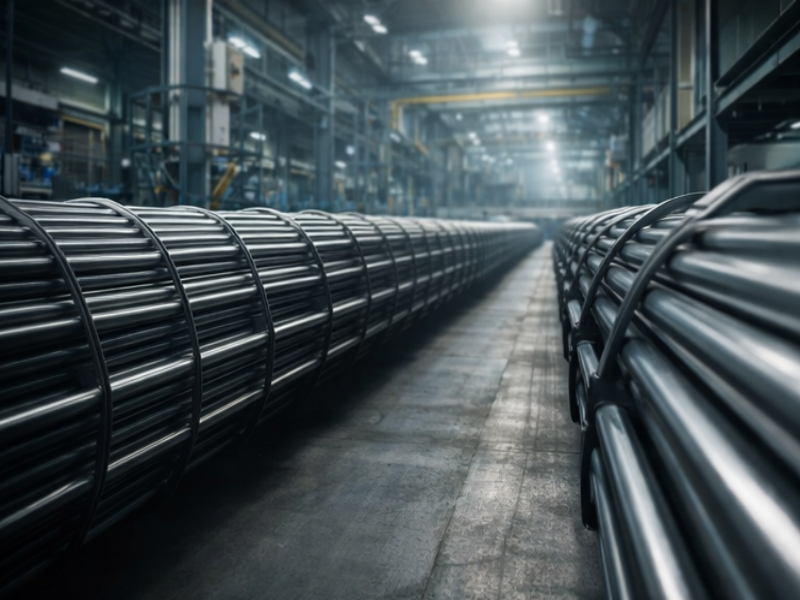
However, longer tubes may also introduce challenges related to vibration, thermal expansion, and mechanical support. Engineers often design tube bundles to maintain stable flow patterns while ensuring adequate spacing for maintenance and inspection. Bundle arrangements—such as triangular or square pitch layouts—affect how fluids move around the tubes. These patterns influence turbulence, pressure drop, and accessibility for cleaning.
Surface Enhancements for Higher Efficiency
In applications where maximizing heat transfer is critical, manufacturers may incorporate surface-enhanced boiler tubes. These specialized designs modify the internal or external tube surface to improve thermal performance.
Common enhancement methods include:
● Finned tubes, which increase the outer surface area exposed to the surrounding fluid
● Internally grooved or rifled tubes, which create turbulence inside the tube to improve heat transfer
These designs are particularly valuable in systems such as waste heat recovery units, where maximizing thermal efficiency can significantly reduce overall energy consumption.
Manufacturing, Standards, and Quality Control for Boiler Tubes
Producing reliable boiler tubes requires strict manufacturing practices and adherence to internationally recognized standards. Because these components operate in high-pressure and high-temperature environments, both fabrication quality and certification play a crucial role in ensuring long-term safety and performance.
Seamless vs Welded Boiler Tube Manufacturing
Boiler tubes are generally produced using two primary manufacturing methods: seamless production and electric resistance welding (ERW). Seamless tubes are created by piercing and rolling solid billets into hollow cylinders. This process eliminates weld seams, resulting in uniform strength throughout the tube wall. For systems operating under high pressure or extreme temperatures, seamless tubes are often the preferred option because they provide greater structural reliability. Welded tubes, by contrast, are manufactured by forming steel strips into cylindrical shapes and welding the edges together. Modern welding technologies allow these tubes to achieve excellent dimensional accuracy and consistent wall thickness. In applications where pressure demands are lower, welded tubes can offer a more economical alternative.
Industry Standards Governing Boiler Tube Specifications
Industrial boiler tubes must comply with strict codes that define material composition, manufacturing methods, and mechanical properties. These standards ensure that equipment operates safely and consistently across industries.
Some of the most widely recognized standards include:
Standard | Organization | Purpose |
ASME Boiler & Pressure Vessel Code | American Society of Mechanical Engineers | Governs design and safety of pressurized equipment |
ASTM Material Standards | ASTM International | Defines material composition and mechanical properties |
EN / DIN Standards | European regulatory bodies | Establish manufacturing and quality guidelines in Europe |
Adhering to these standards is essential for regulatory approval, equipment certification, and international project compatibility.
Testing Methods to Ensure Boiler Tube Integrity
Before boiler tubes are installed in industrial systems, they undergo multiple inspection procedures designed to verify structural integrity and detect hidden defects.
Two major categories of testing are commonly used:
● Hydrostatic testing, where tubes are filled with water and pressurized to confirm their ability to withstand operating conditions.
● Non-destructive testing (NDT) methods, which inspect the material without causing damage.
Common NDT techniques include ultrasonic testing to detect internal flaws and eddy current inspection to identify surface defects or wall thickness variations. These quality control processes help manufacturers ensure that every tube meets performance requirements before it becomes part of a high-pressure heat exchange system.
Conclusion
Choosing the right Boiler Tube improves safety, efficiency, and durability in high-pressure heat exchanger systems. Proper material selection, tube design, and strict quality standards ensure stable performance and longer equipment life. Suzhou Baoxin Precision Mechanical Co.,Ltd. delivers high-performance stainless steel boiler tubes with precise manufacturing and reliable quality, helping industries achieve efficient heat transfer and dependable long-term operation.
FAQ
Q: What is a Boiler Tube in industrial heat exchangers?
A: A Boiler Tube transfers heat between fluids while keeping them separated inside shell-and-tube heat exchangers.
Q: How do Boiler Tube specifications affect heat exchanger performance?
A: Proper Boiler Tube diameter, wall thickness, and material improve heat transfer efficiency and pressure resistance.
Q: Which materials are commonly used for Boiler Tube manufacturing?
A: Common Boiler Tube materials include carbon steel, alloy steel, and stainless steel for corrosion or high-temperature environments.
Q: When should custom Boiler Tube specifications be used?
A: Custom Boiler Tube specifications are needed when operating conditions involve unusual pressure, temperature, or corrosive process media.


