Introduction
Power demand keeps rising. Vehicles need higher efficiency. Can ordinary tubes handle extreme heat? Often, they cannot last long. A precision Boiler Tube solves this problem. It supports safe heat transfer.
In this article, you will learn why precision boiler tubes matter. We explore their role in power and automotive systems.
What Is a Boiler Tube and Why Precision Engineering Matters
The Core Function of a Boiler Tube
In industrial thermal systems, the boiler tube serves as one of the most important structural and functional elements. These tubes are responsible for transferring heat from combustion gases or other heat sources to the water or working fluid circulating inside the system. Through this process, water is converted into high-temperature steam, which is then used to power turbines, drive industrial processes, or generate electricity. Because this heat transfer occurs under extreme operating conditions, the reliability of the tube material and structure directly affects system efficiency and safety.
Beyond heat exchange, boiler tubes also function as controlled channels for fluid transport. Water, steam, or other process media move through these tubes under high pressure, often continuously for long operating cycles. If the tube fails due to deformation, corrosion, or leakage, the entire boiler system can be forced to shut down, leading to operational losses and safety risks. For this reason, boiler tubes are engineered to maintain structural stability even when exposed to sustained temperatures, fluctuating loads, and chemical exposure in industrial environments.
Key Engineering Characteristics of Precision Boiler Tubes
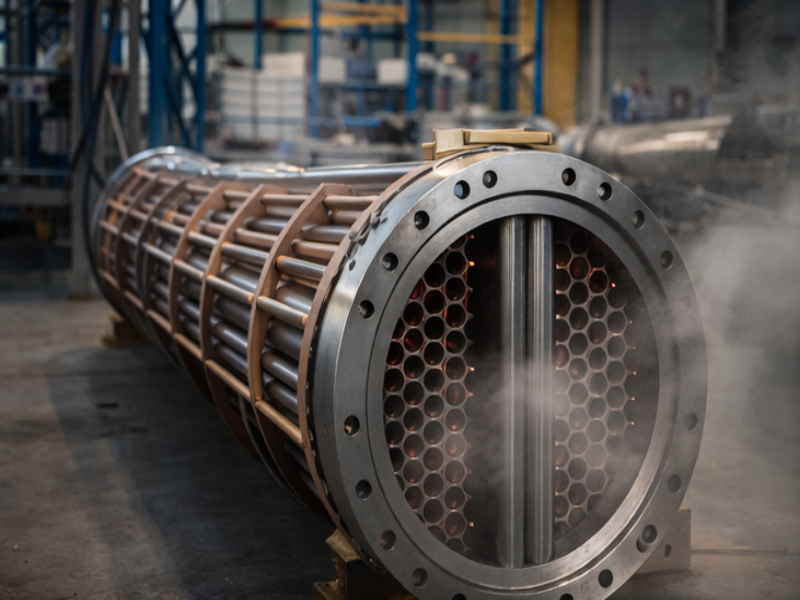
Precision-engineered boiler tubes differ significantly from ordinary industrial pipes. Their design emphasizes dimensional accuracy and structural consistency so they can function reliably within complex boiler assemblies.
Key engineering characteristics typically include:
● Tight dimensional tolerances: Precise outer diameter, inner diameter, and wall thickness allow the tubes to fit accurately within boilers, heat exchangers, and superheaters without alignment problems.
● Smooth internal surfaces: Reduced surface roughness improves fluid flow and enhances heat transfer efficiency by minimizing turbulence and resistance.
● Uniform wall thickness: Even distribution of material helps the tube withstand internal pressure and prevents localized overheating or stress concentration.
These properties are achieved through advanced forming processes and strict manufacturing control. In high-performance applications, even small dimensional variations could affect heat exchange efficiency or mechanical performance, making precision production essential.
Why Precision Manufacturing Improves System Reliability
The precision involved in producing a boiler tube has a direct influence on long-term system reliability. When tubes are manufactured with controlled microstructure and consistent geometry, they are less likely to experience weak points that could lead to cracks or rupture under pressure. Precision manufacturing also improves resistance to thermal cycling, a phenomenon where materials repeatedly expand and contract as temperatures change. In boiler environments, these temperature fluctuations can occur thousands of times over the service life of the equipment. Tubes that are precisely formed and heat-treated are better able to maintain their mechanical strength during these cycles.
Another important advantage is reduced maintenance demand. High-quality precision tubes are less prone to leakage, corrosion-related failure, or structural deformation. As a result, industrial facilities can operate their boilers for longer periods between inspections or replacements, improving productivity and lowering operational costs.
The Role of Boiler Tubes in the Power Generation Industry
Heat Transfer and Steam Generation in Power Plants
In power generation facilities, boiler tubes are central to the process of converting fuel energy into electricity. Inside a power plant boiler, fuel combustion produces extremely hot gases that flow around the tube surfaces. Heat from these gases passes through the tube walls and raises the temperature of the water inside, transforming it into high-pressure steam.
This steam is then directed toward turbines, where its expansion drives rotating blades connected to electric generators. The efficiency of this entire process largely depends on how effectively the boiler tubes can transfer heat while maintaining structural stability. If heat transfer is inefficient, the plant requires more fuel to generate the same amount of electricity.
Precision-engineered boiler tubes therefore play a key role in optimizing thermal performance. Their uniform surfaces and consistent wall thickness allow heat to move evenly through the tube material, ensuring that energy is transferred efficiently without causing localized overheating.
Supporting High-Pressure and High-Temperature Operations
Modern power plants operate under extremely demanding conditions. Advanced thermal units—particularly supercritical and ultra-supercritical systems—can reach temperatures above 600°C while maintaining very high steam pressures. These environments place enormous mechanical stress on the tubes inside the boiler. Under such conditions, materials must resist a phenomenon known as creep, which is the gradual deformation of metals exposed to high temperature and pressure over time. Precision boiler tubes are designed with specialized alloys and controlled metallurgical structures to resist this effect.
Several key requirements must be met simultaneously:
● Resistance to long-term thermal deformation
● High tensile strength to withstand internal steam pressure
● Structural stability under rapid temperature fluctuations
Without these characteristics, the risk of tube rupture increases significantly, which could lead to equipment damage or shutdown of the entire power generation unit.
Improving Plant Efficiency and Operational Stability
Reliable boiler tubes contribute directly to plant efficiency and operational continuity. When tubes maintain consistent heat transfer performance, the boiler can produce steam more efficiently and reduce energy losses throughout the system. Another major advantage is reduced unplanned downtime. Tube failures are among the most common causes of forced outages in power plants. High-quality tubes made from corrosion-resistant or heat-resistant alloys can significantly extend operational life and reduce the need for frequent maintenance.
The operational benefits can be summarized as follows:
● Higher thermal efficiency: Better heat transfer reduces fuel consumption.
● Lower maintenance requirements: Durable materials reduce inspection and replacement frequency.
● Improved system stability: Stronger tubes decrease the likelihood of leaks or structural failure.
Applications Across Different Energy Systems
Although boiler tubes are most commonly associated with conventional thermal power plants, their role extends across a wide range of energy systems. Different energy sectors rely on similar heat-transfer principles, making boiler tubes essential components in many industrial installations.
Energy System | Typical Boiler Tube Function |
Thermal power plants | Steam generation for turbine-driven electricity |
Nuclear power plants | Heat exchange in steam generators |
Industrial heating systems | Steam supply for manufacturing processes |
Waste heat recovery units | Capturing excess industrial heat for energy reuse |
In each of these systems, the core objective remains the same: transfer heat efficiently while maintaining safety under extreme operating conditions. Precision-engineered boiler tubes make it possible to achieve this balance, ensuring reliable energy production across multiple sectors.
How Precision Steel Tubes Support Automotive Engineering
Fuel and Emission System Applications
Modern vehicles rely on highly controlled fuel delivery systems to achieve efficient combustion and meet increasingly strict emission regulations. Precision steel tubes play a crucial role in these systems because they provide stable pathways for fuel to travel from the tank to the engine’s injection components. When the tubing maintains accurate internal dimensions and smooth surfaces, fuel pressure remains consistent, which allows injectors to deliver precise amounts of fuel into the combustion chamber.
Stable fuel pressure directly influences how effectively the air–fuel mixture burns inside the engine. When injection pressure fluctuates due to poorly manufactured tubing, combustion efficiency declines, resulting in higher fuel consumption and increased exhaust emissions. Precision tubes help prevent these issues by maintaining structural stability even under rapid pressure changes and temperature fluctuations.
In high-performance engines and modern fuel injection technologies, tubing accuracy becomes even more important. Manufacturers depend on tight dimensional control to ensure reliable performance over long operating cycles, especially in vehicles designed to meet global emission standards such as Euro or EPA regulations.
Safety-Critical Automotive Components
Beyond fuel systems, precision steel tubing is widely used in automotive components where structural reliability and pressure resistance are essential. Brake lines, for instance, must withstand extremely high hydraulic pressure when drivers apply braking force. Any deformation or leakage in these tubes could compromise the braking system and reduce vehicle safety. Hydraulic systems are not the only applications where tubing strength matters. Steering columns, suspension components, and shock absorber systems also rely on durable steel tubes to transfer mechanical loads and absorb road impacts. These components are constantly exposed to vibration, torsional forces, and fatigue stress during daily driving.
Key automotive systems using precision tubes include:
● Brake and hydraulic lines: transmit pressure from the brake pedal to braking components.
● Steering columns: transfer steering input while maintaining structural rigidity.
● Suspension and shock absorber components: absorb road vibrations and maintain vehicle stability.
The high fatigue resistance and consistent mechanical properties of precision tubing allow these systems to function reliably under repeated mechanical stress.
Lightweight Engineering for Modern Vehicles
Automotive design has increasingly shifted toward lightweight engineering as manufacturers work to improve fuel efficiency and reduce carbon emissions. Precision steel tubing supports this trend by offering high strength-to-weight ratios. Engineers can design thinner-walled components without sacrificing durability, allowing vehicles to achieve weight reduction while maintaining structural safety. Reducing component weight benefits multiple aspects of vehicle performance. Lighter vehicles typically require less energy to accelerate and maintain speed, which improves fuel economy. Lower vehicle mass also contributes to reduced greenhouse gas emissions and helps manufacturers comply with environmental regulations. The use of high-strength precision tubing allows engineers to optimize structural components while maintaining reliability. This balance between reduced weight and high mechanical performance has made precision steel tubes a key material in modern automotive manufacturing.
Materials and Manufacturing Technologies Behind High-Quality Boiler Tubes
Common Materials Used in Boiler Tube Production
The performance of a boiler tube depends heavily on the materials used during manufacturing. Because these tubes operate under high pressure and temperature, the selected metals must provide a balance of mechanical strength, thermal resistance, and corrosion protection. Different industrial environments require different material solutions.
Three commonly used material categories include:
Material Type | Key Characteristics | Typical Applications |
Carbon steel | Strong and cost-effective, suitable for moderate temperatures and pressures | Standard boilers and industrial heating systems |
Alloy steel | Enhanced resistance to heat, pressure, and creep deformation | High-pressure boilers and power plant equipment |
Stainless steel | Excellent corrosion resistance in chemically aggressive environments | Heat exchangers, condensers, and chemical processing systems |
Alloying elements such as chromium, molybdenum, and nickel are often added to improve heat resistance and mechanical stability. These elements strengthen the microstructure of the tube material, enabling it to perform reliably in demanding operating conditions such as those found in power plants or petrochemical facilities.
Seamless vs. Welded Boiler Tube Manufacturing
The manufacturing method used to produce boiler tubes also plays a critical role in their mechanical performance. Two primary production methods are widely used in industry: seamless tube manufacturing and welded tube fabrication. Seamless tubes are produced from a solid billet of steel that is heated and pierced to create a hollow cylindrical structure. Because this process does not involve welding seams, the resulting tube has a uniform grain structure and consistent strength throughout its length. This makes seamless tubes particularly suitable for high-pressure or high-temperature applications where structural integrity is essential. Welded tubes, in contrast, are formed by rolling steel plates or strips into cylindrical shapes and joining the edges using welding techniques. Although the welded seam may introduce a potential weak point under extreme stress, these tubes are widely used in applications where operating conditions are less demanding and cost efficiency is important. In practice, engineers select between these two options based on operating temperature, pressure requirements, and budget considerations.
Quality Control and Industry Standards
To ensure reliability in industrial environments, boiler tubes must undergo strict quality control procedures during manufacturing. These procedures verify that the material composition, mechanical strength, and structural integrity meet industry requirements. Testing processes typically include several stages of inspection. Chemical analysis confirms that the material composition meets the specified alloy standards, while mechanical testing evaluates properties such as tensile strength, hardness, and resistance to deformation. Non-destructive testing methods are also widely used to detect internal defects without damaging the tube.
Common inspection techniques include:
● Ultrasonic testing, which detects internal flaws using high-frequency sound waves
● Radiographic testing, which uses imaging technology to identify hidden cracks or inclusions
● Hydrostatic pressure testing, which verifies the tube’s ability to withstand internal pressure
In addition to internal testing procedures, boiler tubes must comply with internationally recognized standards. Organizations such as ASTM (American Society for Testing and Materials) and ASME (American Society of Mechanical Engineers) provide technical specifications that regulate material quality, manufacturing processes, and performance requirements. Compliance with these standards ensures that boiler tubes can operate safely in high-temperature industrial systems across global markets.
Conclusion
Precision Boiler Tube improves heat transfer. It ensures safe, stable industrial systems. Power plants and vehicles depend on it. Efficiency and safety both increase.
Suzhou Baoxin Precision Mechanical Co.,Ltd. offers reliable precision tube solutions. Their products deliver durability. They support modern industry needs.
FAQ
Q: What is a Boiler Tube used for in industrial systems?
A: A Boiler Tube transfers heat and carries water or steam in high-temperature, high-pressure equipment such as boilers and power plant systems.
Q: Why is a precision Boiler Tube important for power plants?
A: A precision Boiler Tube improves heat transfer efficiency and resists creep, pressure stress, and corrosion in high-temperature steam generation.
Q: How do precision tubes support automotive engineering?
A: Precision Boiler Tube technology provides accurate dimensions and strength, enabling reliable fuel systems, hydraulic lines, and thermal management components.
Q: What materials are commonly used for Boiler Tube manufacturing?
A: A Boiler Tube is typically produced from carbon steel, alloy steel, or stainless steel to balance strength, heat resistance, and corrosion protection.


