Specifying structural and mechanical components carries incredibly high stakes for design engineers. Over-engineering these parts wastes vital project budgets rapidly. Conversely, under-specifying them risks catastrophic mechanical failures in the field. Standard mild steel eventually reaches a critical operational threshold where it simply cannot perform. When equipment faces extreme dynamic loads, heavy torsion, or high internal pressures, standard alloys will yield. Upgrading to a High Strength Machinery Industrial Tube becomes a strict technical necessity at this point.
This article provides a strictly parameter-driven evaluation framework for your engineering team. You will learn how to select high-strength tubes effectively for demanding applications. We will cover methods for minimizing machining time, reducing scrap, and ensuring rigid compliance standards.
Key Takeaways
- Specifying high-strength industrial tubes requires balancing Yield Strength (deformation resistance) with Machinability.
- Evaluating Tube vs. Solid Bar depends heavily on concentricity tolerances and scrap material costs.
- Procurement safety relies on verified Mill Test Reports (MTRs) and Non-Destructive Testing (NDT) capabilities, not just vendor claims.
- Selecting the right mechanical tube over standard structural pipe directly impacts fatigue life in dynamic load environments.
Defining the Baseline: When is a High-Strength Machinery Industrial Tube Mandatory?
Engineers constantly balance upfront material expenses against long-term operational reliability. High-strength alloys like 4140 or ST52 demand a higher initial purchase price. However, you must contrast this against the hidden penalties of using standard grades. Standard steel often requires frequent replacement. It also forces engineers to design thicker walls. Thicker walls add unnecessary dead weight to moving equipment. This excess weight increases energy consumption and slows down machine cycles. When standard parts fail, the resulting machine downtime costs far more than premium materials.
Certain operational triggers dictate the absolute need for high-strength materials. You must evaluate your load types carefully to prevent catastrophic failures.
- High torsional stress: Drive shafts and heavy-duty axles endure immense twisting forces. High-strength alloys resist shearing under these extreme rotational loads.
- High internal pressure: Hydraulic cylinders and process equipment operate under severe outward force. Stronger walls prevent bursting without requiring bulky dimensions.
- Dynamic/cyclic loading: Equipment undergoing repetitive motion requires high fatigue resistance. Premium tubes prevent microscopic cracks from propagating during endless operational cycles.
You must also understand the strict manufacturing distinction between pipe and tube. Standard pipe transports fluids safely. Manufacturers schedule pipe sizes based on internal flow capacity. Conversely, a High Strength Machinery Industrial Tube serves critical structural purposes. You measure machinery tubes by exact outside diameter (OD) and precise wall thickness. They deliver the structural and mechanical precision necessary for high-stakes engineering.
The Core Evaluation Matrix: Technical Parameters for Engineers
Yield Strength vs. Tensile Strength
Engineers often confuse yield strength and tensile strength during the selection phase. In a machinery context, you must prioritize yield strength. Yield strength defines the absolute stress limit before permanent plastic deformation occurs. Once a component yields, it will never return to its original shape. Tensile strength simply measures the ultimate breaking point. If your component deforms but does not break, it has already failed its mechanical purpose.
Consider these common high-strength target ranges and their practical applications. We organized them into a quick reference chart below for your engineering evaluations.
Yield Strength Reference Chart | Yield Strength Range (PSI) | Typical Material Grades | Ideal Machinery Applications |
| 70,000 - 85,000 | ST52, 1020 DOM | Light hydraulic cylinders, structural supports, standard axles. |
| 85,000 - 100,000 | 4130, 1026 DOM | Heavy-duty mining equipment, crane booms, roll cages. |
| 100,000+ | 4140 (Heat Treated) | High-torque drive shafts, extreme pressure vessels, aerospace parts. |
Dimensional Tolerances and Concentricity
Material strength means little if the dimensions lack precision. Precise OD/ID tolerances and wall thickness consistency ensure your parts fit correctly. Concentricity measures how perfectly the inner circle aligns within the outer circle.
Implementation Reality: Poor concentricity creates severe manufacturing bottlenecks. It leads to excessive machining passes. Your CNC machines must work harder to true up the part. This drastically increases cutting tool wear. Furthermore, unbalanced wall thicknesses cause severe vibration in rotating parts. You will spend countless hours balancing these defective components post-assembly.
Manufacturing Method: Seamless vs. Drawn Over Mandrel (DOM)
Your manufacturing method directly dictates both performance and secondary machining requirements. Engineers typically choose between Seamless (SMLS) and Drawn Over Mandrel (DOM) processes.
Seamless (SMLS): Manufacturers pierce a solid steel billet to create seamless tubes. They have no welded seams. This makes them exceptional for high-pressure applications and heavy-wall requirements. However, you face a distinct trade-off. Seamless tubes inherently lack perfect initial concentricity. You will likely need additional machining to achieve tight tolerances.
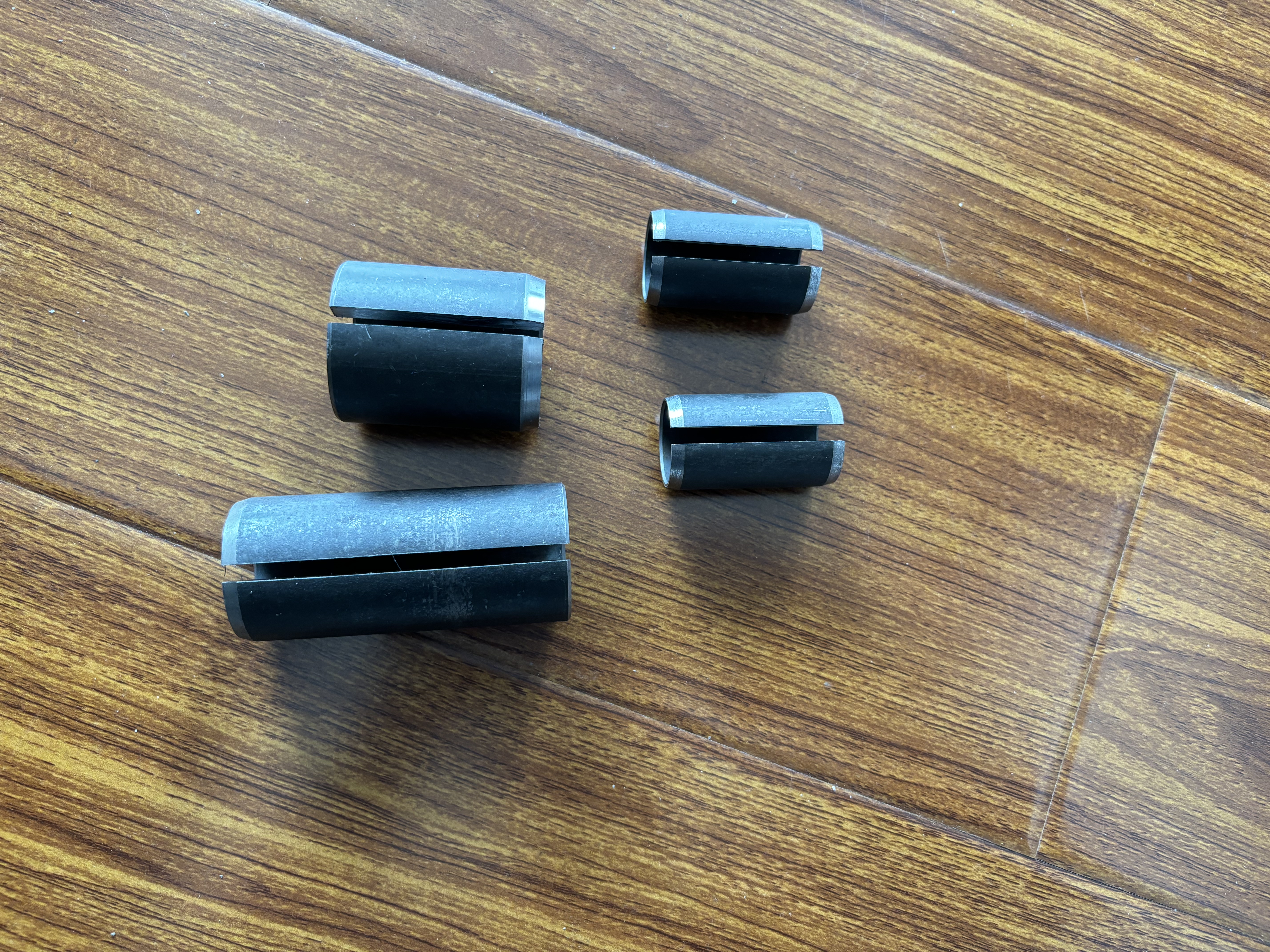
Drawn Over Mandrel (DOM): DOM begins as a welded tube. Manufacturers draw it over a precision mandrel. This cold-working process improves the grain structure significantly. It is best for applications requiring extremely tight dimensional tolerances. DOM offers a superior surface finish. It drastically reduces your post-purchase machining efforts.
Manufacturing Trade-Offs: Tube vs. Solid Bar
Engineers frequently debate the merits of boring out a solid bar versus purchasing heavy-wall tubing. This machining dilemma deeply impacts project budgets and lead times.
Deep-hole boring a solid bar consumes massive amounts of machine time. You must evacuate chips constantly. Tooling wears out rapidly during deep boring operations. Many shops lack the specialized equipment necessary for efficient deep-hole drilling. Conversely, sourcing the exact tube size eliminates this entire step.
You can calculate your break-even point using a straightforward framework. Consider these specific cost factors before drafting your final blueprints:
- Tooling and Machine Time: Calculate your hourly machine shop rate. Multiply this by the hours required to bore out the center of a solid bar.
- Scrap Rate: Measure the material waste generated from solid bars. You pay for steel you eventually throw into the scrap bin.
- Size Availability: Check local distributor inventories. Sometimes custom exact-size tubes require long mill runs. If exact sizes are unavailable, solid bar might remain the only quick option.
Verdict: High-strength tubes generally yield a significantly lower overall manufacturing expense. This rule typically holds true when your required inner diameter (ID) exceeds 2 inches. As long as the required wall thickness allows, always specify mechanical tubing over solid bar stock to protect your project budget.
Material Certifications and Quality Assurance (E-E-A-T Focus)
When you design components for extreme environments, material traceability becomes non-negotiable. Regulatory agencies and safety compliance boards demand absolute proof of material integrity. You cannot rely on verbal vendor promises. A High Strength Machinery Industrial Tube must carry heavily documented pedigree.
Mill Test Reports (MTRs): The MTR is your ultimate source of truth. Engineers must verify several specific fields on every MTR before accepting delivery. You must check the chemical composition. Ensure the carbon and alloy levels match the standard. Verify the mechanical properties. Look specifically at the tested yield and tensile strengths. Finally, cross-reference the heat numbers. The heat numbers physically stamped on the tubes must match the MTR documents exactly.
Non-Destructive Testing (NDT): Visual inspections fail to reveal internal metallurgical flaws. You must outline standard testing requirements for verification. Ultrasonic testing sends high-frequency sound waves through the metal. It easily identifies hidden internal voids or cracks. Eddy Current testing uses electromagnetic fields. It excels at detecting minute surface defects and near-surface irregularities. Specify these tests clearly in your engineering drawings.
Industry Standards: Authoritative frameworks ensure global consistency. You should base your designs on recognized standards rather than proprietary metrics. ASTM A519 governs carbon and alloy steel mechanical tubing in North America. EN 10297 serves as the primary standard for seamless circular non-alloy and alloy steel tubes across Europe. Referencing these frameworks guarantees your suppliers know exactly what you expect.
Shortlisting Logic & Procurement Considerations
Finding a reliable supplier requires evaluating criteria far beyond the simple price per foot. Cheap tubing often carries hidden defects. These defects ruin expensive cutting tools and cause missed deadlines.
Move beyond pricing and evaluate suppliers based on their technical capabilities. Do they offer in-house cutting, honing, or heat-treating? Value-add services save you from shipping raw tubes to secondary machine shops. This streamlines your supply chain immensely. Furthermore, check their ISO compliance. Documented QA/QC processes prove they inspect materials rigorously before shipping them to your facility.
Supply chain realities often complicate procurement. You must address Minimum Order Quantities (MOQs). Custom mill runs allow you to dictate exact chemistry and dimensions. However, mills usually demand massive MOQs (often 10,000 pounds or more). If you need smaller batches, you must source from master distributors. These distributors hold vast floor stock, but you must design your parts around their available standard sizes.
Next-Step Action: We strongly recommend developing a standardized Request for Quote (RFQ) checklist. This prevents miscommunication. Your engineering RFQ checklist should strictly include:
- Exact Outside Diameter (OD) and Inner Diameter (ID).
- Allowable length tolerances.
- The specific required material grade (e.g., 4140 Q&T).
- Required NDT verifications (Ultrasonic or Eddy Current).
- Delivery of certified MTRs upon shipment.
Conclusion
Specifying the proper machinery industrial tube requires a careful balance. You must weigh mechanical properties against machining realities and documented traceability. Choosing the correct yield strength prevents catastrophic deformation. Prioritizing dimensional concentricity reduces tool wear and prevents unbalanced rotational forces. Always verify material integrity through strict MTRs and NDT procedures.
We encourage design engineers to engage metallurgists or specialized tube suppliers early. Bring them into your process during the initial CAD and prototyping phases. Avoid waiting until post-design to source materials. This proactive collaboration prevents you from designing around impossible-to-find custom dimensions. It ensures your structural components remain both incredibly robust and economically viable.
FAQ
Q: How does heat treatment affect the machinability of high-strength industrial tubes?
A: Processes like Quenching and Tempering (Q&T) significantly increase yield strength. However, this dramatically lowers machinability. The hardened metal resists cutting tools aggressively. You will require specialized carbide tooling. You must also adjust your CNC feeds and speeds downward to prevent rapid tool failure and excessive heat generation.
Q: Can standard structural pipe be substituted for machinery tube if the yield strength matches?
A: No. Standard structural pipe suffers from severe dimensional inconsistencies. It lacks the tight OD/ID tolerances required for mechanical components. Pipe also lacks strict surface finish standards. Using pipe forces you into excessive machining passes to achieve structural precision, drastically increasing your overall manufacturing costs.
Q: What is the typical lead time for custom high-strength seamless tubing?
A: You should expect a realistic baseline of 12 to 20 weeks for custom mill runs. Custom chemistry and precise sizing require extensive scheduling. To avoid project delays, engineers must design machinery around standard, widely stocked sizes whenever possible.


