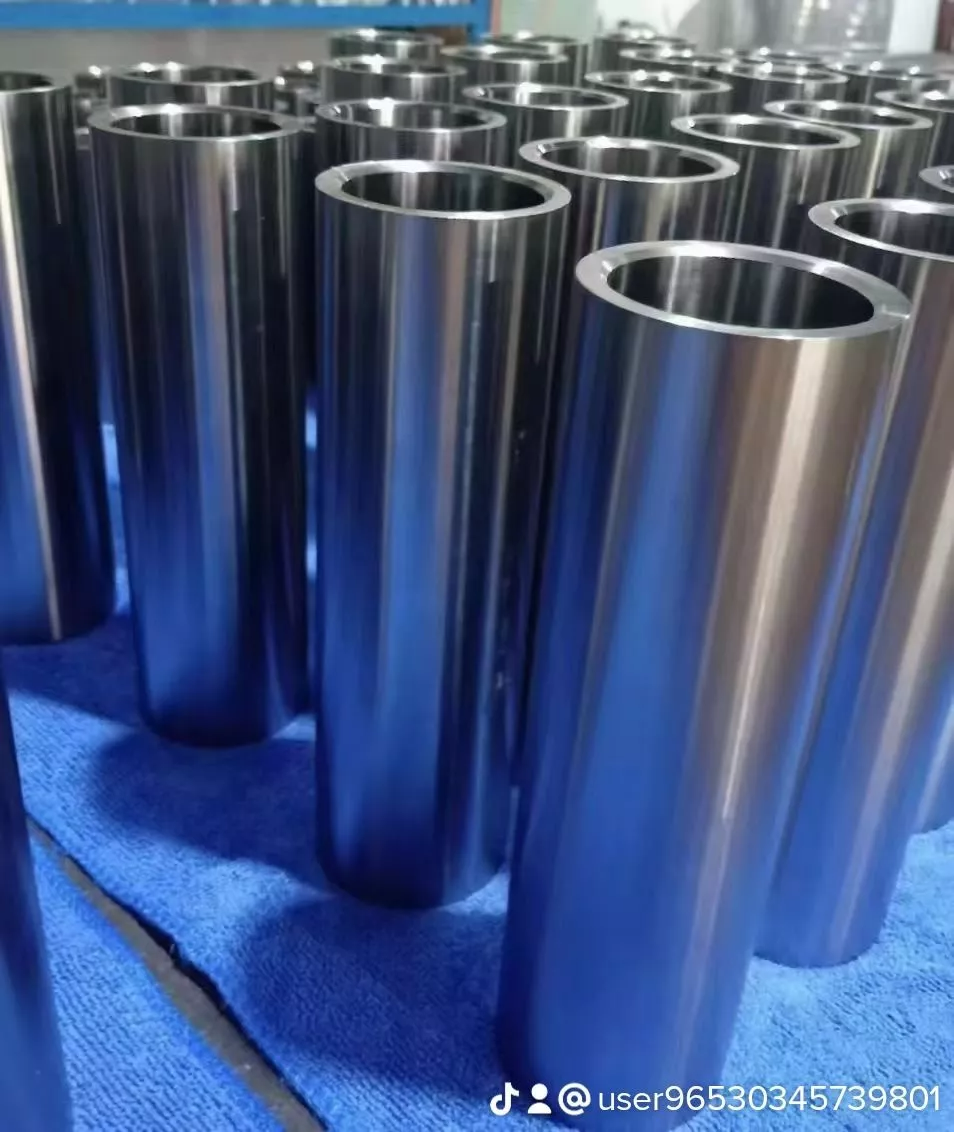
Modern Body-in-White (BIW) architecture relies heavily on hidden structural components to protect passengers and optimize performance. Within this intricate ecosystem, the Car Ante Fender Tube plays a remarkably critical role. Automotive engineers face a constant, unforgiving tension during the design phase. You must aggressively reduce vehicle weight. You must simultaneously meet strict frontal crash compliance standards. You must also keep manufacturing costs under control.
This guide delivers a practical, technical evaluation framework to navigate these competing demands. We explore how to properly select, specify, and integrate these tubes into production-scale automotive platforms. You will learn the mechanical advantages of specific steel grades. You will also discover how modern joining techniques solve mixed-material assembly challenges. By mastering these engineering principles, your team can achieve optimal structural integrity without sacrificing aerodynamic flushness or assembly efficiency.
Key Takeaways
The primary function of the ante fender tube is to bridge structural integrity with energy dispersion during 100% or 40% offset frontal collisions.
Specifying ASTM A519 Car Ante Fender Tubes provides a reliable baseline for seamless mechanical strength, but requires precise tolerance management.
Optimal integration relies heavily on advanced joining techniques (e.g., weld-bonding) to mitigate NVH (Noise, Vibration, and Harshness) and prevent galvanic corrosion in mixed-material chassis.
Vendor selection must prioritize dimensional accuracy (gap and flushness control) and pre-assembly surface treatments capable of surviving OEM e-coat curing processes.
Structural Function: Why the Ante Fender Tube is Critical in BIW Design
Automotive chassis design requires components to perform multiple functions simultaneously. We define the ante fender tube as a vital load-bearing bridge within the vehicle's unibody or spaceframe construct. It sits precisely where the front end connects to the passenger cabin. This placement dictates its primary responsibility: absorbing and managing immense forces.
Frontal crash regulations heavily influence the design of this tube. During a 100% or 40% offset rigid barrier impact, kinetic energy threatens the passenger compartment. The tube acts as a primary energy dispatcher. It absorbs initial impact forces through controlled deformation. It then redirects the remaining kinetic energy outward and downward. This load path management keeps the passenger cabin intact. It prevents engine block intrusion into the firewall.
Beyond catastrophic impacts, the tube manages dynamic loads every time the vehicle moves. High static torsional rigidity is non-negotiable. Optimizing this rigidity directly influences vehicle NVH (Noise, Vibration, and Harshness). A stiff tube shifts resonant vibration frequencies away from engine and road inputs. This prevents structural flutter at highway speeds. Ultimately, it delivers a much smoother ride quality for the consumer.
The tube also serves as a foundational mounting architecture. A vehicle's exterior panels require rigid anchors. You can expect the ante fender tube to support several critical nodes:
A-Pillar Anchors: Stabilizing the transition between the front crush zone and the roofline.
Drip Mounts: Providing a secure channel framework for water management systems.
Baffle Elements: Anchoring splash guards and acoustic dampeners inside the wheel well.
Material Evaluation: Specifying ASTM A519 Car Ante Fender Tubes
Material selection defines the success or failure of structural tubing. Engineers typically weigh carbon and alloy mechanical steel against emerging lightweight alternatives. Extruded aluminum offers excellent weight savings. Carbon fiber composites provide incredible strength. However, steel remains the dominant choice for high-load, mid-market applications.
We see a massive industry preference for the ASTM A519 Car Ante Fender Tube. This standard specifies seamless carbon and alloy steel mechanical tubing. Seamless construction provides a crucial advantage. It eliminates the weld seam entirely. Weld seams often create weak points susceptible to splitting under severe impact. Standardizing on ASTM A519 guarantees predictable yield strength. It ensures excellent energy absorption during crash events.
Engineers face immediate trade-offs between tensile strength and formability. You want high tensile strength to survive impacts. You also need high formability for complex manufacturing steps. Mandrel bending and hydroforming require metals that stretch without tearing. Selecting a lower carbon grade within the A519 standard might improve bending tolerances. Conversely, a higher alloy grade increases rigidity but demands more robust bending equipment.
We must acknowledge a transparent assumption in modern vehicle design. Ultra-high-strength steel (UHSS) certainly offers superior weight efficiency. However, it strains tooling and inflates raw material budgets. Standard alloy tubing, specified correctly, yields a far superior cost-to-performance ratio for most mid-market OEM platforms. It delivers the necessary crashworthiness without demanding specialized, low-volume fabrication lines.
Geometry and Profiling: Matching Tube Shape to Spatial Constraints
A tube's cross-sectional geometry dictates its performance. We evaluate these features based on specific outcomes. The shape directly impacts aerodynamic flushness. It also determines structural resilience across different load axes. A simple round tube is not always the best solution.
Packaging constraints in the modern wheel well are incredibly tight. Clearance realities dictate strict dimensional control. You must maintain mandatory wheel arch clearances to accommodate suspension travel and steering articulation. At the same time, the tube must support precise panel gap alignment. Even a two-millimeter deviation in tube geometry can misalign the outer fender. This misalignment increases wind noise and damages aesthetic quality.
Profile selection requires matching the tube shape to the physical environment. Below is a comparative chart outlining common profiles used in ante fender applications:
Tube Profile | Primary Characteristic | Ideal Application Scenario |
DOM Round Tubing | High dimensional accuracy and uniform wall thickness. | General structural bridging where multidirectional torsional strength is required. |
Flat-Sided Oval / D-Shaped | Maximizes strength-to-weight ratio in a specific directional axis. | Extremely tight packaging environments requiring high lateral stiffness. |
Hydroformed Shapes | Localized wall thickening without overall weight penalties. | Complex mounting zones with high stress concentration points. |
Hydroforming stands out for complex geometries. It uses high-pressure hydraulic fluid to expand the tube into a die. This allows you to transition a tube from a round profile at the base to an oval profile near the A-pillar. You put strength exactly where it belongs. You remove excess mass everywhere else.
Implementation Risks: Assembly, Joining, and Dissimilar Materials
Specifying the right tube solves only half the engineering problem. Implementation realities introduce major manufacturing bottlenecks. Modern vehicle bodies frequently utilize multi-material architectures. You often need to join robust steel tubes to aluminum shock towers or composite bulkheads.
Managing galvanic corrosion becomes a paramount concern. When steel and aluminum touch in the presence of an electrolyte, the aluminum rapidly corrodes. You must isolate steel ante fender tubes from aluminum structural nodes. We achieve this isolation using advanced structural adhesives. These adhesives act as a physical dielectric barrier, stopping the electrochemical reaction entirely.
Weld-bonding represents the gold standard for integration. This technique combines traditional spot welding with crash-toughened epoxy adhesives. Spot welding alone creates localized heat-affected zones. These zones suffer from concentrated stress. Weld-bonding disperses this joint stress across the entire adhesive surface. It increases structural fatigue life exponentially compared to bare welding. It also creates a tighter seal against moisture intrusion.
Process compatibility dictates which adhesives you can actually use on the assembly line. All applied sealants and structural epoxies face a brutal test. They must survive the OEM e-coat baking process. Typical e-coat ovens bake components at 180°C for at least 30 minutes. Adhesives must cure correctly during this phase. They must not degrade, burn, or suffer from washout. You should follow these integration steps to ensure success:
Apply crash-toughened structural adhesive to the mating flanges.
Clamp the dissimilar materials using automated fixtures.
Execute spot welds through the uncured adhesive layer to secure the geometry.
Process the BIW through the e-coat bath and high-temperature curing oven.
Long-Term Durability: Mitigating Fatigue and Cavity Rust
The wheel well represents one of the harshest environments on a vehicle. Hollow structural components situated here face immense environmental vulnerabilities. They endure constant bombardment from high-moisture spray, road salts, and debris impacts. Without rigorous risk mitigation, structural fatigue and cavity rust will compromise crashworthiness over time.
Anti-corrosion protocols must happen at the factory level. Surface coatings alone cannot protect the inside of a hollow tube. You must evaluate and implement automated internal cavity wax injections. Once the vehicle passes through the paint shop, automated probes enter the tube. They atomize rust-proofing wax, coating the interior walls thoroughly. This prevents internal oxidation caused by condensation.
Drainage design plays an equally vital role. Water will inevitably find its way into structural cavities. Capillary action pulls moisture through tiny seams. You must engineer proper drainage routing within the tube itself. Stamping precise weep holes at the lowest gravitational points prevents moisture pooling. Drainage holes must pair with saturated spraying techniques during final assembly. If water enters, it must exit immediately without trapping road salts inside the metal structure.
Shortlisting Logic: Procurement Criteria for Ante Fender Tubing
The car ante fender tube is a highly engineered safety component. Procurement teams cannot treat it as a generic commodity. You need a clear vendor evaluation framework to source reliable components. Automotive engineers and supply chain leads should utilize specific criteria to vet potential manufacturing partners.
Quality assurance processes dictate the reliability of the final product. Look for vendors utilizing precision laser cutting. Laser cutting ensures burr-free ends, critical for automated welding alignment. Furthermore, demand automated mandrel bending capabilities. Mandrel bending inserts a solid tool inside the tube during the bend. This prevents inner-radius wrinkling and outer-radius thinning. Wrinkles create stress risers that fail unpredictably during a crash.
Material traceability is a non-negotiable requirement. Demand certified mill test reports (MTRs) for every batch of steel. These documents validate absolute compliance with ASTM A519 standards. They confirm the exact chemical composition and mechanical yield strength of the raw material.
Finally, prioritize value-add services. Suppliers offering end-to-end processing drastically reduce supply chain friction. You want a vendor capable of handling raw material sourcing, bending, and pre-assembly surface treatments. Essential value-add services include sandblasting, galvanizing, and automated powder coating. A single-source supplier eliminates shipping bottlenecks between secondary processors. It also consolidates quality control accountability.
Conclusion
Recognize the ante fender tube as a highly engineered safety and structural component, not just a simple bracket.
Integrate tube specifications, including profile shape and material grade, extremely early in the CAD/CAE finite element analysis phase.
Standardize on materials like ASTM A519 to ensure predictable energy absorption and eliminate weld-seam failures during offset collisions.
Align your joining methods (like weld-bonding) with overall crashworthiness and mixed-material corrosion prevention goals.
Audit suppliers strictly for precision fabrication capabilities, demanding mandrel bending and complete material traceability.
FAQ
Q: What makes ASTM A519 the standard for car ante fender tubes?
A: ASTM A519 specifies seamless carbon and alloy mechanical tubing. The seamless construction eliminates weld seams, providing a uniform grain structure. This uniformity is ideal for structural load-bearing components. It ensures predictable yield strength and prevents catastrophic splitting during severe frontal impacts.
Q: How does the ante fender tube affect vehicle NVH?
A: The tube acts as a critical reinforcement bridge, stiffening the entire front-end structure. By increasing static torsional rigidity, it shifts resonant frequencies away from common engine or road inputs. This prevents structural flutter and significantly reduces the noise and vibration transmitted into the passenger cabin.
Q: Can ante fender tubes be hydroformed?
A: Yes. Hydroforming is highly effective for these components. It uses high-pressure fluid to expand the tube into a complex die. This process allows engineers to create varying cross-sections along a single tube. You can optimize localized wall thickness, placing strength exactly where needed without adding overall weight.
Q: What are the common tolerances required for ante fender tube fabrication?
A: OEMs demand incredibly strict tolerances to maintain outer panel gap and flushness. Deviations rarely exceed 1 to 2 millimeters. Achieving this requires precision laser cutting for exact lengths and zero-wrinkle CNC mandrel bending to ensure structural integrity and perfect alignment during robotic assembly.


