Introduction
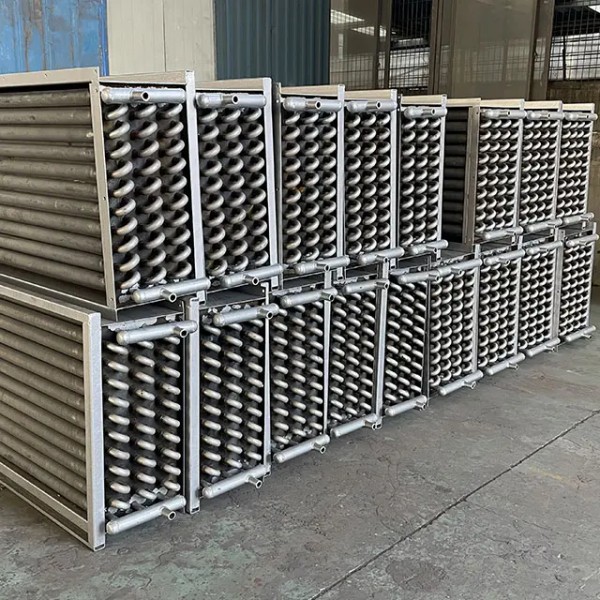
Why do heat systems waste energy? Often, the limit is outside the tube. A Fin Tube adds surface area. It helps raise heat transfer efficiency. Suzhou Baoxin offers seamless tubes and fin solutions.
In this article, you will learn how Fin Tube design improves performance, and how to choose wisely for real duty.
How a Fin Tube Improves the Heat Transfer Coefficient
Extended Surface Area and Gas-Side Thermal Resistance
In many industrial heat exchangers, the limiting resistance is not inside the tube but on the gas or air side. Liquids typically have higher thermal conductivity and better convective behavior, while gases exhibit lower density and weaker heat transfer coefficients. As a result, the gas-side film becomes the dominant bottleneck in the overall heat transfer equation. This imbalance explains why simply increasing flow rate on the liquid side rarely solves performance limitations.
A Fin Tube addresses this constraint by expanding the external surface area available for convection. Instead of relying on a smooth cylindrical surface, fins create multiple extended surfaces that increase the effective heat transfer interface. By enlarging the contact area between the tube wall and the surrounding gas, the overall heat transfer coefficient improves without changing the core flow conditions inside the tube.
However, fin effectiveness is not determined by surface area alone. It depends on two simultaneous mechanisms:
● Conduction along the fin material from the base tube to the fin tip
● Convection from the fin surface to the surrounding fluid
If the fin material has insufficient conductivity or if the fin is excessively long, temperature drops along the fin reduce its effectiveness. Therefore, an optimal balance between fin length, thickness, and material conductivity must be achieved for the fin to contribute meaningfully to total heat transfer.
Fin Tube Thermal Efficiency Optimization in Practice
Thermal efficiency optimization requires careful control of fin geometry. Fin pitch (fins per inch), fin height, and fin thickness directly influence the exposed surface area and airflow behavior. Increasing fin density increases area but may also restrict airflow, raising pressure drop and energy consumption in fans or blowers.
Below is a simplified comparison illustrating how geometry affects performance behavior:
Geometry Variable | Thermal Impact | Operational Trade-Off |
Higher Fin Density | Increases surface area and potential heat transfer | Raises airflow resistance and pressure drop |
Greater Fin Height | Expands heat exchange area | May reduce fin effectiveness if conduction loss increases |
Thicker Fins | Improves conduction along fin | Adds weight and material cost |
Optimization must always be evaluated at the actual duty point—defined by required heat load, temperature difference, and allowable pressure drop. More fin area does not automatically mean higher system efficiency. In some cases, excessive fin density produces marginal thermal gains while significantly increasing energy consumption for air movement. The most effective design aligns geometric variables with system constraints rather than maximizing any single parameter.
Operational Constraints That Limit Performance
Even a well-designed finned structure can lose effectiveness over time. Fouling, scale formation, dust accumulation, and particulate deposition act as insulating layers that reduce thermal conductivity at the surface. In air-cooled or flue-gas applications, contaminants gradually block fin spacing, lowering effective convection and increasing pressure drop.
Thermal cycling introduces another limitation. Repeated expansion and contraction of the tube and fins under fluctuating temperatures may weaken bonding interfaces. Mechanical stresses from vibration, pressure fluctuations, or structural loading can further reduce long-term stability. These factors mean that theoretical heat transfer performance often exceeds real-world sustained performance.
There is also a point of diminishing returns. When fin density becomes too high, airflow resistance may increase more rapidly than heat transfer improvement. In such cases, the system expends additional energy overcoming resistance rather than gaining proportional thermal benefit. Sustainable performance therefore requires a balance between surface expansion and hydraulic or aerodynamic efficiency.
Fin Tube Designs and Bonding Methods That Drive Industrial Performance
Welded Fin Tube Configurations
Welded fin structures are typically evaluated based on the stability of the thermal contact between fin and base tube. A strong metallurgical bond minimizes contact resistance, allowing heat to transfer efficiently from the tube wall into the fin structure. This stability becomes particularly important in high-temperature or high-stress environments where bond degradation would directly reduce heat transfer performance.
From a fatigue standpoint, welded connections must withstand thermal cycling without crack propagation or detachment. Repeated heating and cooling create expansion differences that stress the interface. Therefore, weld integrity influences not only structural durability but also sustained thermal efficiency over time.
Welded approaches are commonly considered when service conditions involve elevated temperatures, pressure cycling, or mechanical stress. In these scenarios, bonding stability is as critical as surface area expansion, and performance evaluation focuses on long-term reliability rather than short-term peak output.
Extruded and Embedded (G-Fin) Technologies
Mechanical bonding methods such as extrusion or embedding create a tight physical interface between fin and tube without relying solely on welding. In these designs, the fin material is either mechanically forced over the tube or locked into a groove, forming a stable contact surface.
These approaches shift inspection priorities. Instead of weld seam evaluation, attention centers on mechanical fit integrity and resistance to loosening under vibration. In systems subject to mechanical oscillation or fluctuating loads, embedded designs may offer predictable structural behavior.
The trade-offs among bonding methods can be summarized as follows:
Bonding Method | Strength Profile | Typical Consideration |
Welded | High metallurgical stability | High-temperature, high-stress service |
Extruded | Strong mechanical compression bond | Corrosion resistance and structural stability |
Embedded (G-Fin) | Locked mechanical interface | Vibration-sensitive applications |
Each method presents a balance among bond strength, manufacturability, and long-term performance retention. Selection depends on service environment rather than manufacturing preference alone.
Integral Low-Fin Tubes in Compact Heat Exchangers
Integral low-fin tubes are produced by forming fins directly from the base tube material. Because no separate fin component is attached, the thermal interface resistance is minimized. This design supports compact heat exchanger configurations where spatial efficiency is a priority.
Compactness, however, interacts with hydraulic behavior. Smaller exchanger footprints may increase flow velocity, affecting pressure drop. Additionally, tighter fin spacing can complicate cleaning and inspection procedures. Therefore, low-fin structures are often evaluated where geometry constraints are decisive, but maintainability remains a consideration.
Integral low-fin designs are particularly relevant when moderate surface enhancement is sufficient and when minimizing interface complexity supports predictable long-term performance.
Fin Tube Material Selection for Heat Exchangers
Thermal Conductivity Versus Mechanical Strength
Material selection for a Fin Tube involves a multidimensional trade-off. High thermal conductivity improves heat transfer response, but mechanical strength ensures structural stability under pressure and temperature stress. Materials with excellent conductivity may lack the durability required for aggressive industrial conditions.
Typical decision logic separates the functional roles of fin and tube. The tube must withstand internal pressure and mechanical load, while the fin primarily enhances external convection. In some applications, carbon steel or stainless steel may be preferred for structural reliability, even if conductivity is lower than alternative metals.
The “best” material is therefore context-dependent. A high-temperature pressure vessel may prioritize mechanical integrity, whereas a moderate-temperature air-cooled system may prioritize conductivity. The duty envelope—not a single material property—determines suitability.
Material Compatibility and Fin-to-Tube Integrity
Compatibility between fin and tube materials influences long-term stability. Different coefficients of thermal expansion can create stress at the interface during heating and cooling cycles. If mismatch is excessive, bond degradation or micro-gaps may develop, increasing thermal contact resistance.
Bonding method further affects this interface. Metallurgical bonds reduce contact resistance, while mechanical bonds rely on compression or locking force. In both cases, consistent manufacturing tolerances are essential for predictable performance. Even minor deviations in surface preparation or bonding pressure can affect thermal response.
For industrial heat exchangers, repeatability matters as much as peak performance. Consistent fin attachment ensures that large arrays of tubes behave uniformly within the exchanger bundle.
Specialty Alloys for Extreme Environments
When corrosion or extreme temperature becomes the dominant constraint, alloy selection may override conductivity considerations. In chemically aggressive or high-temperature service, oxidation resistance and structural stability take priority.
Specialty alloys may exhibit lower thermal conductivity compared to more common metals, but their resistance to degradation ensures sustained performance. In environments involving aggressive pH conditions or elevated temperature exposure, maintaining structural integrity is essential for safety and operational continuity.
Material validation must consider the complete operating envelope: temperature range, pressure level, chemical exposure, and maintenance interval. Selecting an alloy without confirming compatibility across all variables risks premature performance decline. In high-demand industrial heat transfer systems, durability and thermal stability must be evaluated together to ensure reliable energy efficiency over the equipment lifecycle.
Industrial Fin Tube Heat Exchanger Performance by Operating Conditions
Industrial Fin Tube performance cannot be evaluated in isolation from operating context. A finned configuration that performs efficiently in moderate HVAC duty may behave very differently in a waste heat recovery boiler or a petrochemical heater. Therefore, understanding how temperature, pressure, corrosion exposure, and spatial constraints influence long-term thermal behavior is essential for realistic performance assessment.
High-Temperature and High-Pressure Systems
In elevated temperature environments such as boilers, economizers, or fired heaters, the dominant risks shift from simple heat transfer limitations to structural and metallurgical stability. Oxidation at high temperatures can thin fin material over time, while repeated thermal cycling induces expansion and contraction stresses that challenge bond integrity. These mechanisms gradually alter thermal contact resistance, affecting heat transfer even before visible structural damage appears.
Mechanical stability and thermal stability are inseparable under these conditions. A fin structure may initially provide excellent surface enhancement, but if bonding weakens or micro-cracking develops, effective heat transfer declines. Performance evaluation therefore includes not only nominal heat output but also resistance to fatigue and creep-related deformation over sustained cycles.
To clarify the interaction between risk factors and performance impact:
Risk Factor | Impact on Fin Structure | Effect on Heat Transfer Stability |
Oxidation | Material thinning, surface degradation | Gradual efficiency reduction |
Thermal Fatigue | Micro-cracking at bond interface | Increased contact resistance |
Pressure Cycling | Mechanical stress on tube wall | Potential deformation affecting flow |
“High-performance” in these systems should be defined as stable performance within duty constraints, meaning the fin structure maintains consistent heat transfer output under defined temperature and pressure ranges rather than delivering short-term peak efficiency.
Corrosive and Humid Environments
In humid or chemically aggressive environments, corrosion becomes a primary determinant of sustained efficiency. Corrosive attack can reduce fin thickness, weaken attachment points, and create roughened surfaces that disturb airflow patterns. Even small structural losses can significantly reduce effective surface area and thermal response.
Importantly, corrosion resistance is not only a durability concern but also a performance factor. When corrosion alters geometry or increases surface roughness, the heat transfer coefficient declines. Energy efficiency therefore deteriorates gradually, often without immediate structural failure.
Inspection and maintenance strategies shift in corrosive service conditions. Instead of focusing solely on mechanical integrity, operators must monitor:
● Surface condition and coating stability
● Fin spacing blockage from corrosion products
● Changes in pressure drop indicating restricted flow
Corrosive service environments require tighter inspection intervals and condition-based monitoring. Failure to account for this operational reality during specification can result in underperforming systems long before theoretical service life is reached.
Compact System Design and Energy Density
Modern industrial facilities increasingly demand higher heat transfer per unit footprint. Extended surface fin tubes allow designers to increase thermal output without proportionally increasing exchanger size. By multiplying the external surface area, energy density improves and equipment volume can be reduced.
However, compactness introduces trade-offs. Higher fin density and tighter spacing can increase air-side resistance, raising fan energy consumption. Additionally, maintenance access becomes more challenging when bundles are densely packed.
The balance among compactness, airflow resistance, and serviceability can be summarized:
Design Priority | Advantage | Associated Trade-Off |
High Energy Density | Smaller exchanger footprint | Increased pressure drop |
Dense Fin Spacing | Greater theoretical heat transfer | Reduced cleanability |
Reduced Bundle Size | Lower material footprint | Potential inspection limitations |
Compact systems must therefore be evaluated for long-term performance drift, not just initial output. Reduced access for cleaning may accelerate fouling impact, offsetting early efficiency gains. Sustainable compact design requires aligning geometry with maintenance capability.
Specifying a Fin Tube Without Overdesign
Selecting a finned configuration involves more than maximizing surface area. Overdesign—such as specifying excessive fin density or unnecessary alloy grade—can increase cost, pressure drop, and maintenance burden without proportional performance benefit. Specification discipline ensures performance matches actual process requirements.
Defining Duty Conditions Accurately
Accurate specification begins with clearly defining operational inputs. These include required heat duty, inlet and outlet temperatures, flow characteristics, allowable pressure drop, and environmental exposure. Without these parameters, fin geometry and material selection become guesswork.
Key inputs to confirm before selection:
● Heat load (kW or equivalent energy transfer requirement)
● Fluid properties and flow regime
● Maximum allowable pressure drop on air/gas side
● Temperature range and cycling frequency
Translating these constraints into geometry choices requires analytical evaluation. For example, if allowable pressure drop is limited, increasing fin density may not be feasible even if higher area appears beneficial. Specification must align with the actual duty envelope rather than aiming for maximum theoretical fin count.

Maintenance Planning and Fouling Risk Assessment
Fouling risk directly influences spacing decisions and cleanability considerations. In dusty, humid, or particulate-rich environments, wider fin spacing may sustain performance longer despite slightly lower initial efficiency. Designing purely for peak thermal output without considering fouling tendencies can shorten effective performance life.
Maintainability should be treated as a performance parameter. Systems that allow easier cleaning, inspection, and access typically maintain closer-to-design heat transfer rates over time. Maintenance-aware design reduces the risk of accelerated efficiency loss.

A balanced planning approach includes:
● Evaluating expected contamination type and rate
● Determining feasible cleaning methods (mechanical, chemical, air-blow, etc.)
● Setting realistic inspection intervals
Avoiding overdesign often means selecting geometry that operators can realistically maintain rather than pursuing marginal theoretical gains.
Performance Benchmarking in Operation
Once installed, performance monitoring validates specification decisions. Operators should track temperature approach (difference between fluid outlet and ambient), pressure drop trends, and indicators of heat transfer degradation. These metrics reveal whether performance decline stems from fouling, structural changes, or process variation.
Interpreting performance drift requires comparing operational data against baseline commissioning values. A gradual rise in pressure drop often signals fouling, while sudden efficiency loss may indicate structural or bonding issues. Differentiating these causes supports targeted corrective action rather than unnecessary replacement.
Operational feedback loops improve future design decisions. By analyzing long-term data from similar duty conditions, engineers refine fin density, material selection, and bonding preferences for subsequent projects. This iterative learning approach prevents repeated overdesign and supports sustained energy efficiency across industrial heat exchanger systems.
Conclusion
High-performance Fin Tube systems increase the heat transfer coefficient and improve industrial energy efficiency. They expand surface area and reduce thermal limits in demanding heat exchangers. Geometry, bonding strength, and material choice must match real duty conditions. Proper fit prevents overdesign and protects long-term stability.
Suzhou Baoxin Precision Mechanical Co.,Ltd. offers seamless tube expertise and engineered fin solutions. Their products deliver durable structure, stable heat transfer, and reliable industrial value.
FAQ
Q: What is a Fin Tube used for in industrial systems?
A: A Fin Tube increases external surface area to improve heat transfer efficiency in boilers, air coolers, and heat recovery units.
Q: How does Fin Tube geometry affect performance?
A: Fin Tube pitch, height, and thickness influence heat transfer coefficient and pressure drop, requiring balance at the defined duty point.
Q: When should welded Fin Tube designs be selected?
A: A welded Fin Tube is typically chosen for high-temperature or high-stress environments where bond stability affects long-term performance.
Q: What factors define proper Fin Tube specification?
A: Fin Tube selection depends on heat duty, temperature range, flow rate, allowable pressure drop, and corrosion exposure.


