Procuring thermal system components represents a critical risk-management decision. It is never a simple commodity purchase. Substandard bends lead to restricted fluid flow, accelerate corrosion, and eventually cause catastrophic system downtime. When you evaluate components, you must immediately shift your focus to strict technical criteria. Dimensional precision must meet exact tolerances. Adherence to stringent compliance standards like ASME and TEMA is absolutely mandatory. Proven metallurgical integrity post-bending ensures long-term operational safety. Specifying a high-quality U Bending Tube For Heat Exchangers actively prevents these expensive failures. In this comprehensive guide, we will explore how exact bend geometry influences your fluid dynamics. You will understand the necessity of localized stress relieving. We will also outline the non-destructive testing protocols you need to verify structural integrity before installation.
Key Takeaways
- Precision dictates performance: Ovality and wall thinning at the bend directly impact flow dynamics and internal pressure limits.
- Stress relief is non-negotiable: Proper post-bend heat treatment is critical to mitigating Stress Corrosion Cracking (SCC), particularly in high-temperature or corrosive media.
- Compliance guarantees compatibility: Strict adherence to TEMA and ASTM standards ensures seamless tube sheet integration and lifecycle predictability.
- Verification over promises: Procurement decisions must be backed by documented Non-Destructive Testing (NDT), including eddy current and hydrostatic evaluations.
The Engineering Reality: How Bend Quality Dictates Heat Exchanger Reliability
Let us examine the basic physics of the bend. Cold bending creates intense mechanical stress within the metal structure. The outer radius, known as the extrados, stretches significantly. At the same time, the inner radius, or intrados, undergoes heavy compression. This physical transformation alters the tube wall geometry permanently. You must understand these mechanics to predict system reliability.
Wall thinning limits are strictly defined by engineering codes. During the stretching phase, the extrados loses thickness. Exceeding acceptable thinning tolerances directly compromises your thermal system's pressure boundary. A weakened outer wall may burst or leak under standard operating pressures. Manufacturers must utilize advanced mandrel systems to control this thinning process.
Ovality represents another serious geometric concern. The bending process naturally distorts the perfect circular cross-section into an oval shape. Excessive ovality causes severe flow disruption within the loop. It introduces erratic turbulence and localized pressure drops. This turbulence disrupts smooth fluid flow and causes uneven heat transfer efficiency across the entire bundle. You cannot afford inconsistent thermal distribution.
These fabrication realities dictate your daily operational outcomes. Poorly bent tubes require frequent maintenance interventions. They reduce overall thermal output. They also disrupt your scheduled production cycles. High-quality precision bending maintains the original design pressure ratings. It guarantees predictable fluid dynamics. Ultimately, you experience fewer unexpected shutdowns and longer equipment life spans.
Acceptable Fabrication Limits Overview
| Defect Type | Cause During Fabrication | Impact on Thermal System |
| Wall Thinning | Over-stretching of the extrados during tight radius bending. | Compromises pressure containment; increases burst risk. |
| Ovality | Lack of proper mandrel support causing cross-section flattening. | Creates flow turbulence; causes localized pressure drops. |
| Wrinkling | Excessive compression at the intrados without wiper die support. | Promotes internal fouling and restricts internal fluid velocity. |
Navigating Fabrication Standards: TEMA, ASME, and ASTM Compliance
Baseline requirements begin at the foundational industry level. Your thermal systems demand strict regulatory compliance to operate safely. ASME Section VIII sets the core foundation for pressure vessel construction. Relevant ASTM specifications heavily govern the raw material properties. For example, ASTM A688 specifically dictates the technical tolerances for welded austenitic stainless steel feedwater heater tubes. You must mandate these baselines during procurement.
TEMA specifications add another critical layer of strict dimensional control. The Tubular Exchanger Manufacturers Association outlines highly specific guidelines. They dictate minimum bend radii for different tube diameters. They regulate precise tube spacing within the bundle. Straight-leg length tolerances are also heavily monitored. These rules ensure uniformity across massive industrial projects.
Fitment realities expose the true importance of these standards. Consider the delicate tube sheet insertion process. Minute deviations in leg length cause immediate misalignment. Incorrect bending radii push the tube ends slightly out of center. This slight misalignment increases labor costs significantly during manual assembly. Installers struggle to properly align and secure the ends. Poor alignment also raises the risk of defective tube-to-tubesheet joints. Weak rolled or welded joints invite continuous leaks. Standard compliance guarantees seamless physical integration.
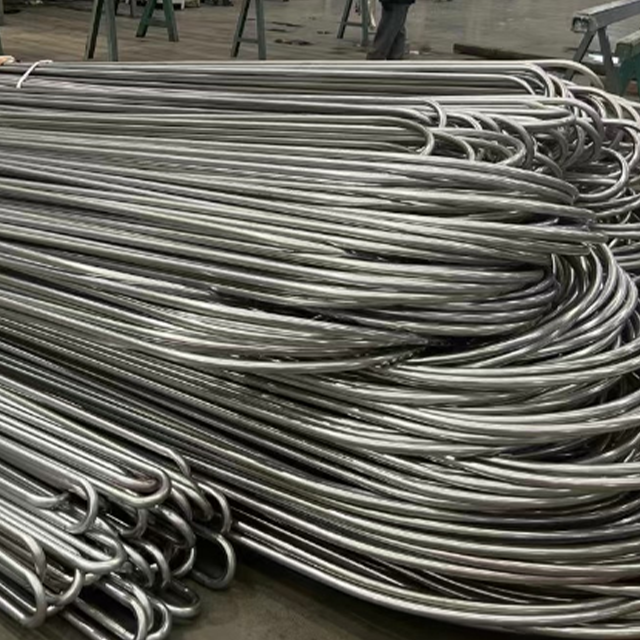
Mitigating Failure Modes: The Critical Role of Stress Relieving
Cold-forming leaves immense residual stress locked inside the metal crystalline structure. This residual stress acts as a primary catalyst for material failure. It leads directly to Stress Corrosion Cracking (SCC) during active operation. This destructive phenomenon attacks metallic components rapidly. Highly corrosive liquid media and elevated operating temperatures actively accelerate this destructive process. Proper stress relieving becomes mandatory to protect your investment.
Targeted heat treatment offers a highly effective metallurgical solution. Quality manufacturers apply controlled heat only to the bend and a specific length of the adjacent straight legs. This localized approach relieves physical stresses without compromising the mechanical strength of the entire straight section. It differs significantly from full-tube heat treatment methods. Localized treatment uses precise electrical resistance or induction heating. It guarantees targeted metallurgical recovery.
Different industrial alloys demand highly specific temperature profiles. You cannot treat them universally.
- 304/316L Stainless Steel: Requires specific elevated temperatures followed by rapid cooling to avoid sensitization.
- Duplex Stainless Steels: Need incredibly strict thermal control to prevent the formation of brittle intermetallic phases.
- Titanium Alloys: Present unique atmospheric shielding challenges during the heat cycle to prevent oxidation.
Improper cooling rates cause detrimental phase precipitation. For instance, carbide precipitation in stainless steel drastically reduces its native corrosion resistance. You must verify the manufacturer's heat treatment charts for every batch.
Material Selection and Environmental Compatibility
You must actively match the chosen alloy to your specific field application. A proper decision framework considers the aggressively corrosive nature of your working fluids. Shell-side fluids often differ wildly from tube-side fluids. One side may carry high-chloride cooling water, while the other handles acidic process hydrocarbons. You must evaluate both environments thoroughly before selecting the base material.
Stainless steel and duplex alloys dominate the modern industrial landscape. They see massive daily use in complex petrochemical plants and massive power generation facilities. These specific materials offer exceptional strength-to-weight ratios. They also deliver superior, long-lasting corrosion resistance in remarkably harsh chemical environments. Duplex alloys, in particular, excel in high-chloride settings where standard 304 series metals quickly fail.
We must also critically evaluate the surface finish. Maintaining ultra-smooth internal and external surface finishes post-bending is crucial. The bending process can easily scuff or scratch the metal.
- A rough internal surface actively promotes biological and mineral fouling.
- Minerals and abrasive particulates easily cling to microscopic surface abrasions.
- Scaling restricts flow volume and chemically insulates the tube walls.
This unwanted insulation ruins your calculated heat transfer efficiency. You should mandate strict roughness average (Ra) limits in your purchase orders.
Material Decision Matrix Chart
| Alloy Type | Primary Strengths | Best Application Environment |
| 304/316L Stainless Steel | Excellent baseline corrosion resistance; highly formable. | General chemical processing; clean water environments. |
| Duplex Stainless Steel | High yield strength; superb resistance to SCC and pitting. | High-chloride cooling water; offshore marine applications. |
| Titanium | Ultimate resistance to aggressive acids and seawater. | Desalination plants; highly acidic petrochemical refining. |
Vendor Shortlisting: A Framework for Evaluating Fabrication Partners
Corporate procurement requires a clear, objective framework. You need rigorous evaluation criteria to select reliable fabrication partners. Documented proof always outweighs clever marketing promises. Implement these four steps to secure top-tier components.
- Required Documentation (MTRs): Insist on comprehensive Material Test Reports. These critical documents ensure full metallurgical traceability. They track the chemical composition from the raw steel billet directly to the finished fabricated component.
- Non-Destructive Testing (NDT) Capabilities: Specify the strict need for verifiable NDT protocols. Demand 100% Eddy Current testing to instantly detect hidden surface flaws. Mandate Ultrasonic Testing (UT) for exact wall thickness verification. Require hydrostatic testing post-bending to prove operational pressure integrity.
- Tooling and Equipment Validation: Evaluate the vendor’s CNC rotary draw bending capabilities. Advanced automated machines ensure exact dimensional repeatability across large-volume commercial orders. Verify their custom internal mandrel usage. Properly sized mandrels prevent intrados collapse during exceedingly tight radius bends.
- Packaging and Transport: Address the logistical risk immediately. Proper crating prevents severe transit damage. Custom wooden boxes with designated cut-out slots are mandatory. Internal wooden separators stop the metal surfaces from hitting each other during cross-country freight transport.
Conclusion
Specifying thermal components requires a careful balance. You must constantly align your operational thermal output requirements with rigorous metallurgical standards. Precision fabrication is a non-negotiable asset for modern facilities. Ovality limits, exact wall thinning tolerances, and localized stress relief dictate your system's survival. Overlooking these parameters invites rapid failure and severe safety hazards.
We recommend immediate, proactive action. Audit your current supplier's testing protocols today. Verify their MTRs and NDT documentation to ensure full compliance. Request a detailed technical consultation to thoroughly review your specific TEMA and ASME requirements. By enforcing these rigorous standards, you guarantee long-lasting performance and operational stability.
FAQ
Q: What is the minimum allowable bend radius for a U-bend heat exchanger tube?
A: The minimum bend radius typically ranges from 1.5 to 2 times the outside diameter (OD). However, the exact limit is highly dependent on the specific material ductility, the original wall thickness, and the tooling precision of the CNC machinery used.
Q: Is stress relieving mandatory for all U-bent tubes?
A: It is not always mandatory by engineering code for every single material. However, it is highly recommended for exceptionally tight radii and operating environments prone to Stress Corrosion Cracking (SCC), such as media with high chloride content.
Q: How do you measure wall thinning on a completed U-bend?
A: Quality control technicians measure wall thinning by utilizing specialized ultrasonic thickness gauges. They place the ultrasonic probes directly along the extrados of the bend to map out the exact remaining wall thickness non-destructively.
Q: What causes a U-bend tube to fail at the tube sheet?
A: Failure typically happens when improper straight-leg length tolerances or residual bending stresses remain. These manufacturing errors put undue mechanical strain on the rolled or welded tube-to-tubesheet joint, eventually causing micro-fractures and system leaks.


