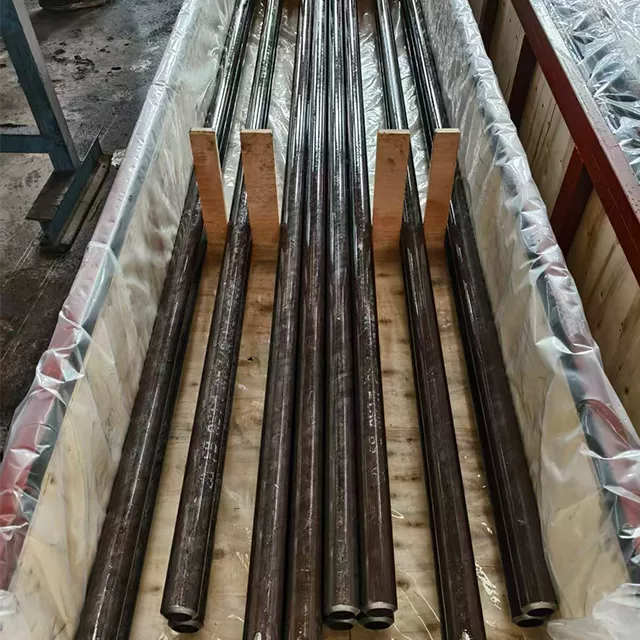
Managing thermal expansion challenges industrial engineers daily. Shell and tube heat exchangers endure immense operational stress. Differing expansion rates can quickly tear rigid systems apart. We must constantly balance mechanical reliability against fabrication and maintenance limits. The TEMA BEU design effectively handles high-temperature differentials. Many consider it the industry standard. However, it is never a universal solution. You must carefully match the design to your specific operational constraints.
This guide establishes a strict, evidence-based evaluation framework. Procurement engineers and facility managers will find actionable criteria here. You will learn exactly how to specify and source a U Bending Tube For Heatexchangers. We cover essential metallurgical standards, fluid dynamics, and rigorous quality control. We will help you avoid premature mechanical failures and optimize long-term reliability.
Key Takeaways
Thermal Stress Mitigation: U bending tubes inherently absorb differential thermal expansion without requiring expensive shell-side expansion joints.
Application Boundaries: They are ideal for high thermal shock environments (HVAC, power generation) but strictly limited to clean tube-side fluids due to mechanical cleaning constraints at the bend.
Fabrication Risks: Improper cold-drawing during bending leads to Stress Corrosion Cracking (SCC) unless mitigated by ASME-compliant post-bend heat treatment.
TCO Advantage: Replacing a localized U-tube bundle saves approximately 40% compared to full heat exchanger replacement.
The Business Case: When to Specify a U Bending Tube
You cannot ignore the physics of thermal differentials in industrial processes. Extreme temperature changes force materials to expand and contract. Steel shells and copper tubes expand at vastly different rates. Consider a scenario where extreme steam heat enters a cold system. The internal tubes will stretch significantly more than the outer shell. A rigid connection at both ends will eventually crack under this immense stress. A U Bending Tube provides a "floating" end. This curved apex moves freely inside the shell cavity. It naturally absorbs differential stretching and prevents tube sheet failure.
Straight tube designs face entirely different mechanical realities. Engineers classify them under the TEMA BEM designation. Straight tubes require complex floating heads to handle high thermal variance. Alternatively, they rely on fragile expansion joints built into the outer shell. These additions introduce multiple potential leak points. They also increase manufacturing complexity and operational risk.
Space constraints often dictate facility design choices. U-bends maximize heat transfer surface area within a compact spatial footprint. A single horizontal footprint houses twice the linear tube length. This geometric efficiency serves dense commercial mechanical rooms perfectly.
Design simplicity directly influences upfront manufacturing efficiency. Using a single tube sheet and a single channel head significantly streamlines production. Fewer welded joints mean fewer failure modes. We eliminate the entire rear header assembly found in straight-tube models. This minimalist approach delivers superior high-temperature performance.
Structural Comparison: BEM Straight Tube vs. BEU U-Tube
Feature / Metric | BEM (Straight Tube) | BEU (U-Tube Design) |
Thermal Stress Handling | Requires external expansion joints or floating heads. | Naturally absorbs expansion via the floating bend. |
Spatial Footprint | Requires longer horizontal clearance for equal surface area. | Highly compact; maximizes surface area per square foot. |
Component Complexity | Two tube sheets, two channel heads. | One tube sheet, one channel head. |
Leak Potential | Higher due to multiple gasketed joints at both ends. | Lowered significantly by eliminating the rear header. |
Evaluation Framework: Fluid Characteristics & Application Limits
Transparent limitations build engineering trust. You must recognize when a U-tube design will fail. We strictly define the application boundaries based on fluid properties. The primary disqualifier involves mechanical cleaning constraints. You cannot push rigid cleaning rods through a tight curve.
Highly viscous fluids pose severe operational risks. Slurries and media carrying heavy suspended solids will collect at the bend apex. These particulates agglomerate and eventually choke the flow path. You must route heavily fouled media through the shell side instead. Alternatively, you should specify a straight tube configuration. Straight tubes allow direct line-of-sight mechanical scraping.
Ideal operating scenarios require clean tube-side media. We highly recommend these configurations for steam lines and treated boiler water. Clean refrigerants and refined chemical gases also perform exceptionally well. They leave minimal residue and eliminate the need for harsh mechanical drilling.
High-temperature variance systems demand this exact architecture. Commercial HVAC systems undergo constant thermal shock as loads fluctuate. Refinery heaters endure intense thermal cycling during startup and shutdown phases. The floating bundle seamlessly absorbs these volatile temperature swings without fatiguing the primary welds.
Vibration and flow velocity introduce another critical evaluation metric. Fluids rushing through the pipes create dynamic physical forces. The unsupported bend radius experiences the highest stress from flow-induced vibration. If cross-flow velocities exceed critical thresholds, vortex shedding occurs. This phenomenon causes the tubes to clatter against each other. Sustained vibration leads directly to metallurgical fatigue and catastrophic rupture. Engineers must carefully calculate baffle spacing to support the straight lengths just before the curve.
Engineering & Fabrication Standards for Heatexchangers U Bending Tube
Premature mechanical failure usually stems from poor fabrication. You must enforce authoritative technical criteria during manufacturing. The bending process inherently alters the metal's physical geometry. Standardized calculations ensure the material retains its pressure-holding capabilities. We must adhere strictly to TEMA and ASME baseline requirements.
Bend radius calculations govern the entire forming process. The bend radius (R) must typically equal or exceed 1.5 times the tube outside diameter (OD). Tight radii create severe mechanical vulnerabilities. The outer curve, known as the extrados, stretches dramatically during cold drawing. This stretching causes dangerous wall thinning. Simultaneously, the tube cross-section may flatten into an oval shape. Severe ovality compromises the internal pressure ratings and alters fluid dynamics. You must strictly monitor the Heatexchangers U Bending Tube during this precise forming stage.
Cold-drawing introduces dangerous residual stresses. Bending naturally increases the metal's hardness. Unfortunately, it drastically reduces ductility. Hardened, stressed metal invites Stress Corrosion Cracking (SCC). Chlorides in the fluid will ruthlessly attack these stressed microscopic grain boundaries.
Mitigating these cold-working risks requires mandatory heat treatment. You must relieve the residual stress built up in the apex. ASME UG-79 standards dictate exact protocols for this process. We mandate solution annealing followed by rapid quenching.
Required Post-Bend Heat Treatment Protocol
Pre-Cleaning: Thoroughly clean the bend area to remove drawing lubricants. Carbon residues can cause localized pitting during heating.
Target Heating: Heat the bend region and at least 150mm of the adjacent straight leg. For austenitic stainless steels (like 304/316L), hold the temperature strictly between 1040°C and 1100°C.
Soak Time: Maintain the peak temperature long enough to allow complete recrystallization of the internal grain structure.
Rapid Quenching: Cool the metal rapidly using air blasts or water sprays. Slow cooling allows carbide precipitation, which ruins corrosion resistance.
Final Inspection: Check the oxidized surface and prepare it for chemical passivation.
Operational Replacement and Maintenance Strategy
Long-term operational efficiency relies on smart maintenance planning. Industrial downtime halts production and strains engineering resources. Facility managers must choose equipment that facilitates rapid interventions. The floating bundle architecture provides massive advantages during turnaround periods.
Consider the process of replacing a degraded bundle versus a full unit. A localized tube failure does not necessarily condemn the entire heat exchanger. The robust outer shell typically outlasts the internal tubes by decades. When tubes degrade, maintenance teams simply unbolt the primary channel head. They can then rapidly pull the entire bundle from the shell cavity.
This operational advantage fundamentally shifts maintenance strategies. Swapping a degraded bundle shortens lead times drastically. Manufacturers can often fabricate standard replacement bundles in 24 to 48 hours. Conversely, ordering a completely new custom shell and tube unit might take months. Retaining the existing piping connections on the shell side prevents extensive re-welding. Your facility returns to normal operation in a fraction of the time.
Routine maintenance protocols differ significantly from straight-tube units. Shell-side cleaning remains highly accessible. Once workers extract the bundle, they can easily pressure-wash the exterior tube surfaces. They can also inspect the internal shell walls for erosion.
Tube-side cleaning demands specialized approaches. You cannot force rigid drill bits through the curved apex. Facilities must implement alternative cleaning technologies.
Approved Tube-Side Maintenance Protocols
Clean-in-Place (CIP) Flushing: Circulating specialized chemical solvents dissolves internal mineral scale. Operators pump these acids or alkalines through the closed loop.
Flexible High-Pressure Lancing: Specialized hoses navigate the bend radius. They blast internal foulants away using extreme water pressure.
Acoustic Cleaning: Sonic waves break apart brittle internal deposits without physically touching the tube walls.
Preventative Filtration: Installing upstream strainers prevents large particulates from entering the system entirely.
Procurement Checklist: Quality Control & Supplier Verification
You cannot trust visual inspections alone when sourcing components. Invisible micro-cracks and subsurface defects will cause catastrophic failures under pressure. Actionable quality control separates reliable suppliers from risky vendors. You must implement a strict procurement checklist.
Mandatory Non-Destructive Testing (NDT) proves structural integrity. Every fabricated bundle must pass a rigorous testing sequence before leaving the factory.
Essential Non-Destructive Tests
Hydrostatic Testing: Technicians fill the tubes with water and pressurize them far beyond operating limits. This test verifies pressure integrity post-bending and guarantees weld security.
Eddy Current Testing (ECT): Probes pass through the straight lengths. They generate electromagnetic fields to detect internal subsurface defects near the bend transition zone.
Dye Penetrant Testing: Inspectors apply fluorescent liquids to the extrados. The dye seeps into surface-level micro-cracks caused by excessive stretching. A developer then makes these hidden flaws visible.
Dimensional tolerances require precise verification. You must specify acceptable limits clearly in your purchase orders. Measure wall thinning at the exact apex of the curve. It must never drop below the minimum required thickness for your pressure rating. Calculate the ovality percentage to ensure it meets TEMA restrictions. Severe ovality disrupts fluid flow and weakens the arch.
Documentation acts as your final defense against substandard materials. Never accept delivery without a comprehensive paperwork package. Insist on Material Test Certificates (MTC). These documents trace the metal's chemical composition back to the original steel mill. You must also demand certified heat treatment logs. These logs prove the manufacturer held the metal at the correct temperature for the required duration. Without this proof, you risk installing a stress-bomb in your facility.
Conclusion
Choosing the correct heat exchanger components requires balancing thermal physics against maintenance realities. U-tube designs offer exceptional thermal expansion tolerance and a highly compact spatial footprint. They perform brilliantly in environments suffering from severe temperature fluctuations. However, they demand impeccably clean tube-side fluids to prevent irreversible fouling at the bend.
Long-term reliability hinges strictly on manufacturing excellence. Suppliers must respect minimum bend radius limits to prevent critical wall thinning. They must also perform rigorous post-bend heat treatments to neutralize stress corrosion cracking. Skipping these steps guarantees early failure.
Take immediate action to secure your facility's operational future. Audit your current fluid cleanliness levels and historical temperature deltas. Review your maintenance logs to determine if straight tubes are unnecessarily complicating your shutdown procedures. Finally, consult a certified thermal engineer to verify your specific TEMA requirements before finalizing any procurement orders.
FAQ
Q: What is the minimum bend radius for a U bending tube in a heat exchanger?
A: Generally, TEMA and ASME standards dictate a minimum bend radius of 1.5 times the tube's outer diameter (1.5D). Adhering to this baseline prevents excessive wall thinning on the extrados. It also minimizes structural ovality, ensuring the tube safely contains internal operational pressures.
Q: How do you clean the inside of a U-tube heat exchanger?
A: Unlike straight tubes that allow rigid mechanical rodding, U-tubes require non-rigid cleaning techniques. Maintenance teams rely on chemical cleaning (flushing) to dissolve scale. They also utilize high-pressure water jetting with specialized flexible lances. Acoustic cleaning methods offer another effective, non-invasive alternative for brittle deposits.
Q: When should I choose a straight tube over a U-tube design?
A: Specify a straight tube (BEM designation) when dealing with heavily fouled, viscous, or particulate-heavy fluids inside the tubes. These aggressive fluids cause blockages at the bend. Straight tubes easily accommodate the frequent, rigid mechanical scraping required to keep dirty fluid systems operational.


