Product Overview
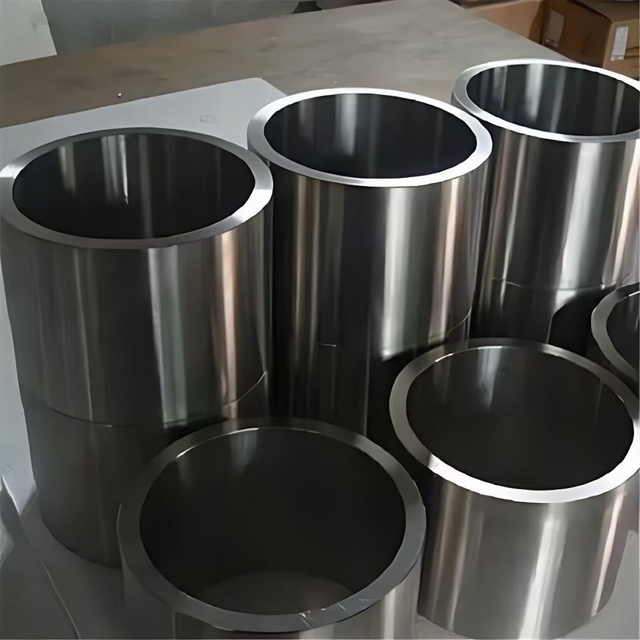
Constructed with 316L stainless steel via cold-drawing, it meets ASTM A312 for seamless stainless steel tubes and ASME BPVC Section I for boiler components. The seamless design eliminates weak points, while the 316L alloy (with 2-3% molybdenum) provides superior corrosion resistance in hydraulic fluids and boiler steam. Available in wall thicknesses from 2mm to 10mm, it is optimized for systems requiring both high pressure and temperature resistance.
Product Features
High-Pressure Resistance: Boasts 30 MPa (4351 psi) working pressure and 90 MPa (13053 psi) burst pressure—a 40% improvement over 304 stainless steel tubes. This makes it ideal for heavy-duty hydraulic systems (e.g., automotive lifts, excavator hydraulics) and high-pressure boilers.
Thermal Stability: Maintains structural integrity at 500°C (boiler steam temperature) with an oxidation rate of <0.02 g/m²·h—preventing tube thinning and leakage. It retains 85% of its room-temperature tensile strength (620 MPa) at 500°C.
Corrosion Resistance: The 316L alloy resists chloride-induced stress corrosion cracking (SCC) in saltwater environments and hydraulic fluids with anti-wear additives. In 3.5% NaCl solution, it exhibits a corrosion rate of <0.01mm/year.
Weldability: Compatible with TIG and MIG welding, with weld joint efficiency >0.9 per ASME B31.1. Welded connections retain 90% of the base material’s strength, ensuring reliability in integrated hydraulic-boiler systems.
Applications
Automotive hydraulic lift systems (supporting vehicle weight with high-pressure fluid).
Industrial boiler water tubes (transmitting high-temperature steam).
Construction machinery hydraulic lines (e.g., bulldozer hydraulic cylinders).
Marine boiler systems (resisting seawater corrosion).
FAQ
What wall thickness is suitable for my hydraulic system?
For low-pressure systems (<10 MPa), 2-3mm wall thickness is sufficient. For medium-pressure systems (10-20 MPa), choose 4-6mm. For high-pressure systems (>20 MPa) (e.g., heavy machinery), select 8-10mm. Always refer to your system’s pressure rating and ASME B31.3 standards for final selection.
Can it be bent for custom installations?
Yes, but the minimum bend radius must be ≥5x the tube’s OD (e.g., 30mm radius for 6mm OD tube) to avoid wall thinning. Use a mandrel bender to maintain inner diameter consistency—cold bending without a mandrel can reduce pressure resistance by 20%. For tight bends, contact the manufacturer for pre-bent custom lengths.
What testing is performed before shipment?
Each tube undergoes hydrostatic testing at 1.5x the working pressure (e.g., 45 MPa for 30 MPa tubes) to detect leaks. It also passes ultrasonic flaw detection (ASTM A609) to identify internal defects. A sample from each batch undergoes corrosion testing via ASTM G48 to confirm 316L alloy compliance.


